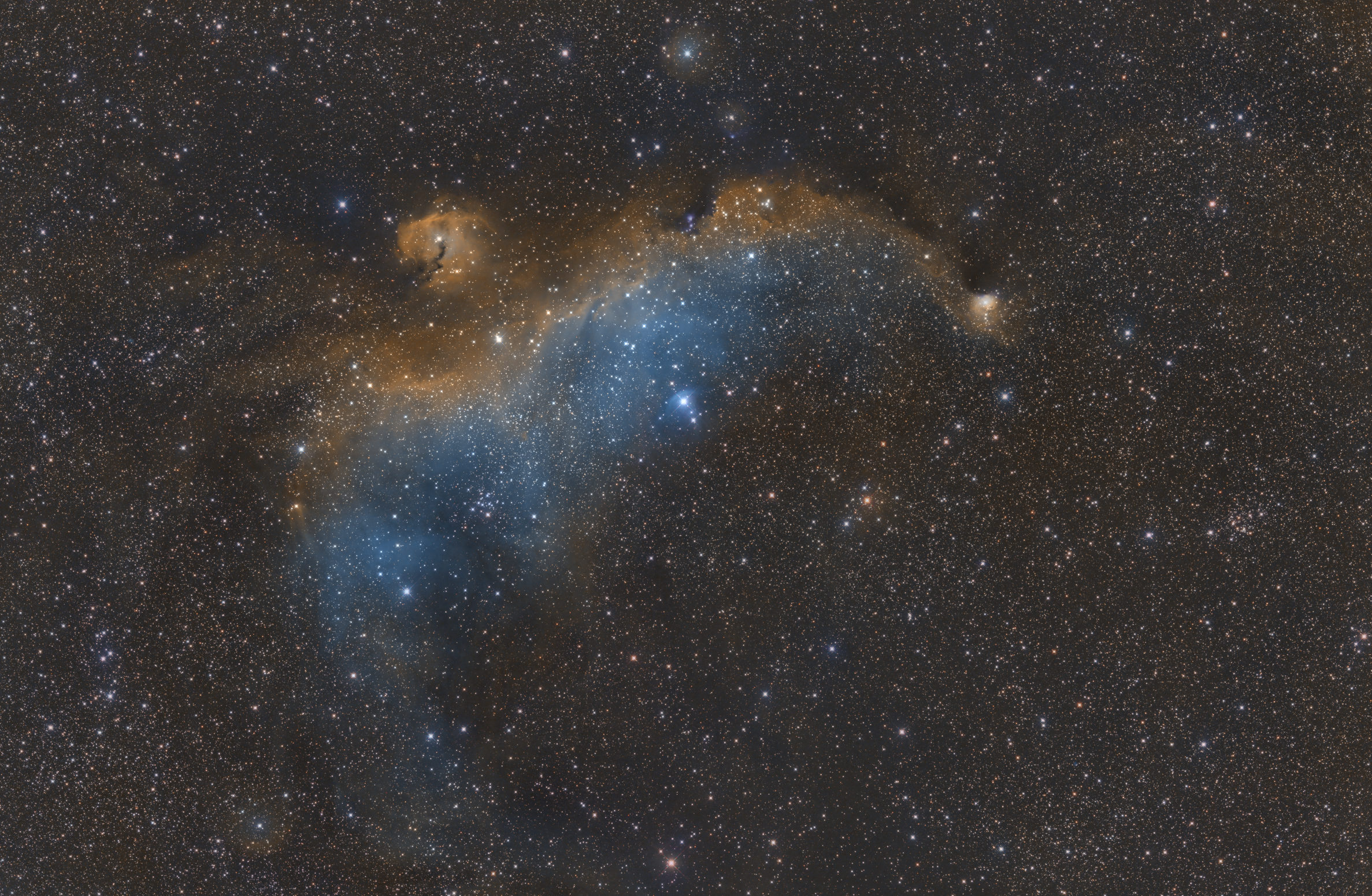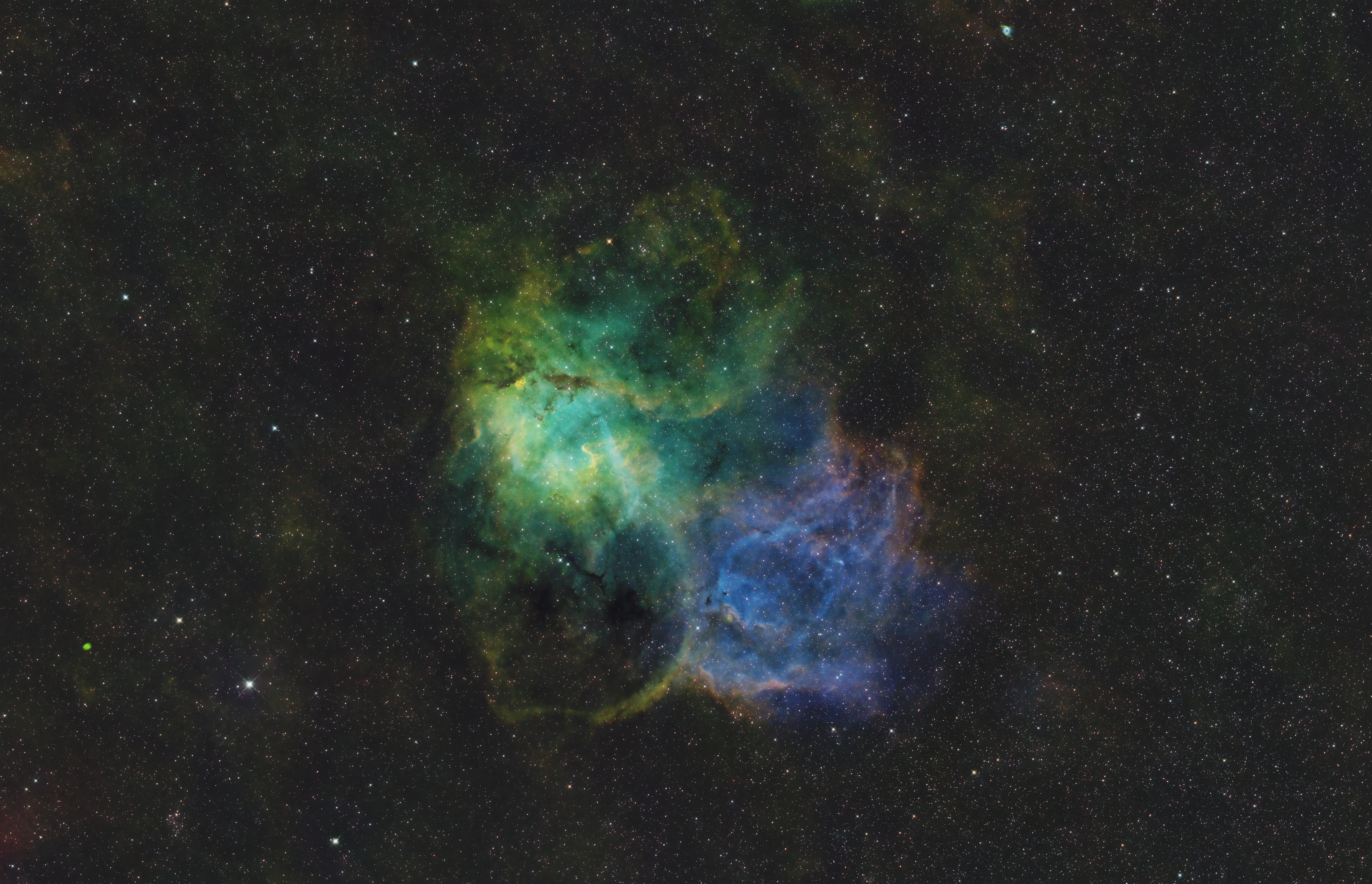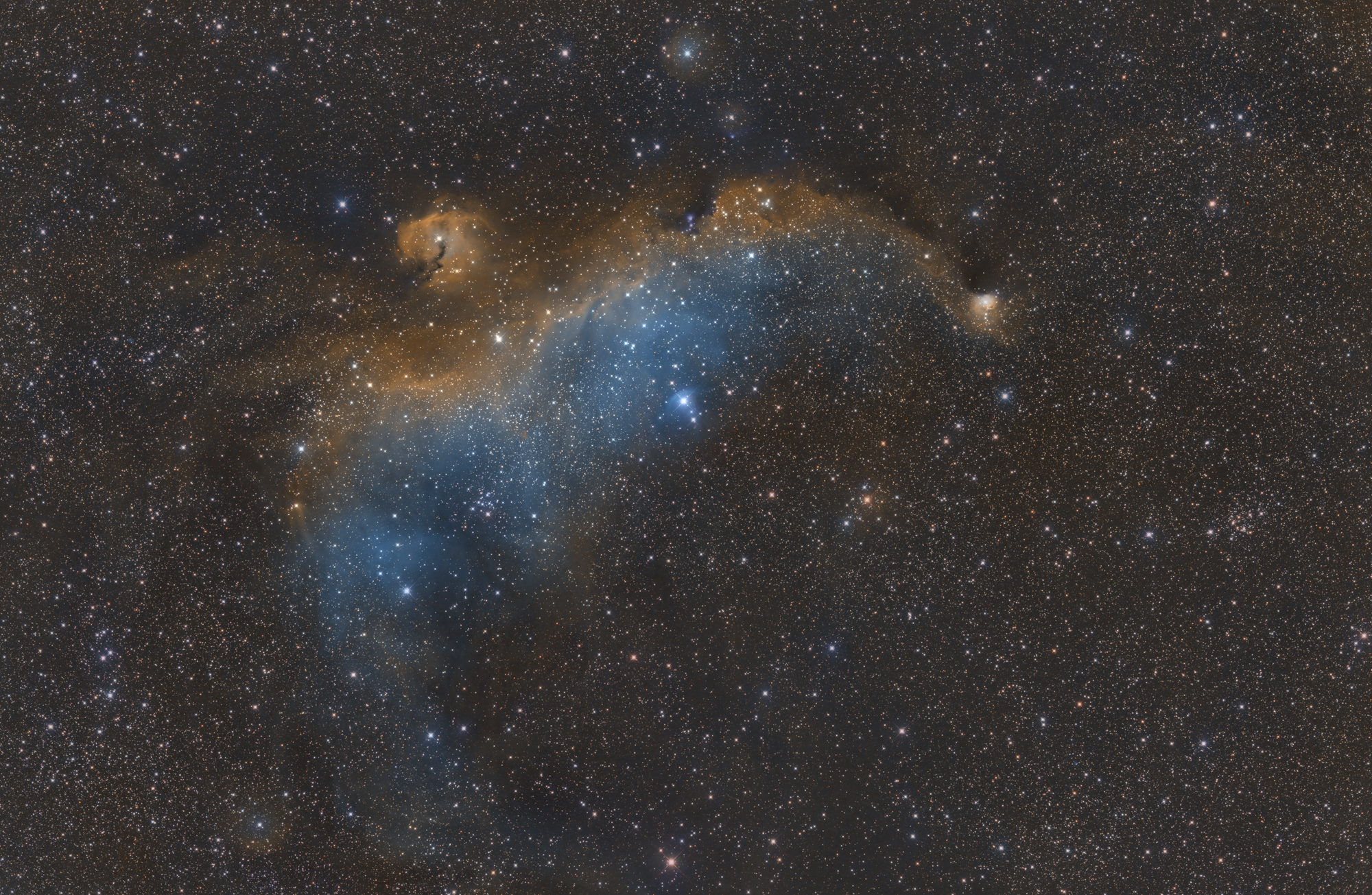
IC2177- Seagull Nebula
3,650 light-years away from Earth. Located in the constellation Monoceros, IC 2177 is a large, intricate emission nebula resembling a seagull in flight. It's illuminated by several young, hot stars and spans a vast area of gas and dust, showcasing beautiful structures of star formation.
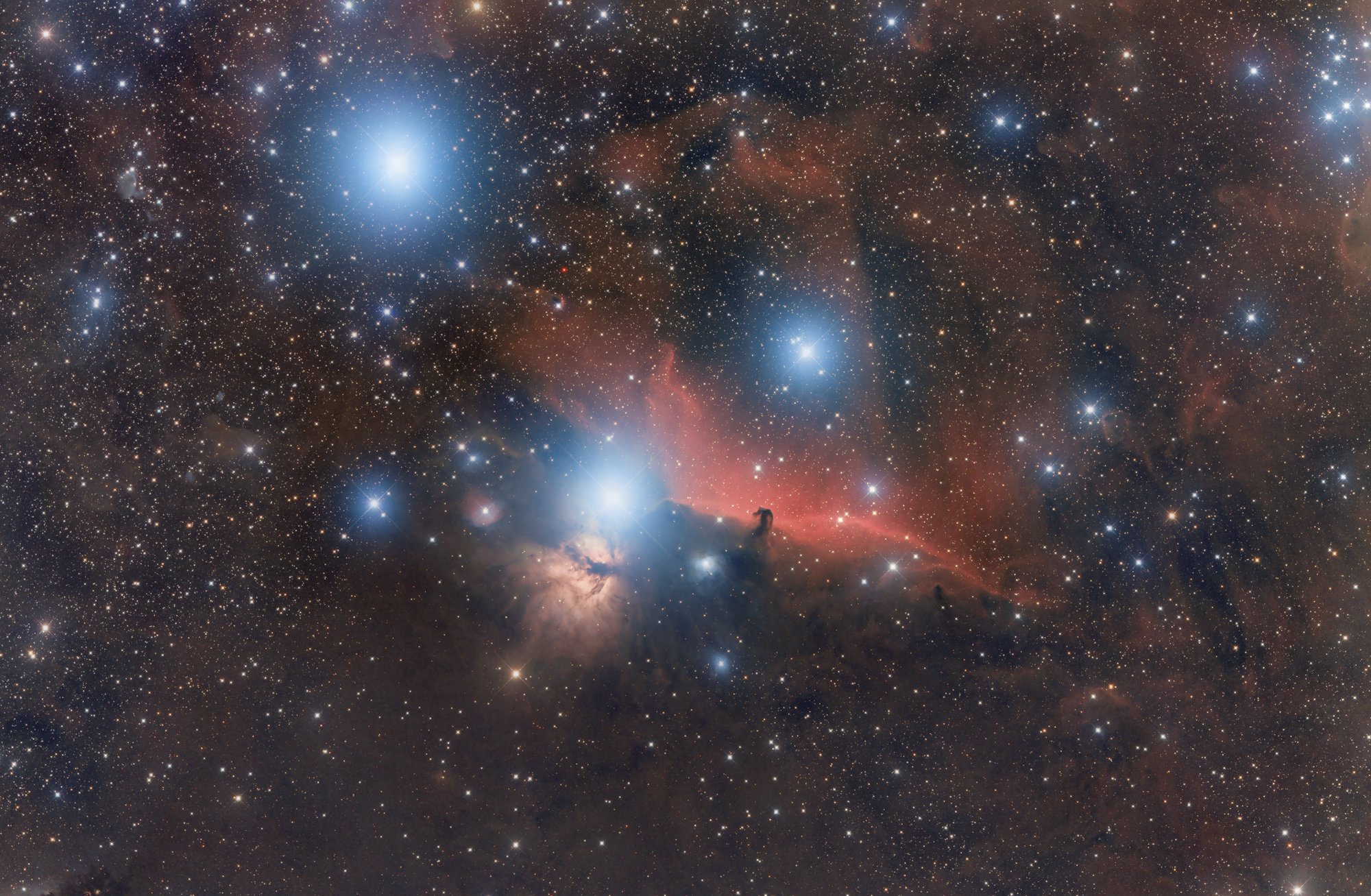
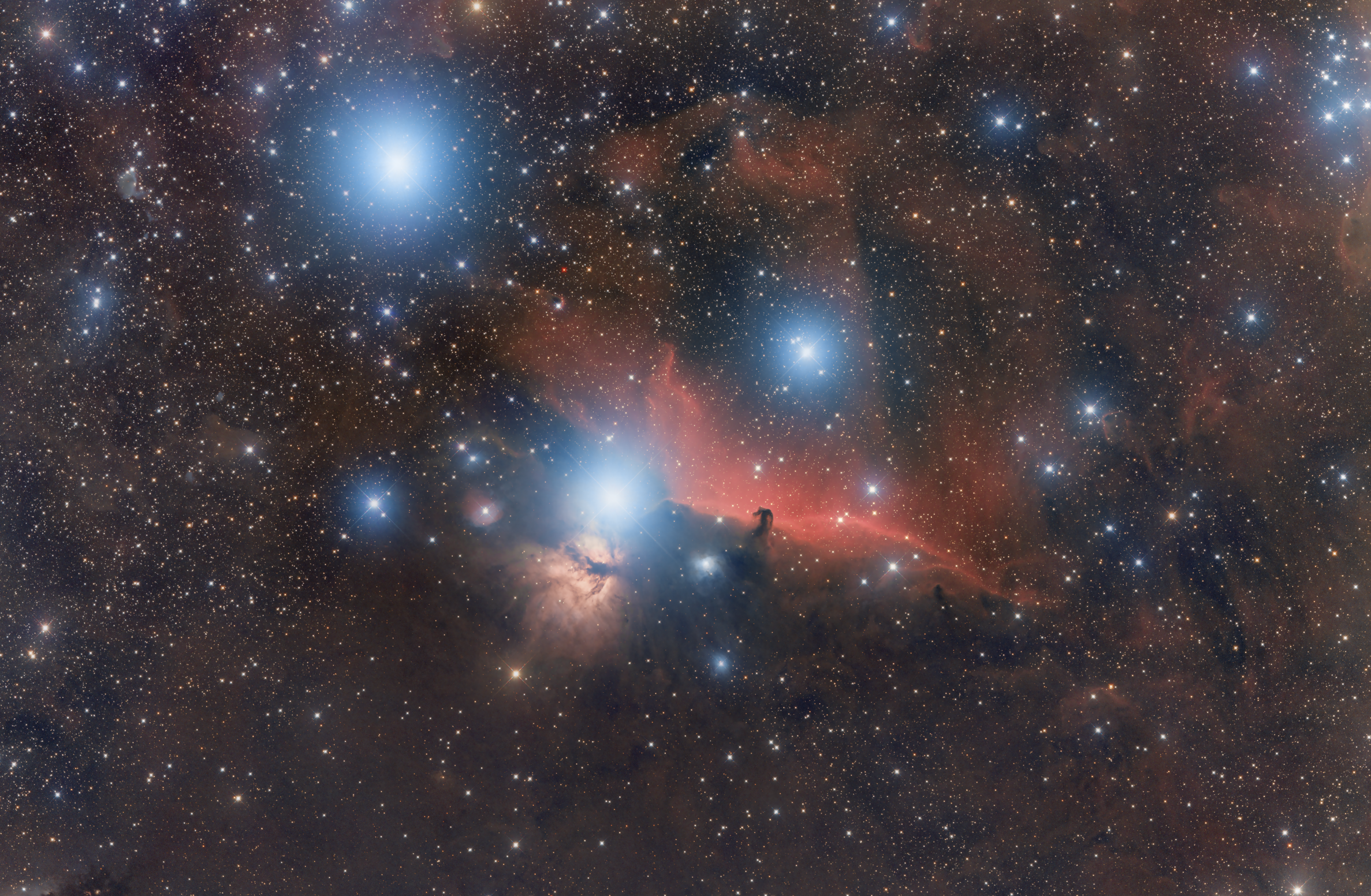
LDN1730- Horsehead Nebula
LDN 1730 is a dark nebula in the constellation Orion. It's a dense, cold region of dust and gas that blocks the light from background stars, creating a prominent dark patch in the sky, and it's an area of interest for studying the early stages of star formation.
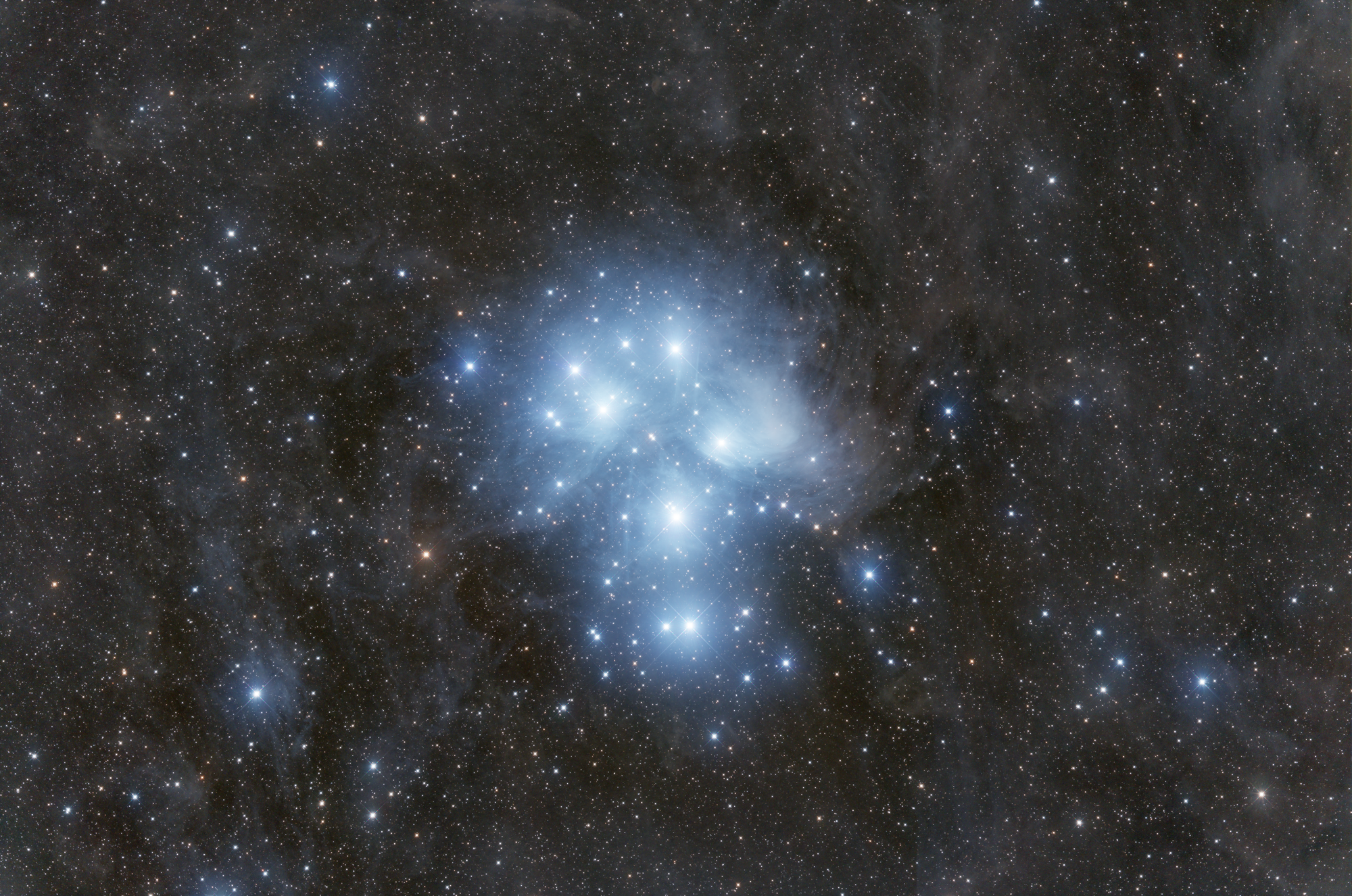
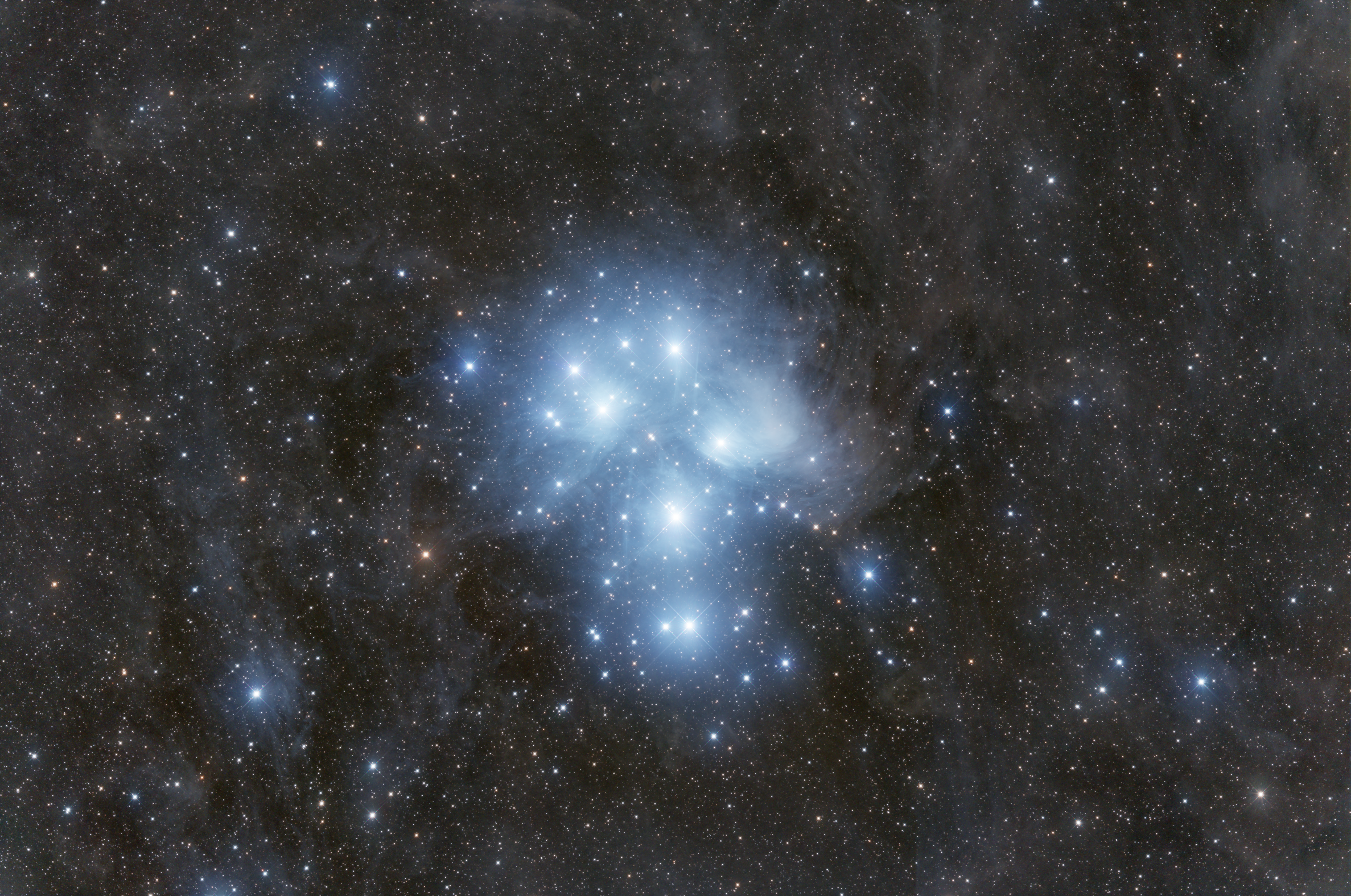
M45- Plejades
Approximately 444 light-years distant from Earth. M45 is an open star cluster in the constellation Taurus. It consists of hot, young stars surrounded by reflection nebulosity. The cluster is easily visible to the naked eye and has been a subject of fascination and mythology for centuries.
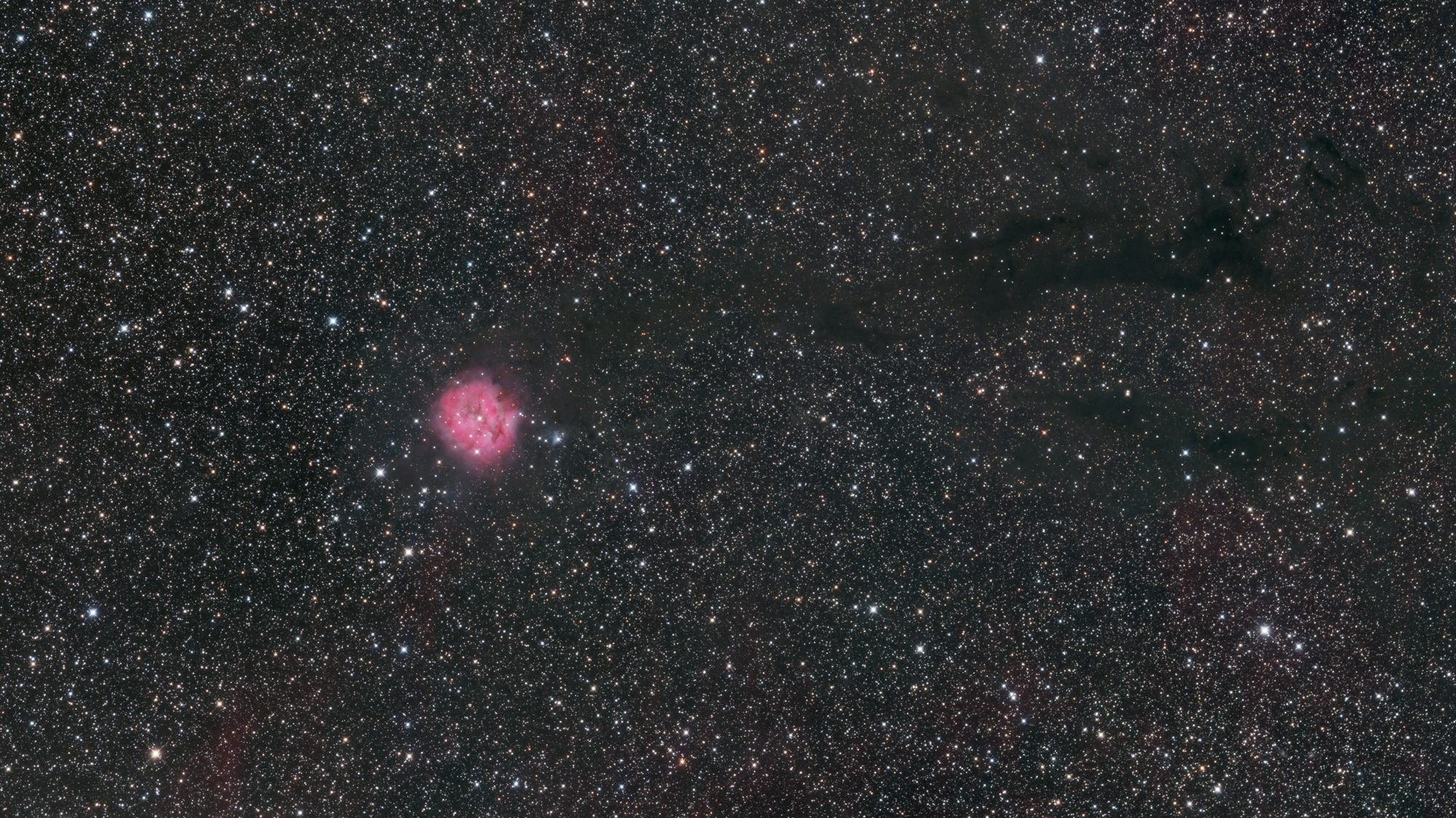
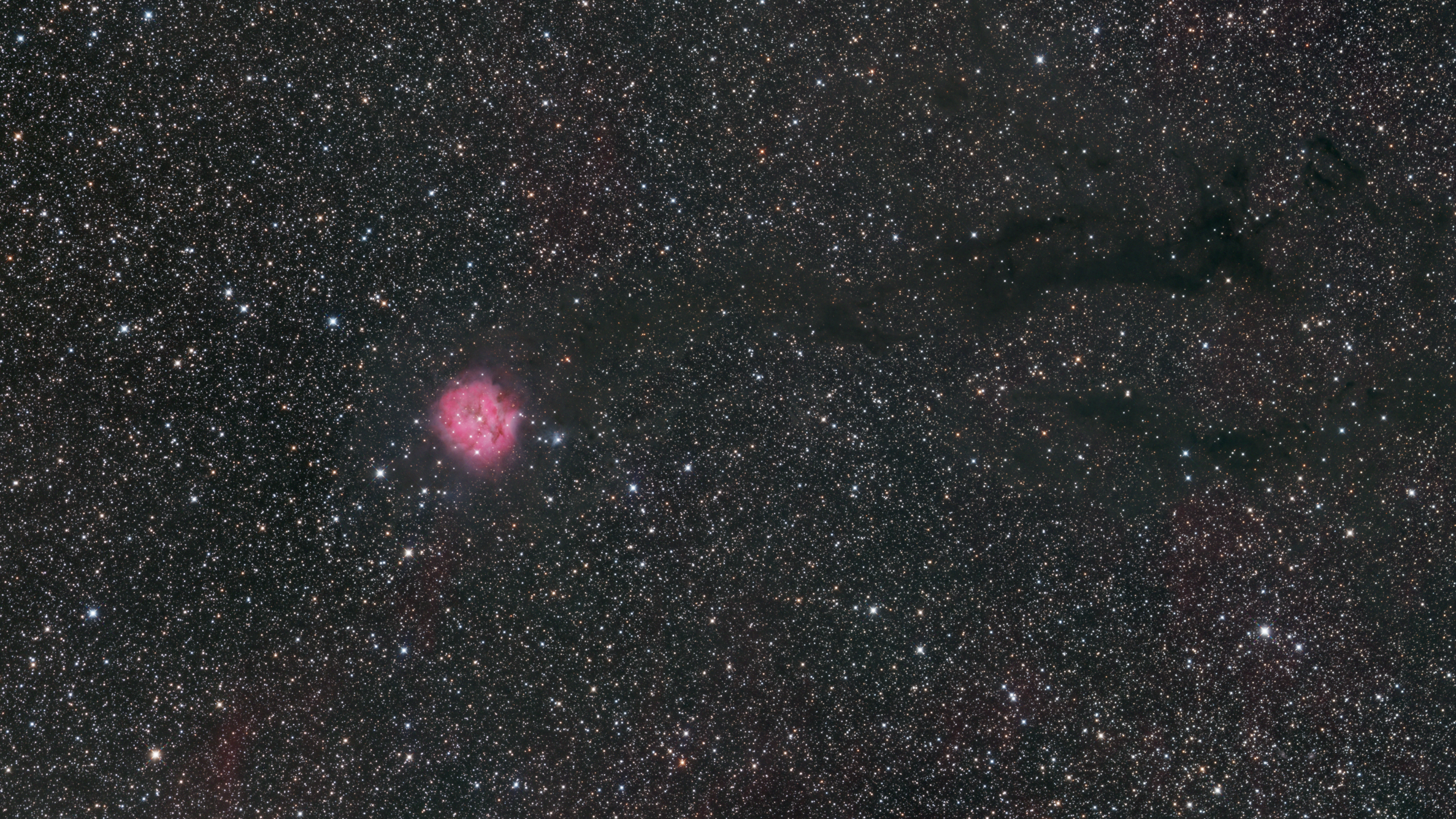
IC5146- Cocoon Nebula
Approximately 4,000 light-years away. IC 5146 is a reflection/emission nebula and an open star cluster located in the constellation Cygnus. The nebula's shape resembles a cocoon, housing a cluster of young stars in the process of formation, surrounded by glowing gas and dust.
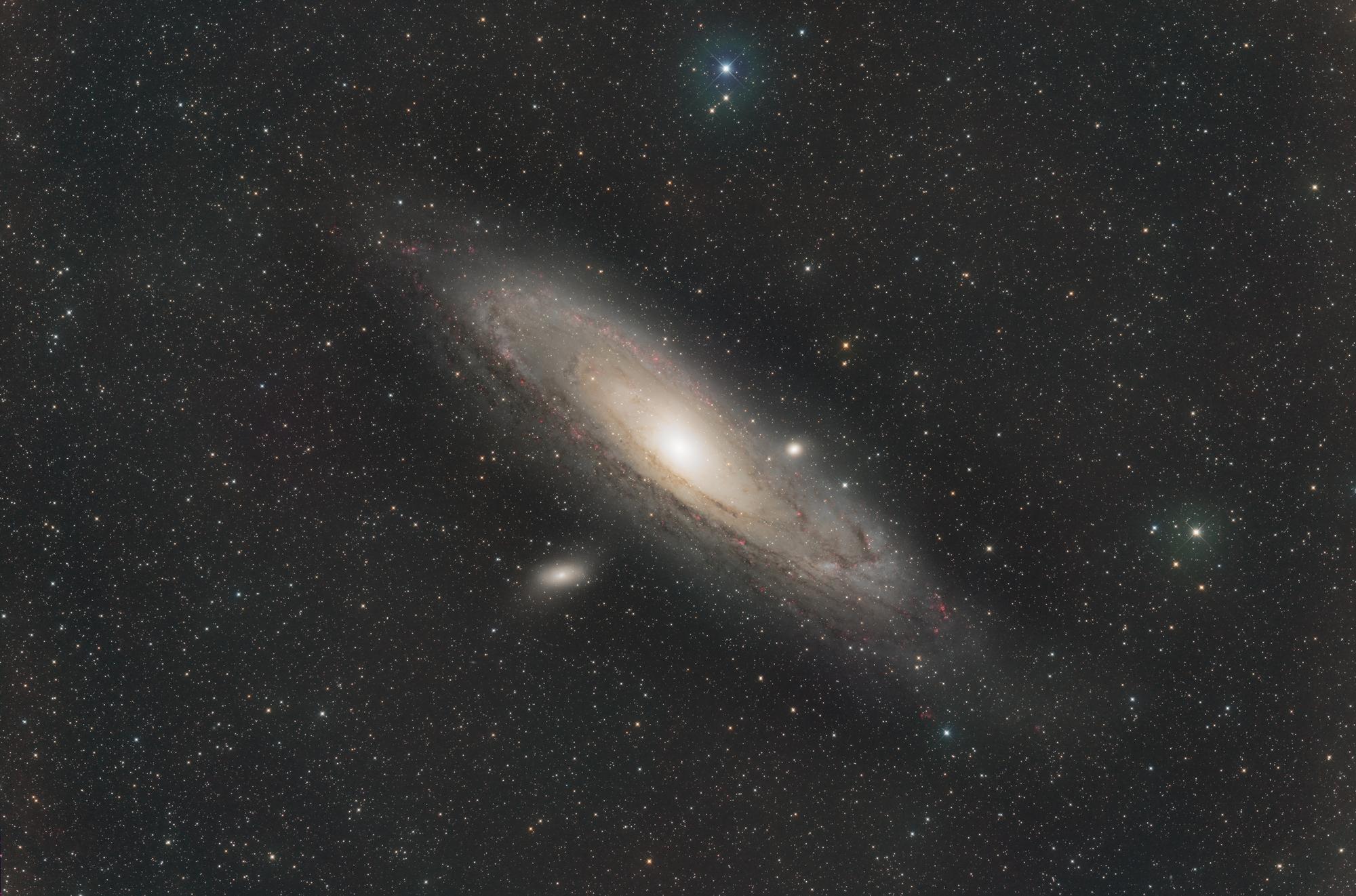
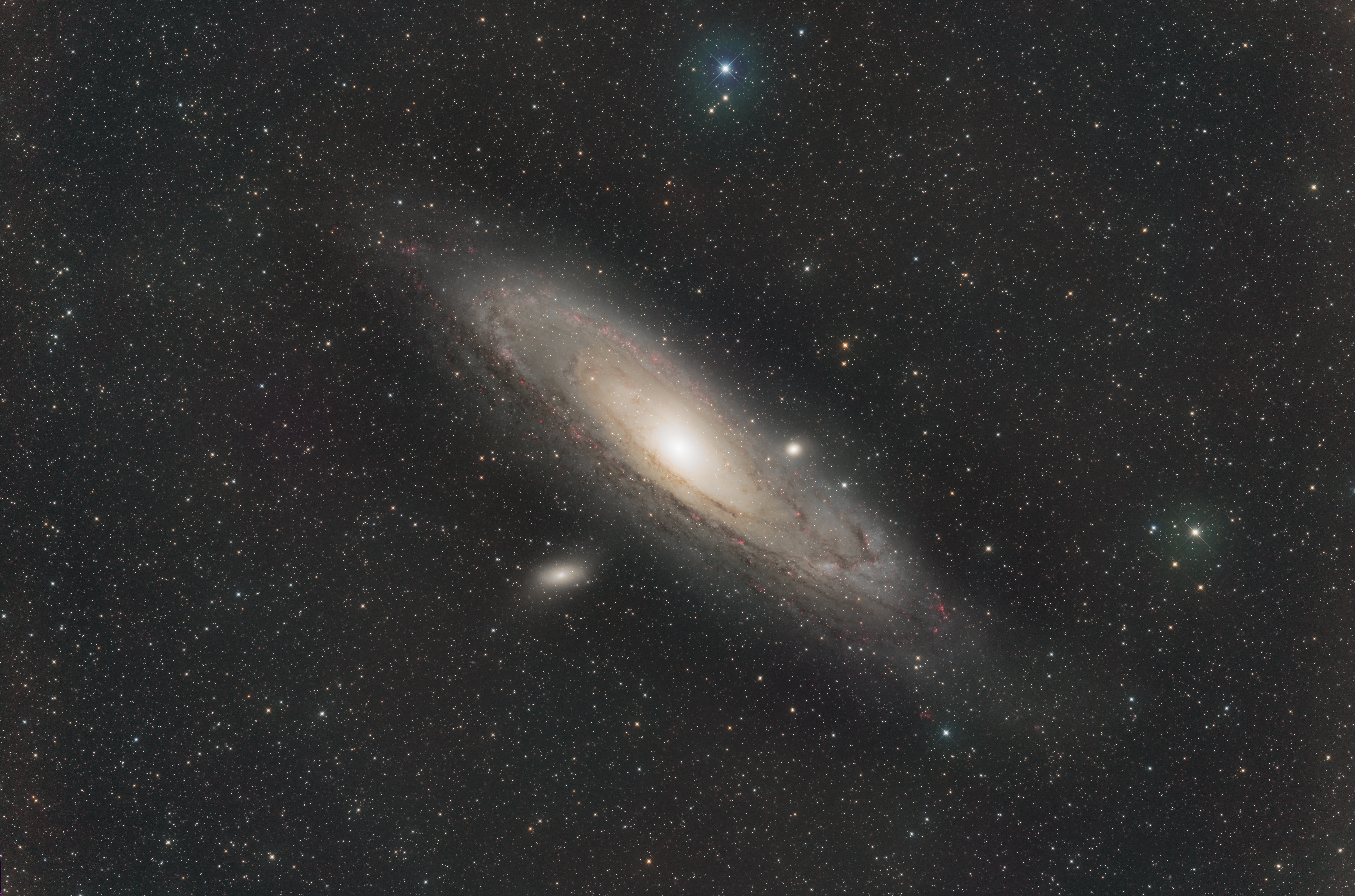
M31- Andromeda Galaxy
A majestic spiral galaxy located approximately 2.537 million light-years away. Its is the closest galaxy to the Milky Way. M31's satellite galaxies include M32, a compact elliptical galaxy, and M110, a larger satellite galaxy.
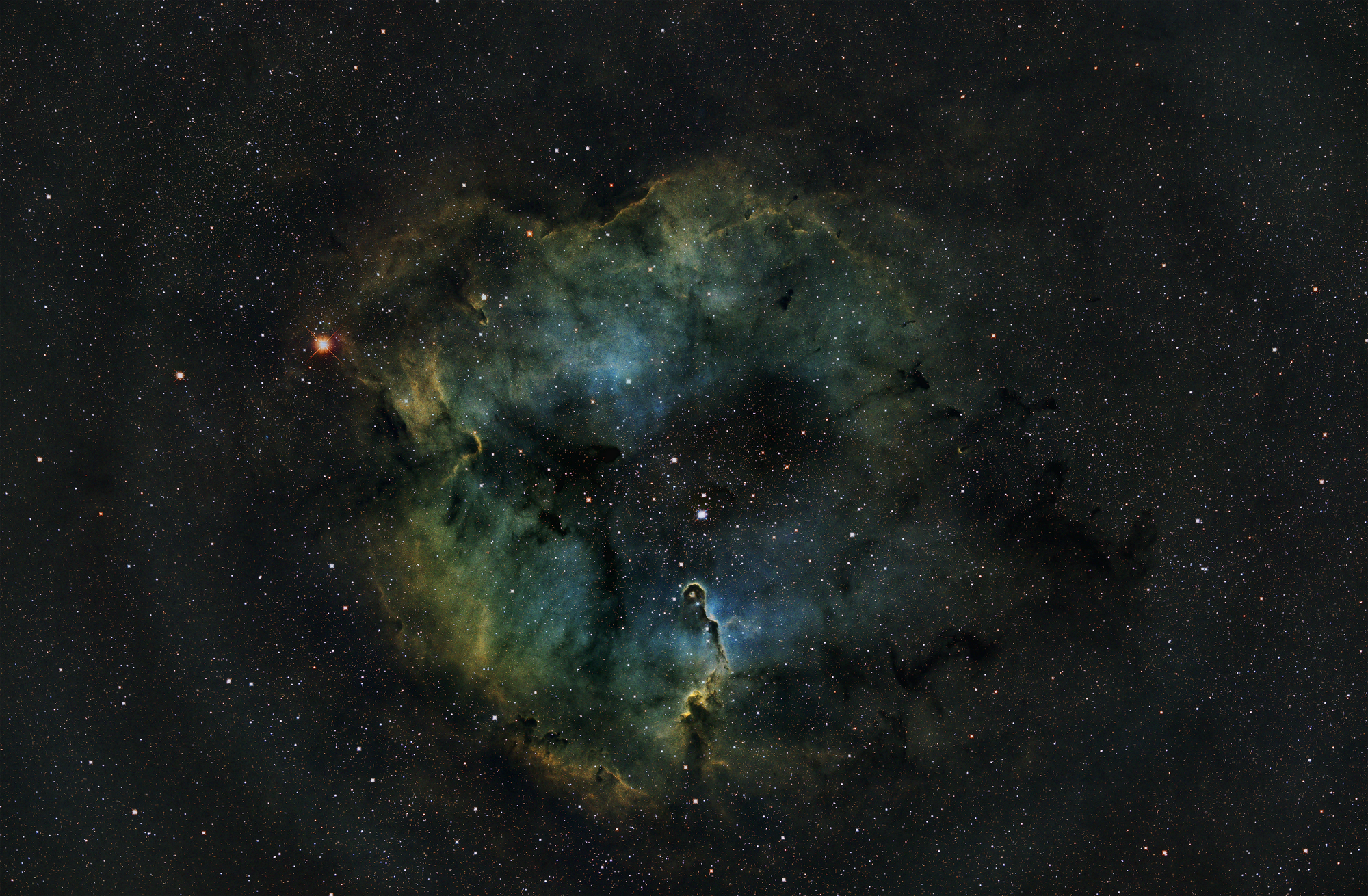
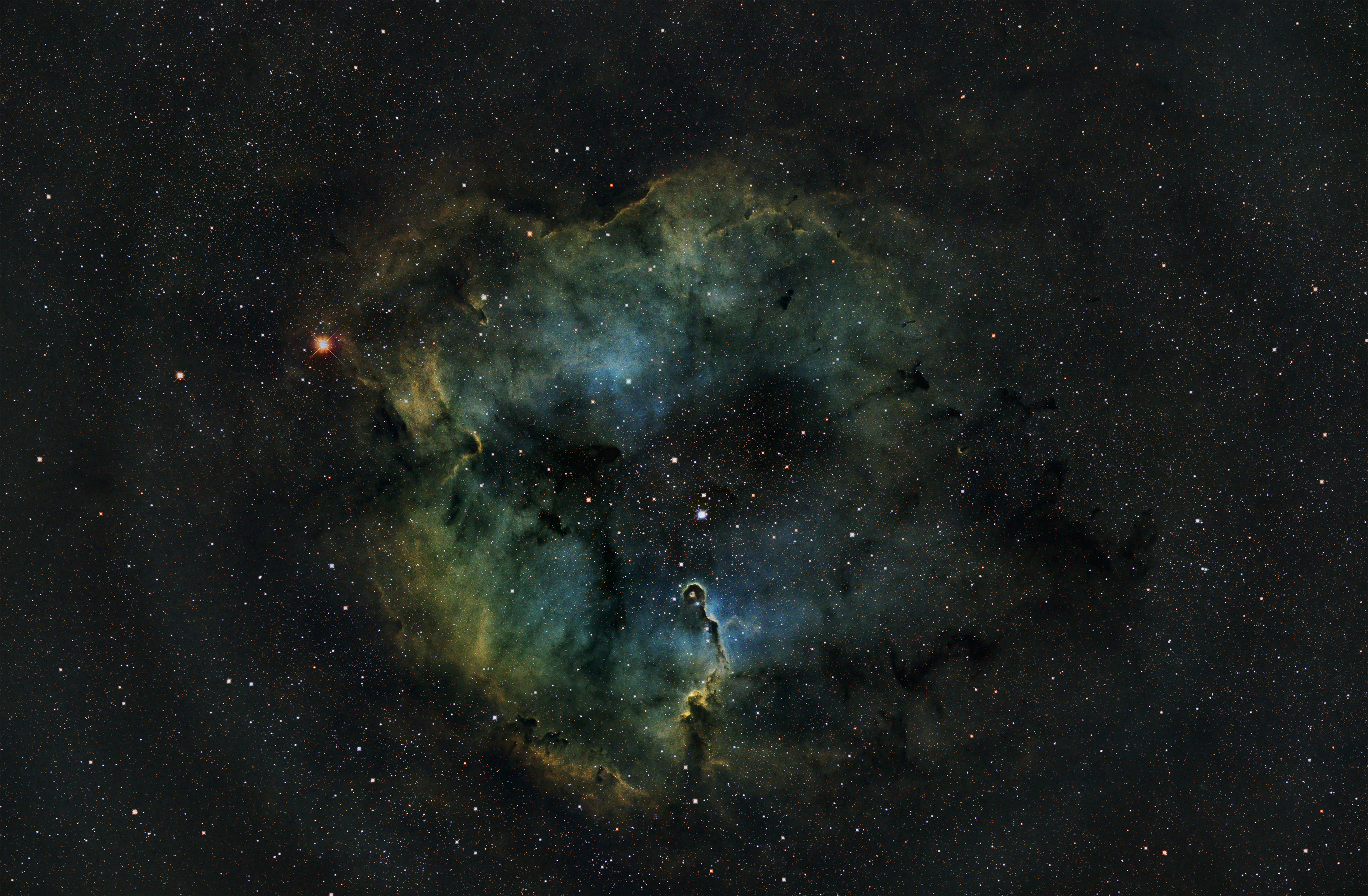
IC1396- Elephant's Trunk Nebula
Approximately 2,400 to 3,000 light-years away. IC 1396 is a large emission nebula in the constellation Cepheus. This region of ionized hydrogen gas houses multiple star-forming regions and dark lanes of dust, displaying stunning emission nebulae and young stars.
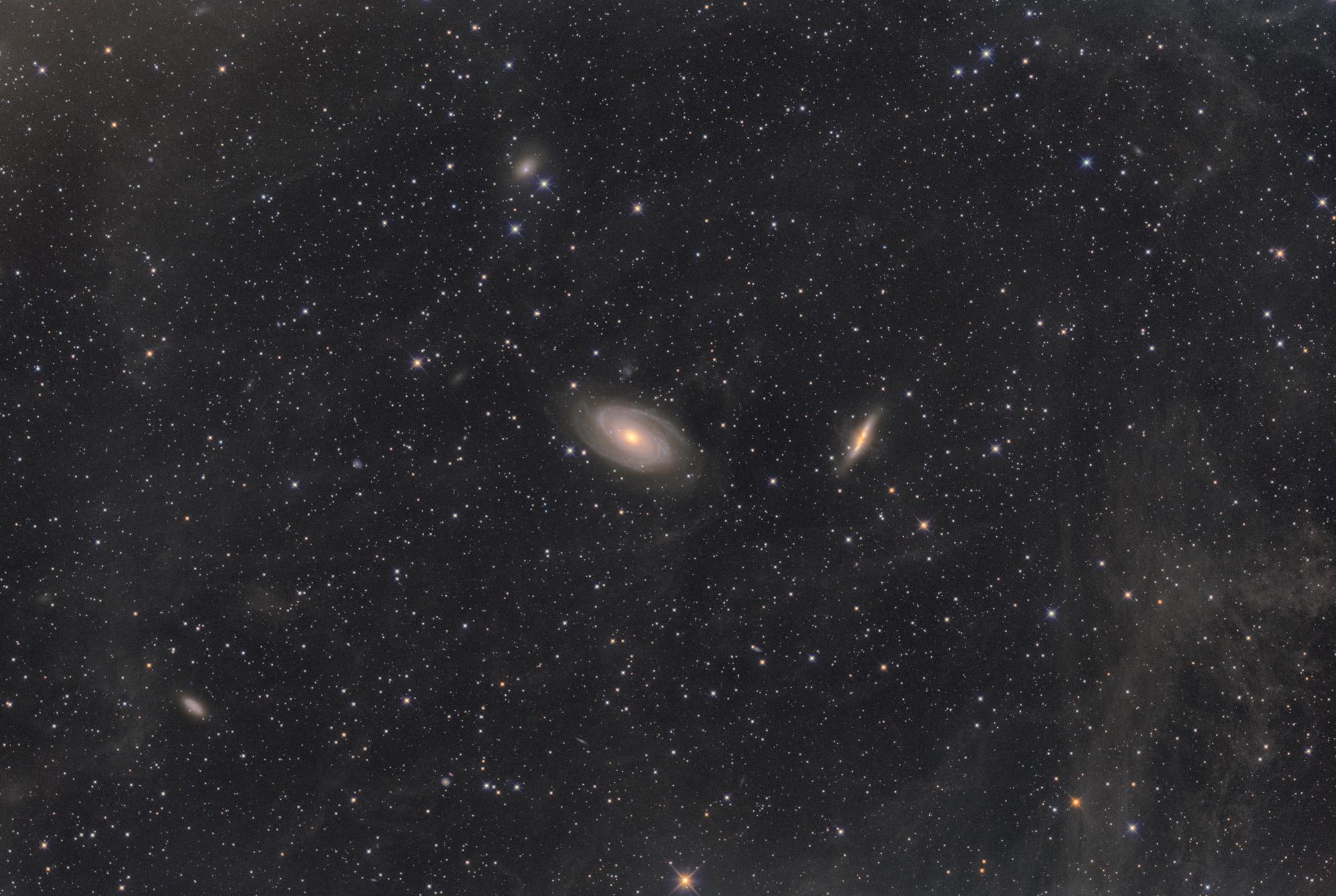
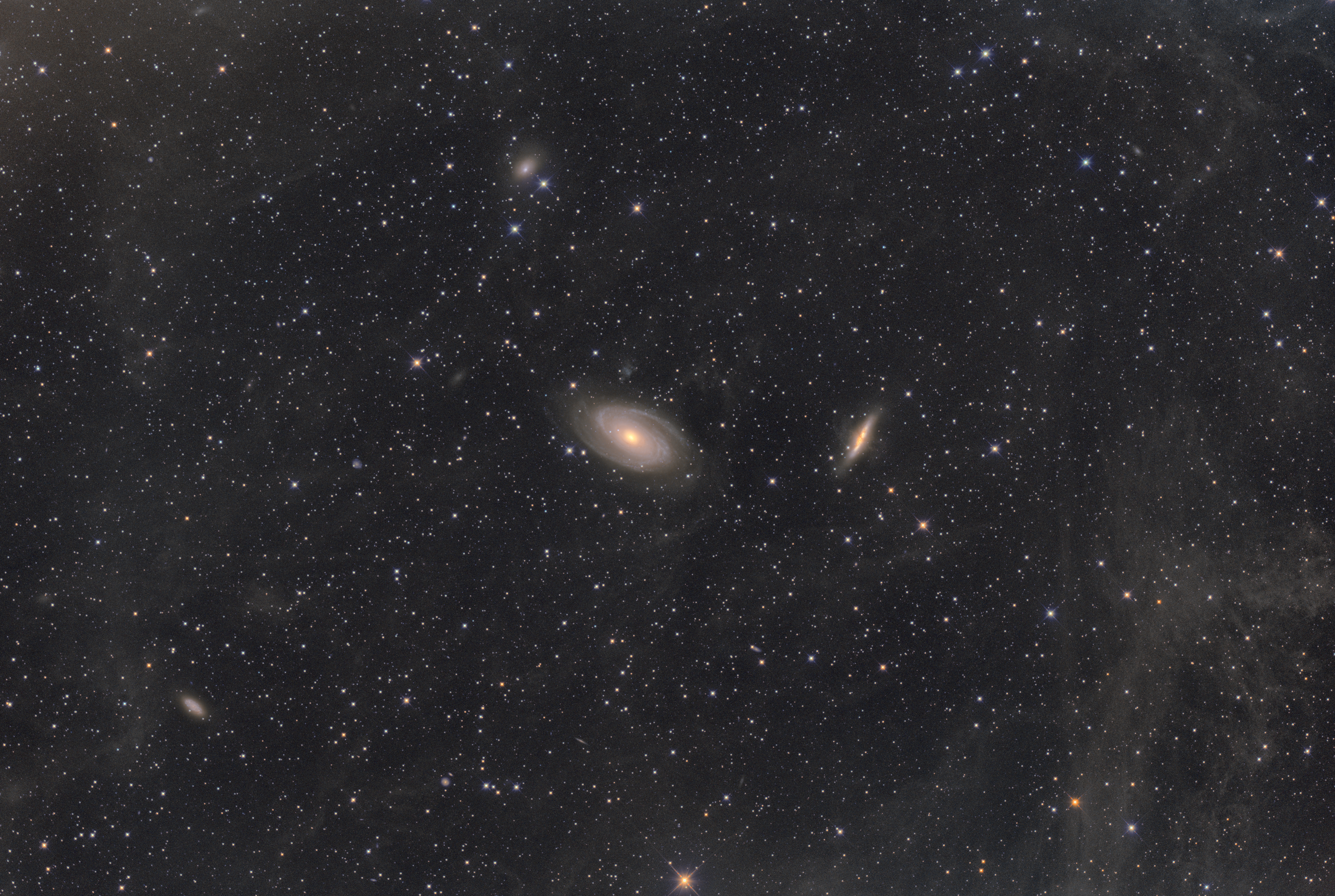
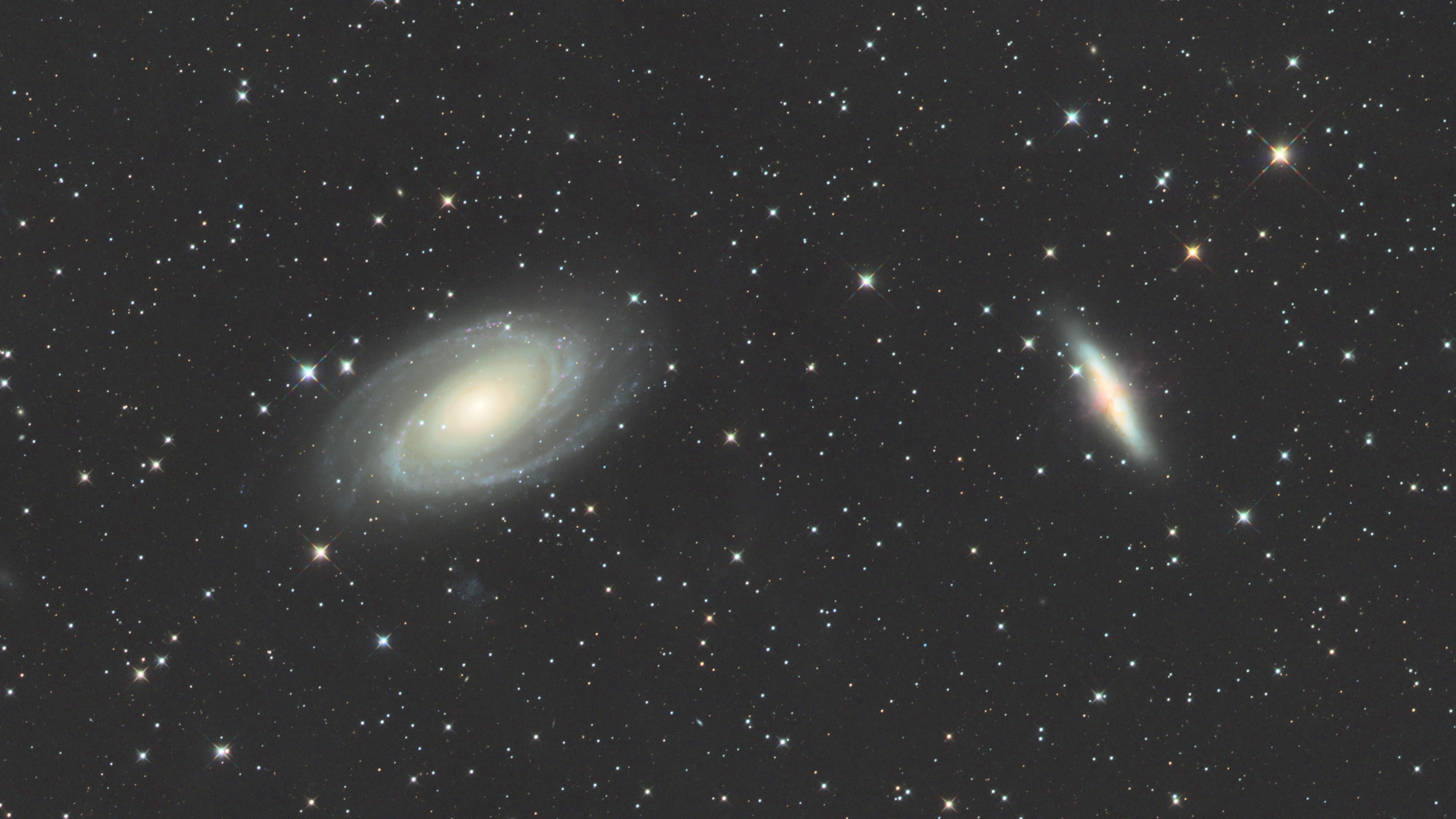
M81- Bode's Galaxy
Approximately 12 million light-years from Earth. M81 is a grand spiral galaxy in the constellation Ursa Major. It's a prominent member of the M81 Group and is known for its spiral arms, which showcase ongoing star formation and contain billions of stars.
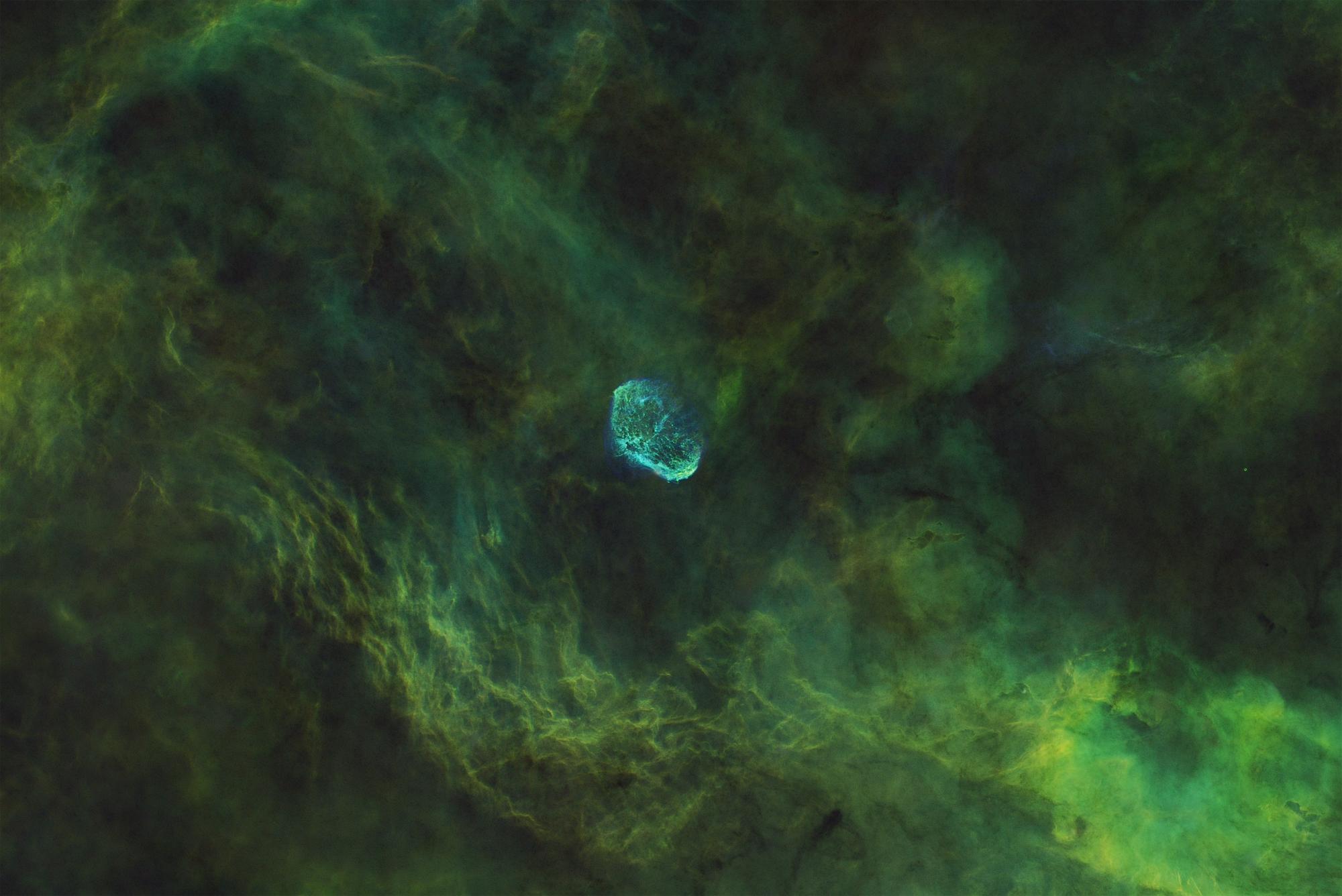
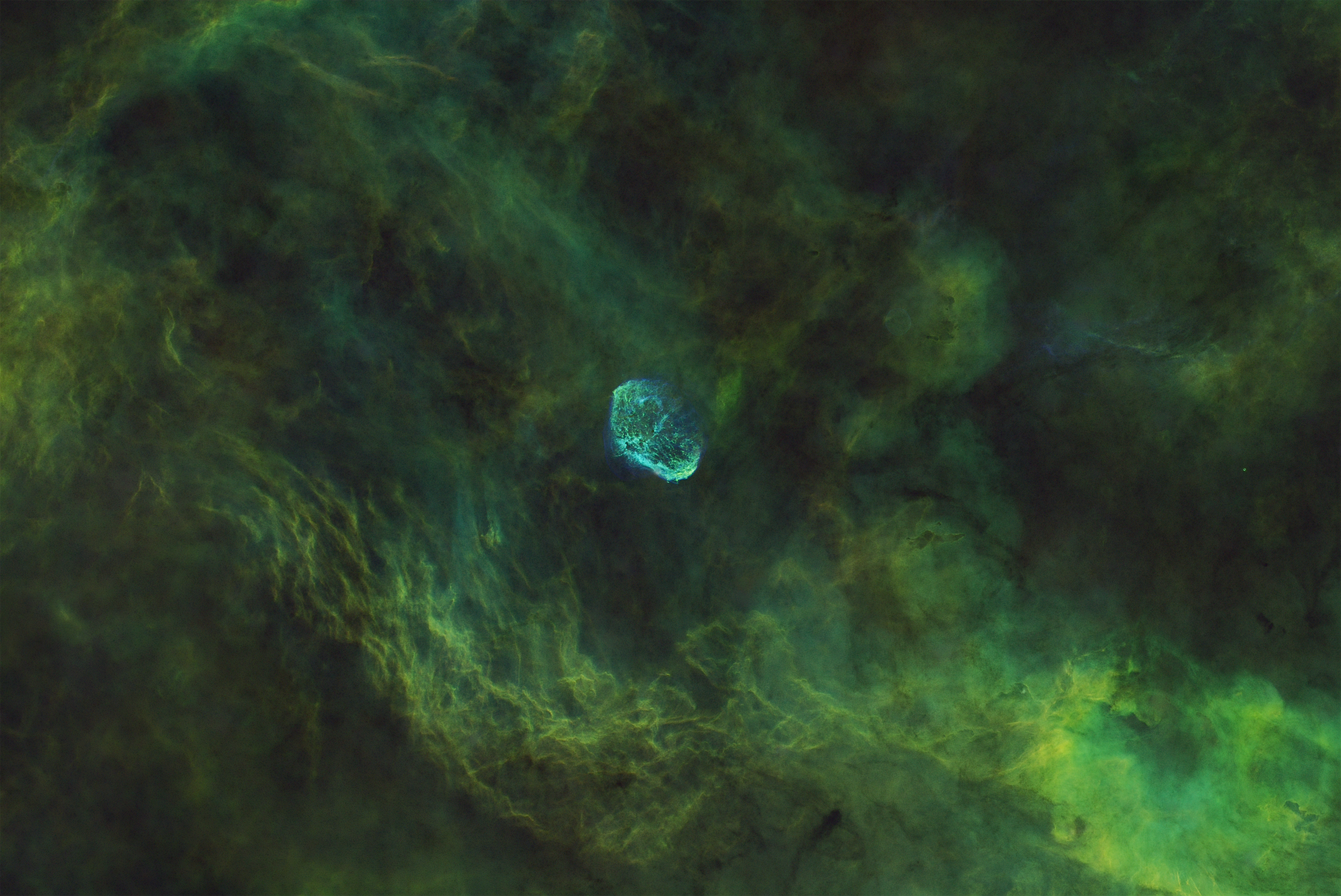
NGC 6888 -SHO- Crescent Nebula
Estimated to be around 5,000 light-years away. NGC 6888 is an emission nebula located in the constellation Cygnus. Shaped like a crescent, it's formed by the stellar wind from a massive Wolf-Rayet star interacting with surrounding interstellar gas.
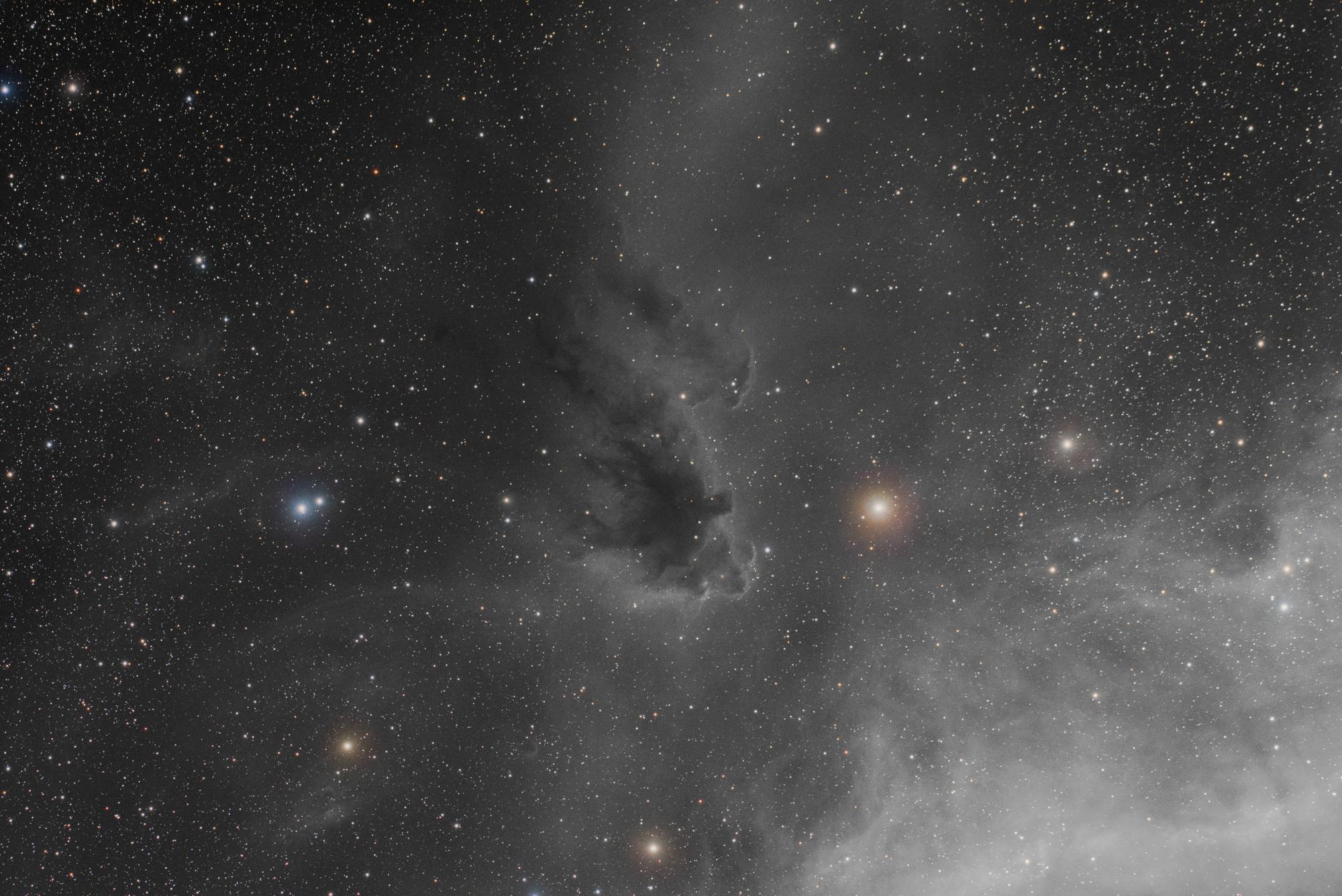
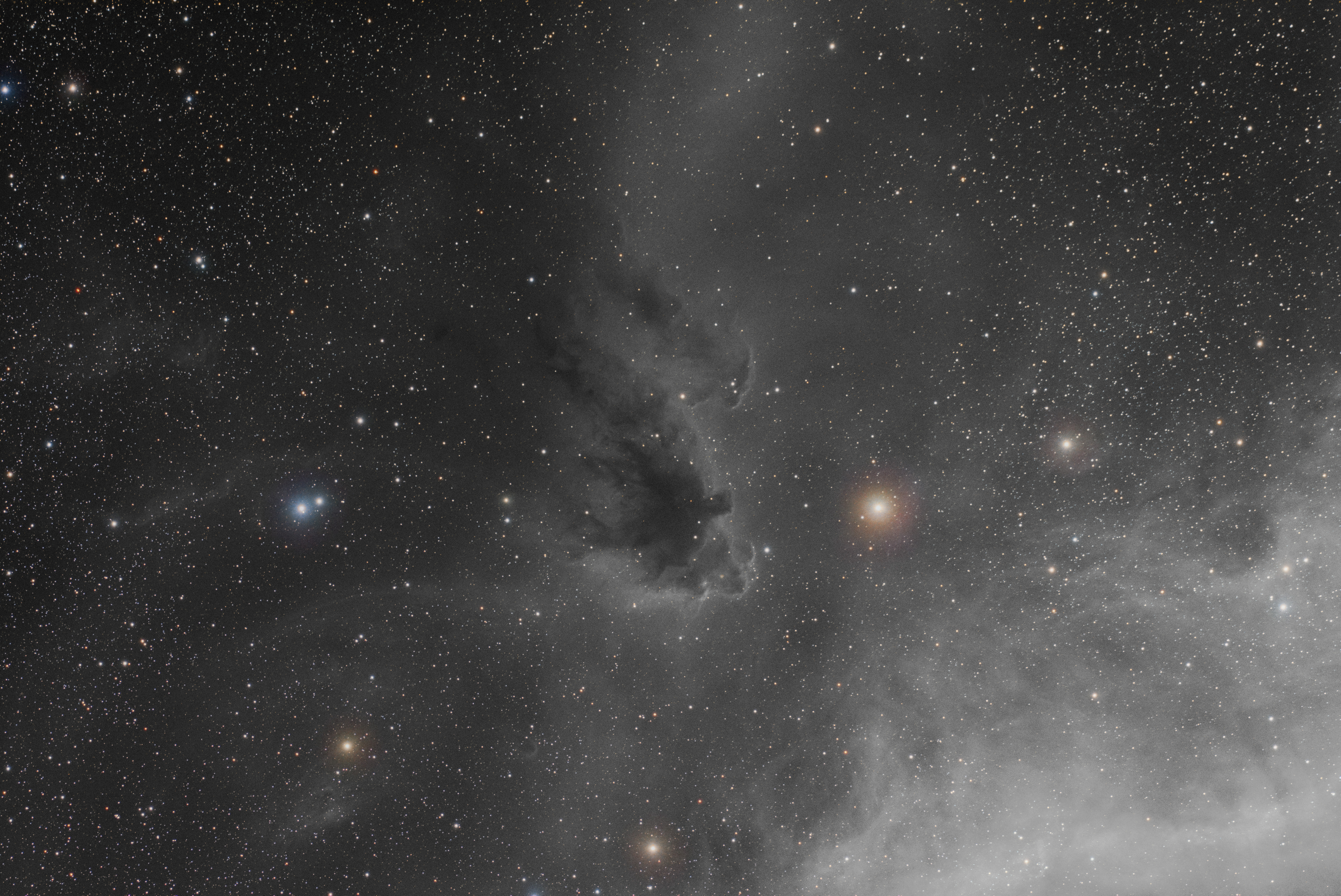
LDN1622- The Boogeyman Nebula
LDN 1622 is a dark nebula in the constellation Orion. It's an opaque cloud of gas and dust that absorbs light from background stars, appearing as a dark patch against the starry background.
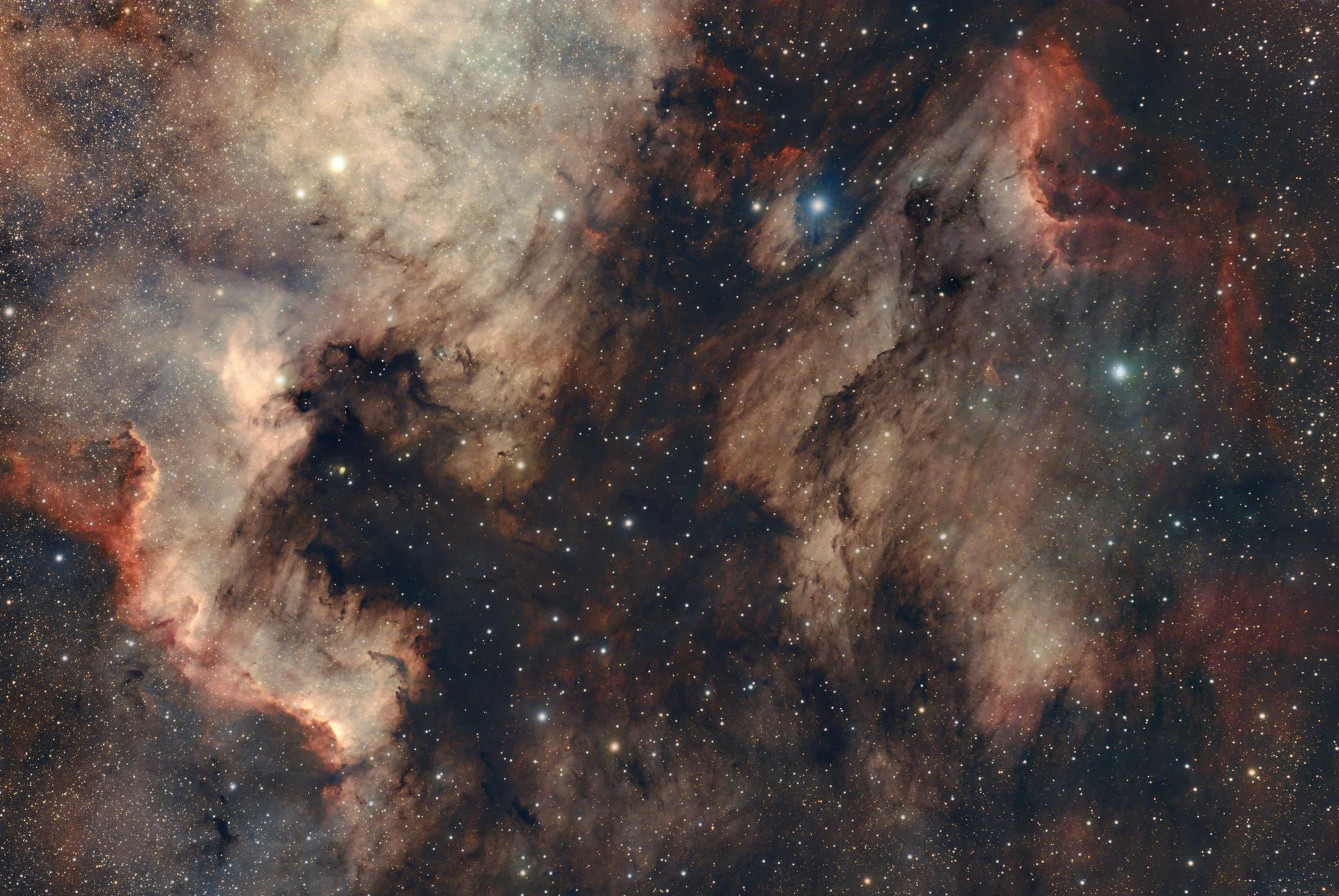
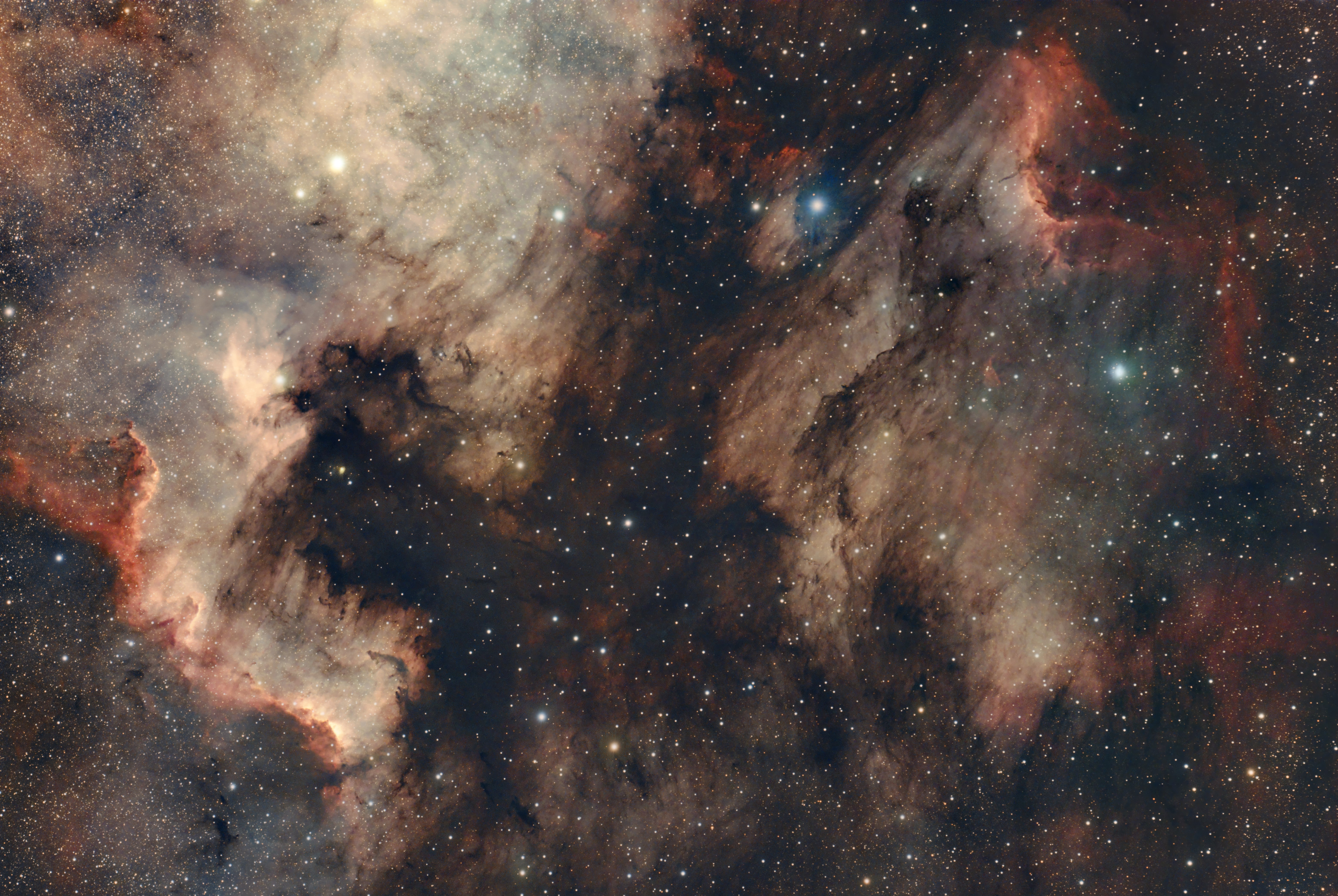
NGC7000- North America Nebula
Roughly 1,600 light-years away from Earth. NGC 7000 is a large emission nebula in the constellation Cygnus, resembling the shape of the North American continent. It's illuminated by young stars and displays intricate patterns of gas and dust.
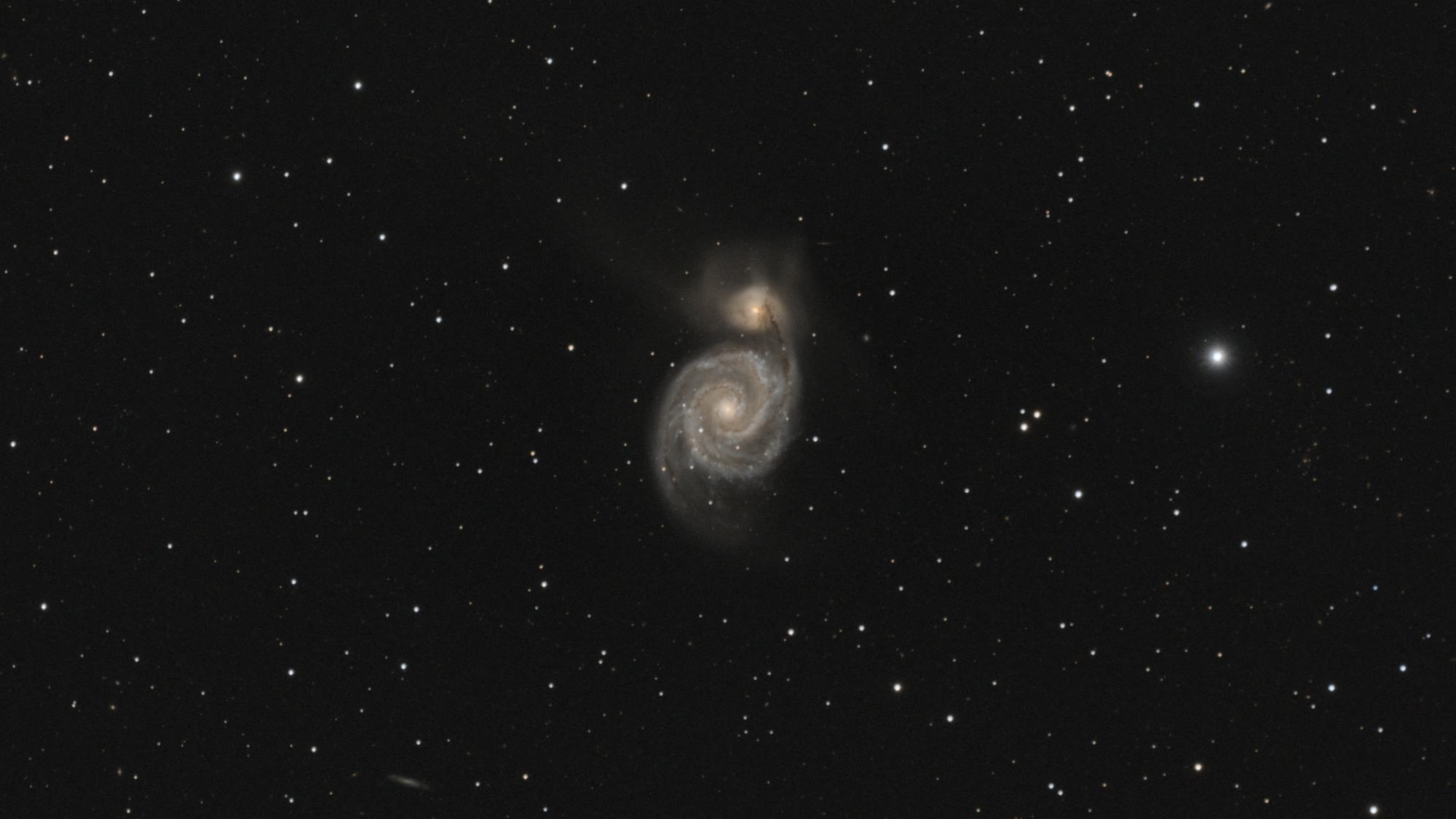
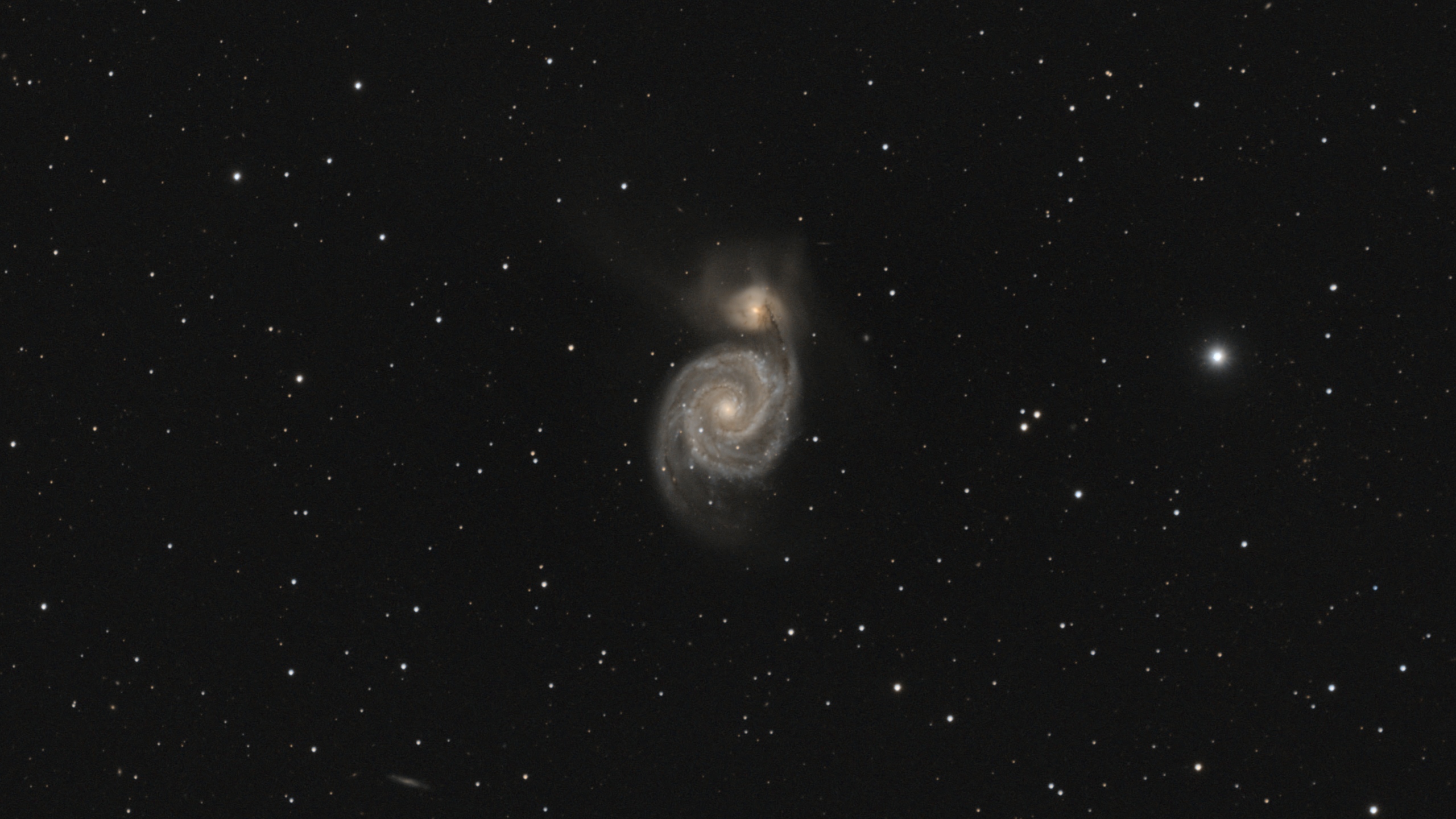
M51- Whirlpool Galaxy
Approximately 23 million light-years from Earth. M51 is a spiral galaxy found in the constellation Canes Venatici. It's famous for its interacting companion galaxy, NGC 5195, creating a spectacular display of spiral arms and ongoing gravitational interactions.
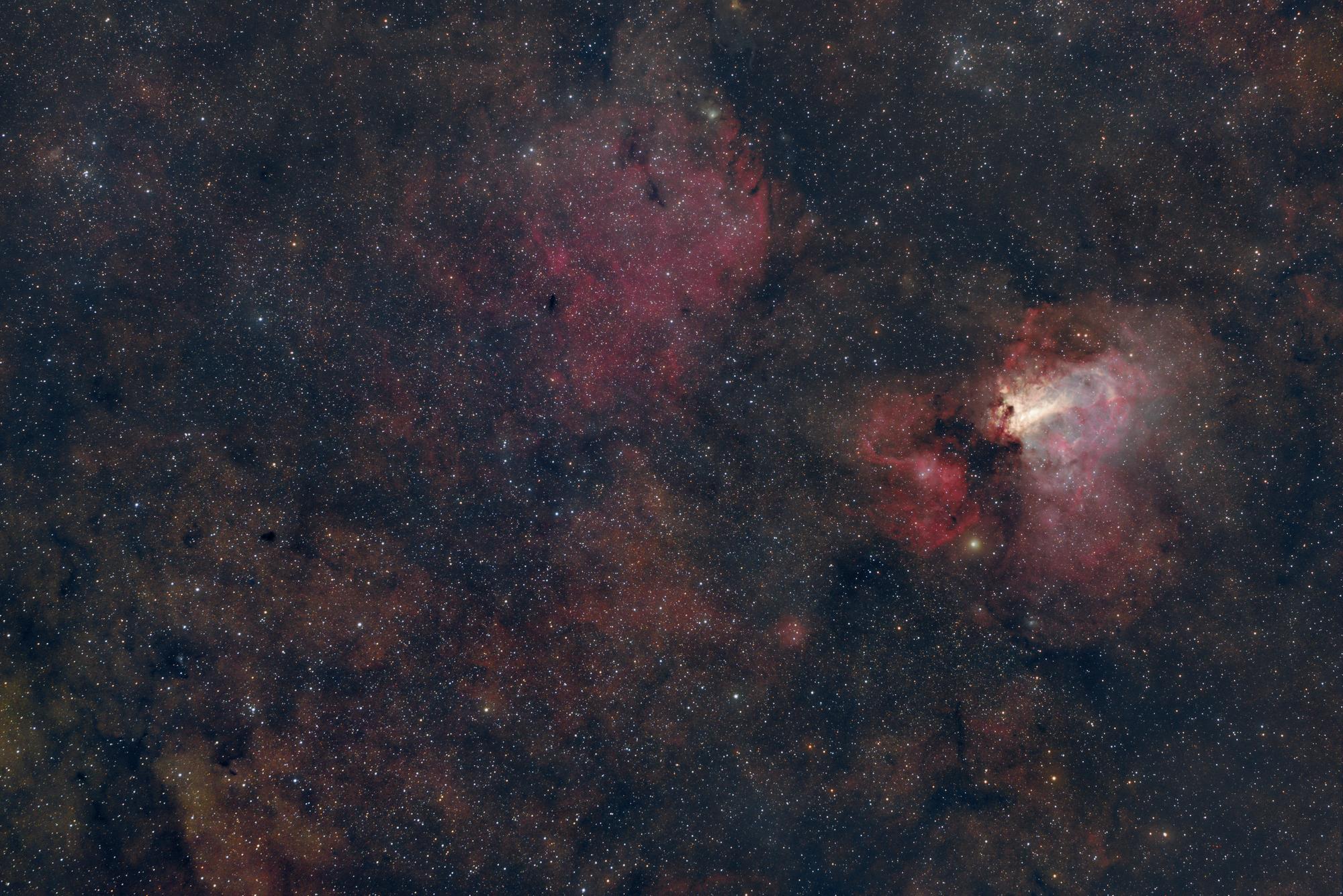
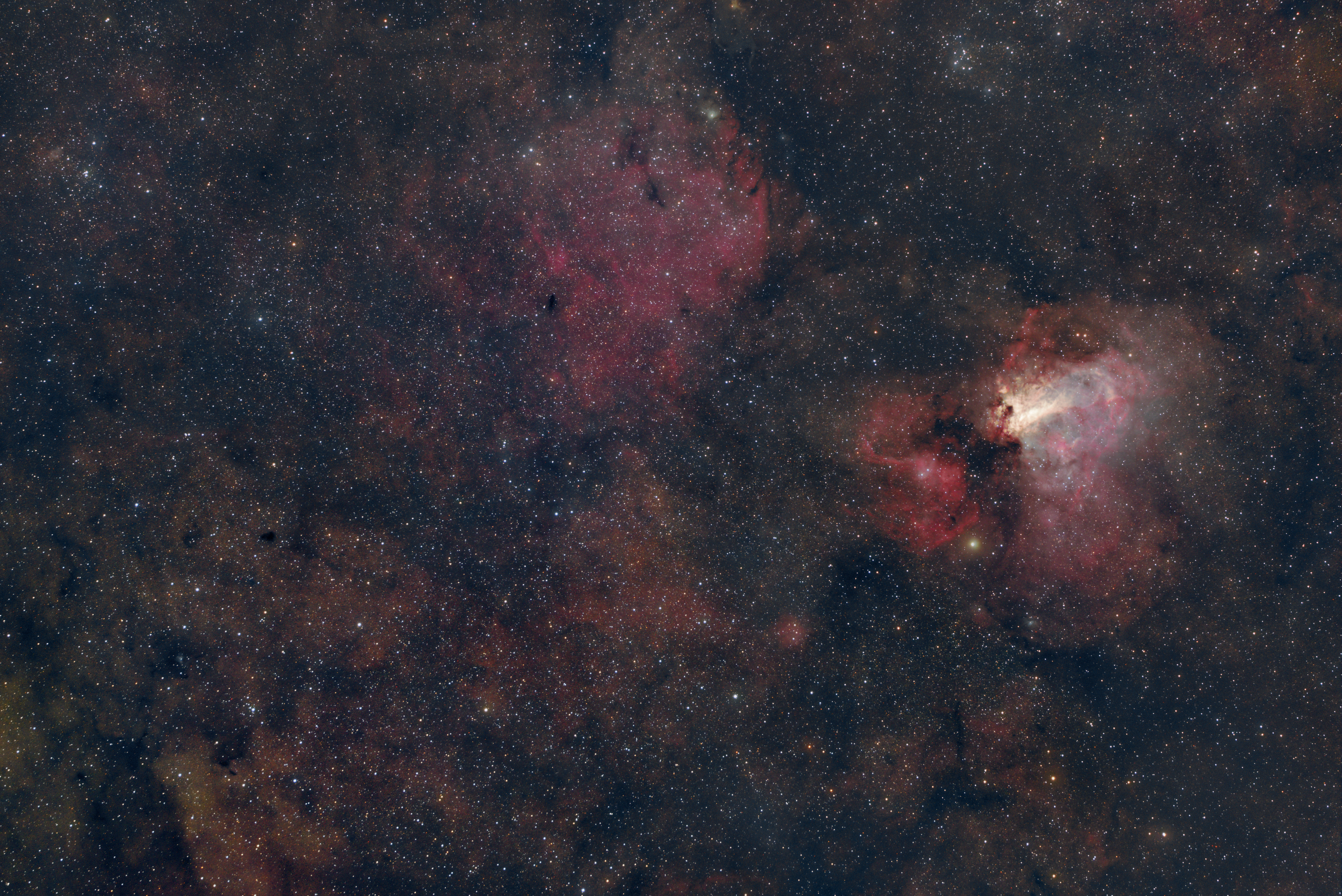
M17- Omega Nebula
Approximately 5,000 to 6,000 light-years away. M17 is a bright emission nebula in the constellation Sagittarius. It's known for its distinctive shape resembling the Greek letter omega or a swan and hosts a cluster of young stars actively forming within its gas and dust clouds.
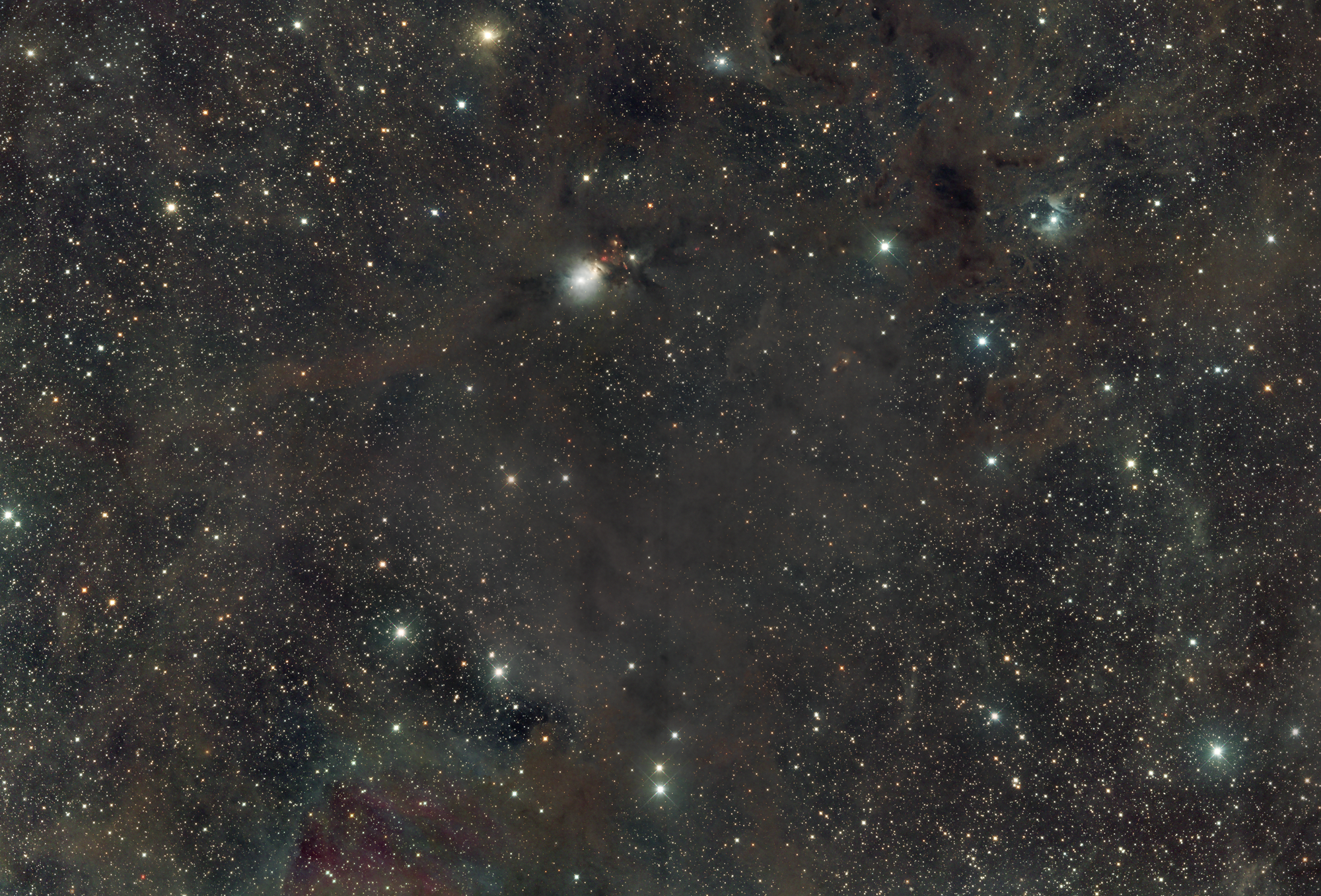
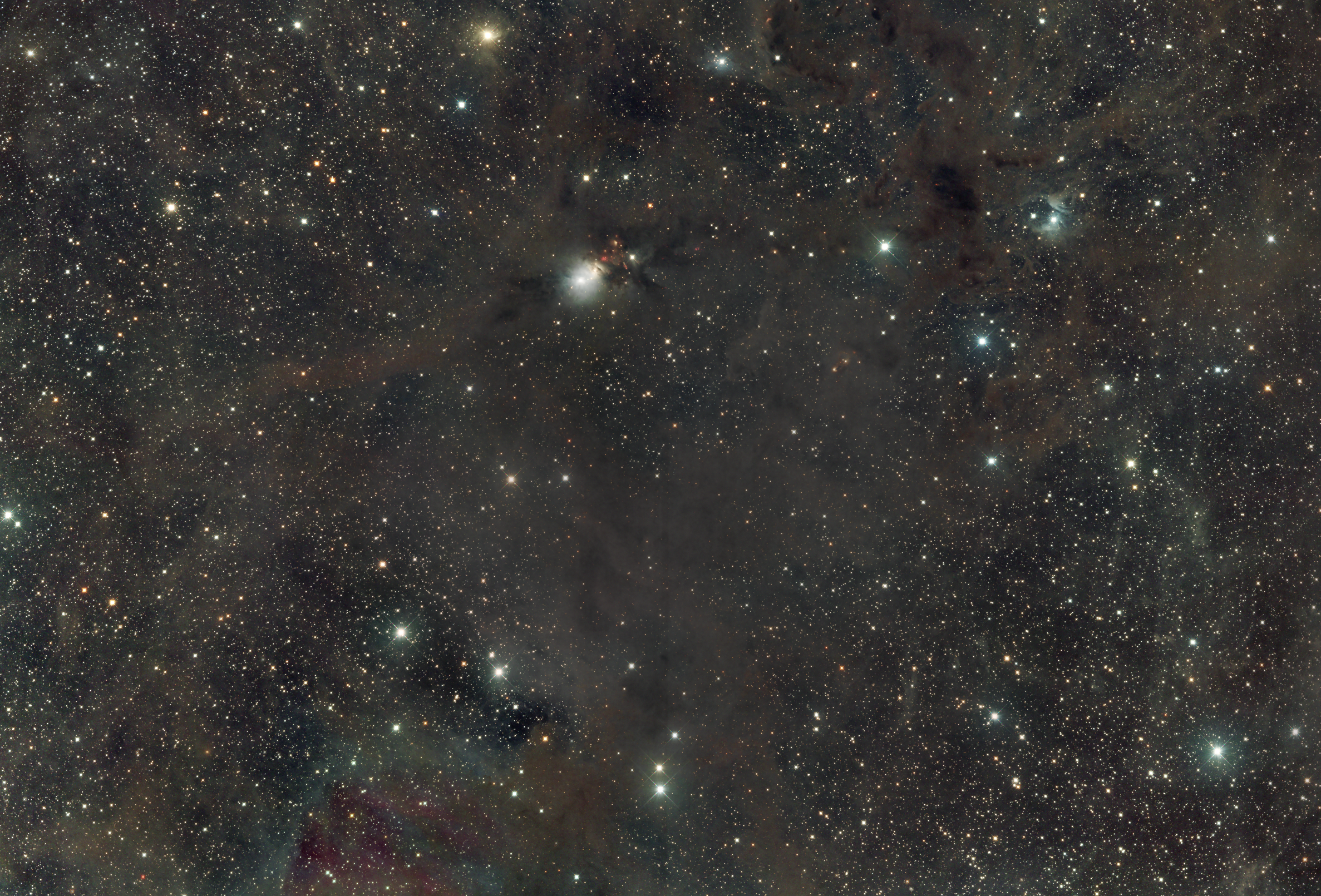
NGC1333
Estimated to be around 1,000 light-years from Earth. NGC 1333 is a reflection nebula and star-forming region found in the constellation Perseus. It contains a cluster of young stars embedded in a cloud of gas and dust, where new stars are being born.
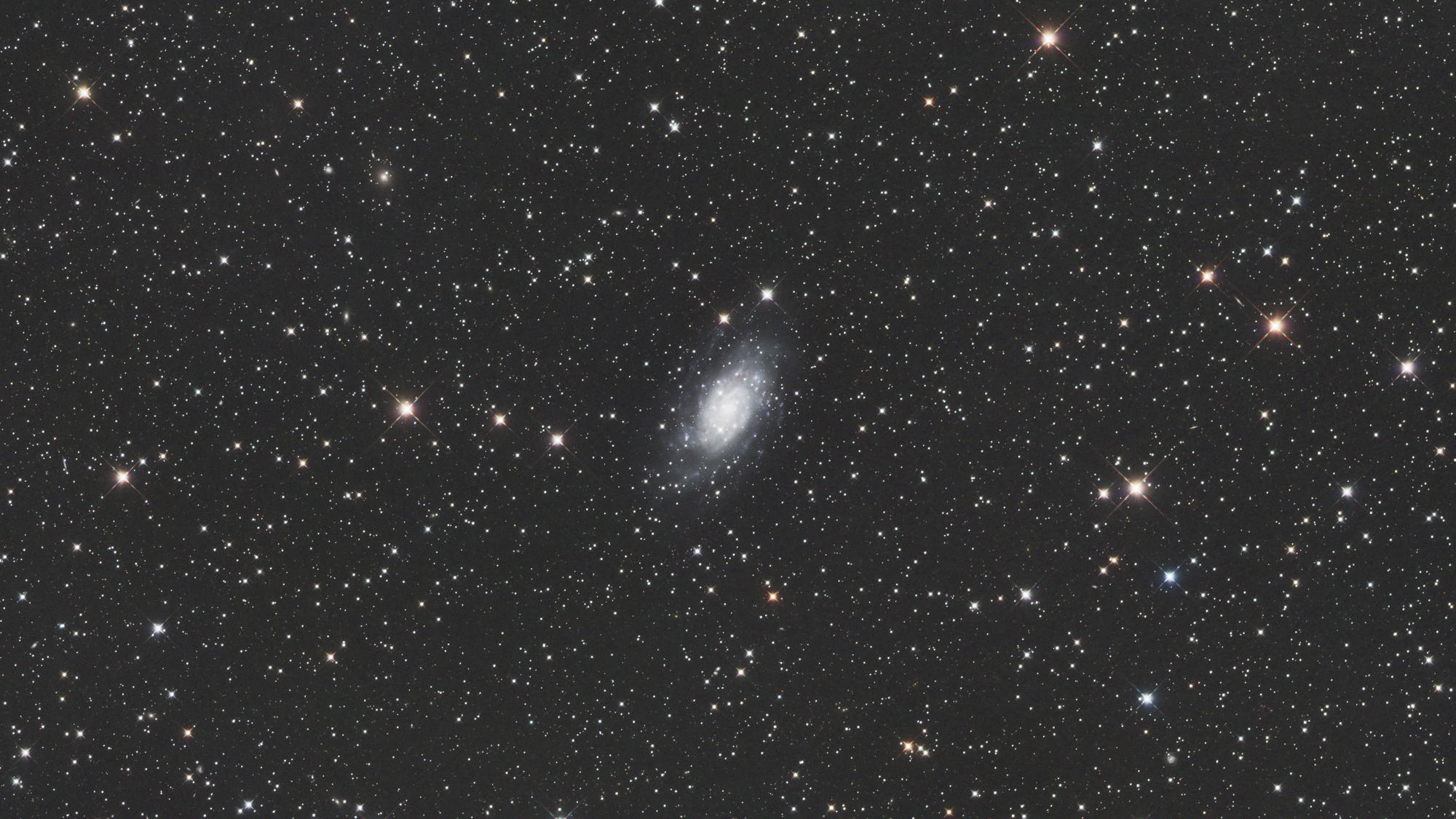
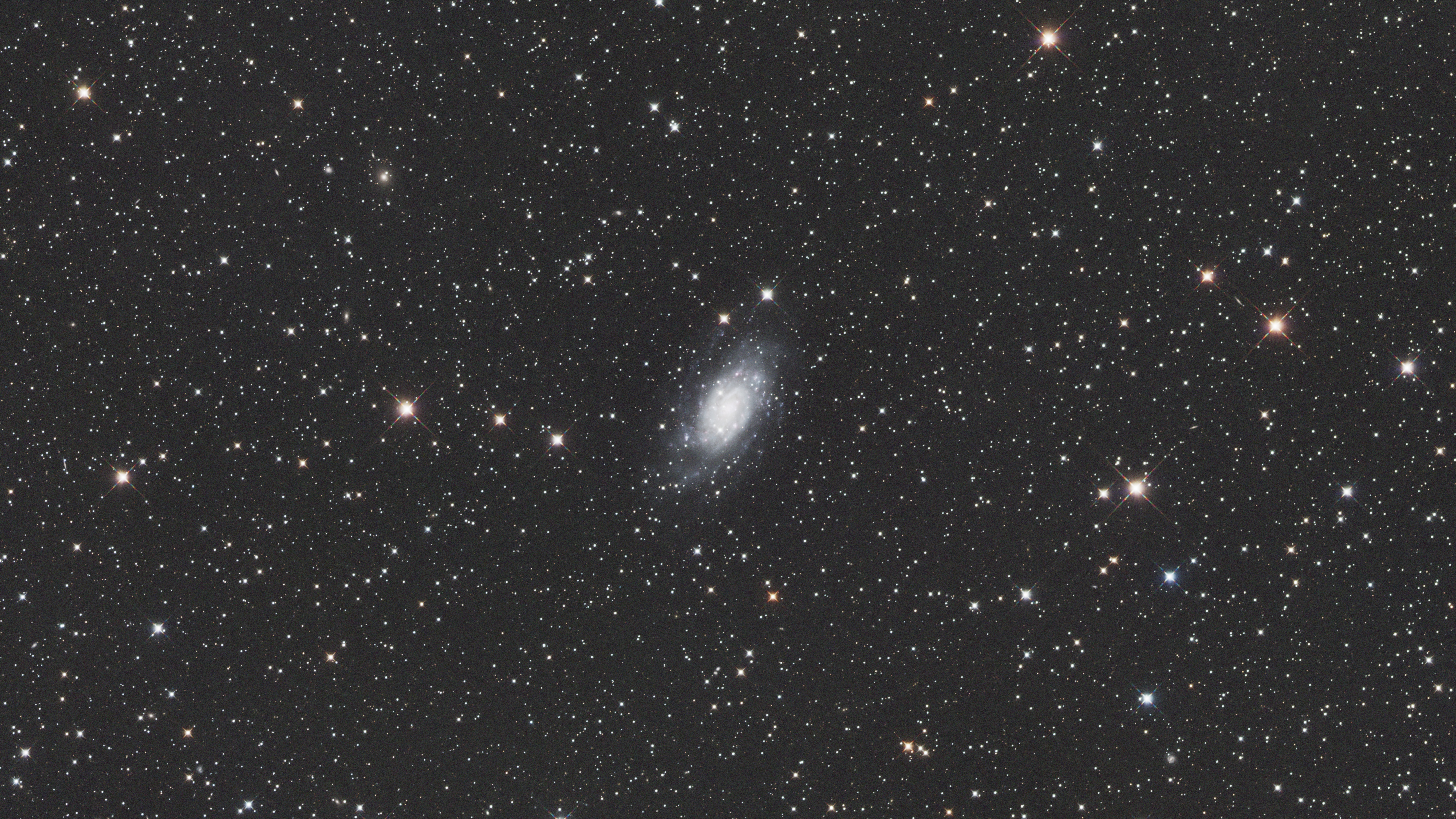
NGC2403
NGC 2403 is an intermediate spiral galaxy in the constellation Camelopardalis. It is an outlying member of the M81 Group, and is approximately 8 million light-years distant. It bears a similarity to M33, being about 50,000 light years in diameter and containing numerous star-forming H II regions

M66/ M65/ NGC3628- The Leo Triplet
The Leo Triplet (also known as the M66 Group) is a small group of galaxies about 35 million light-years away[5] in the constellation Leo. This galaxy group consists of the spiral galaxies M65, M66, and NGC 3628.
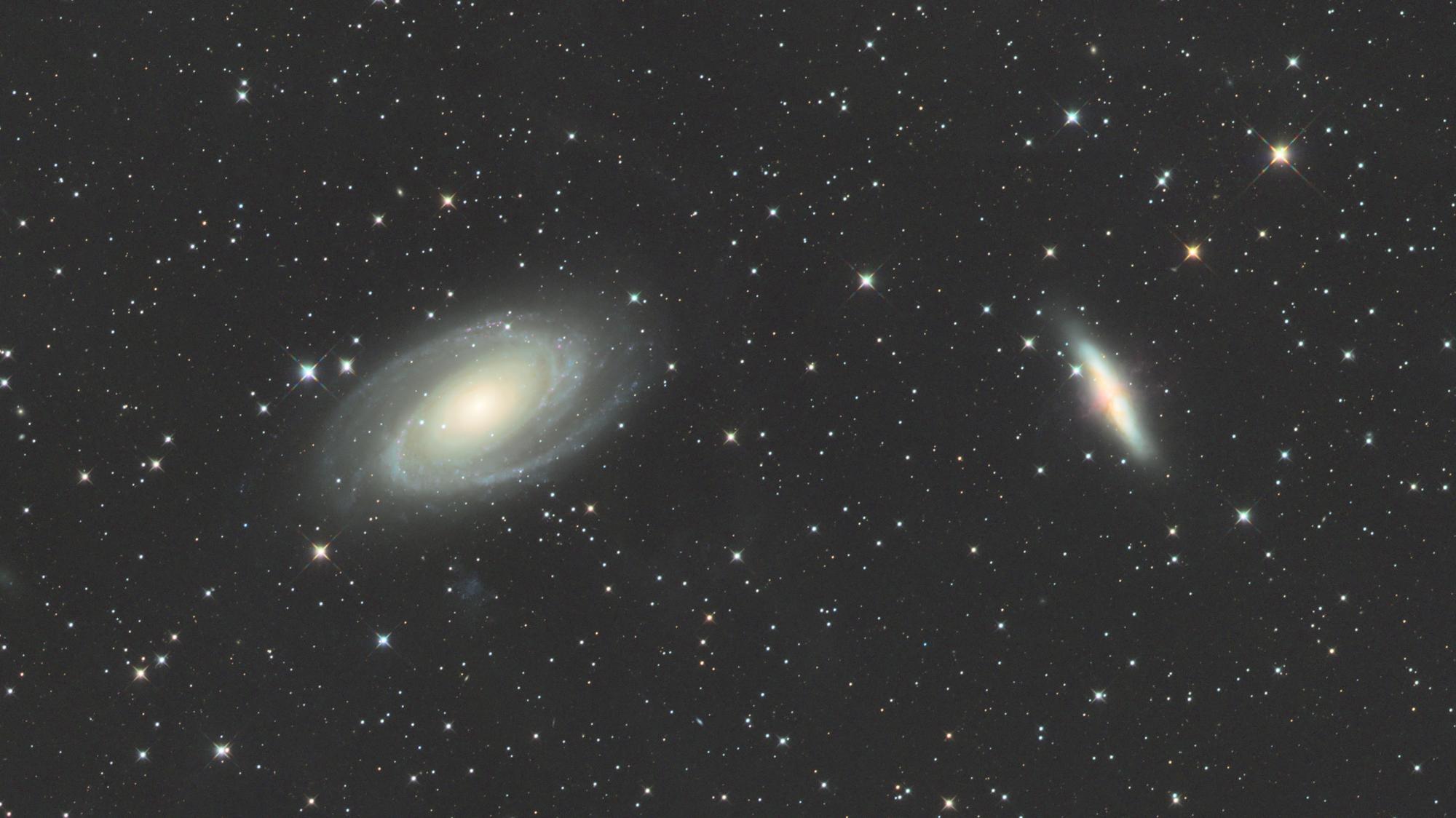
M81- Bode's Galaxy
Approximately 12 million light-years from Earth. M81 is a grand spiral galaxy in the constellation Ursa Major. It's a prominent member of the M81 Group and is known for its spiral arms, which showcase ongoing star formation and contain billions of stars.
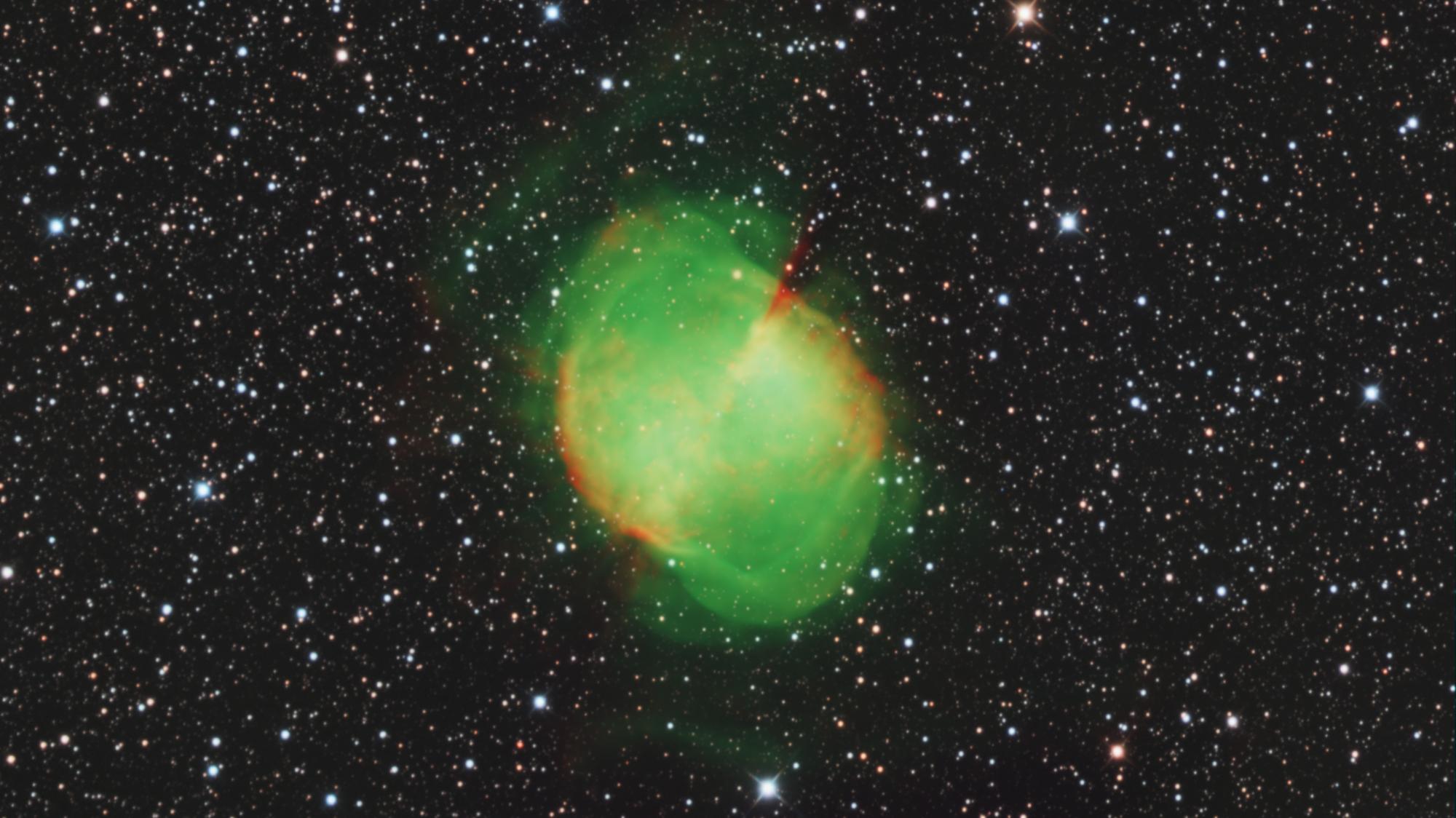
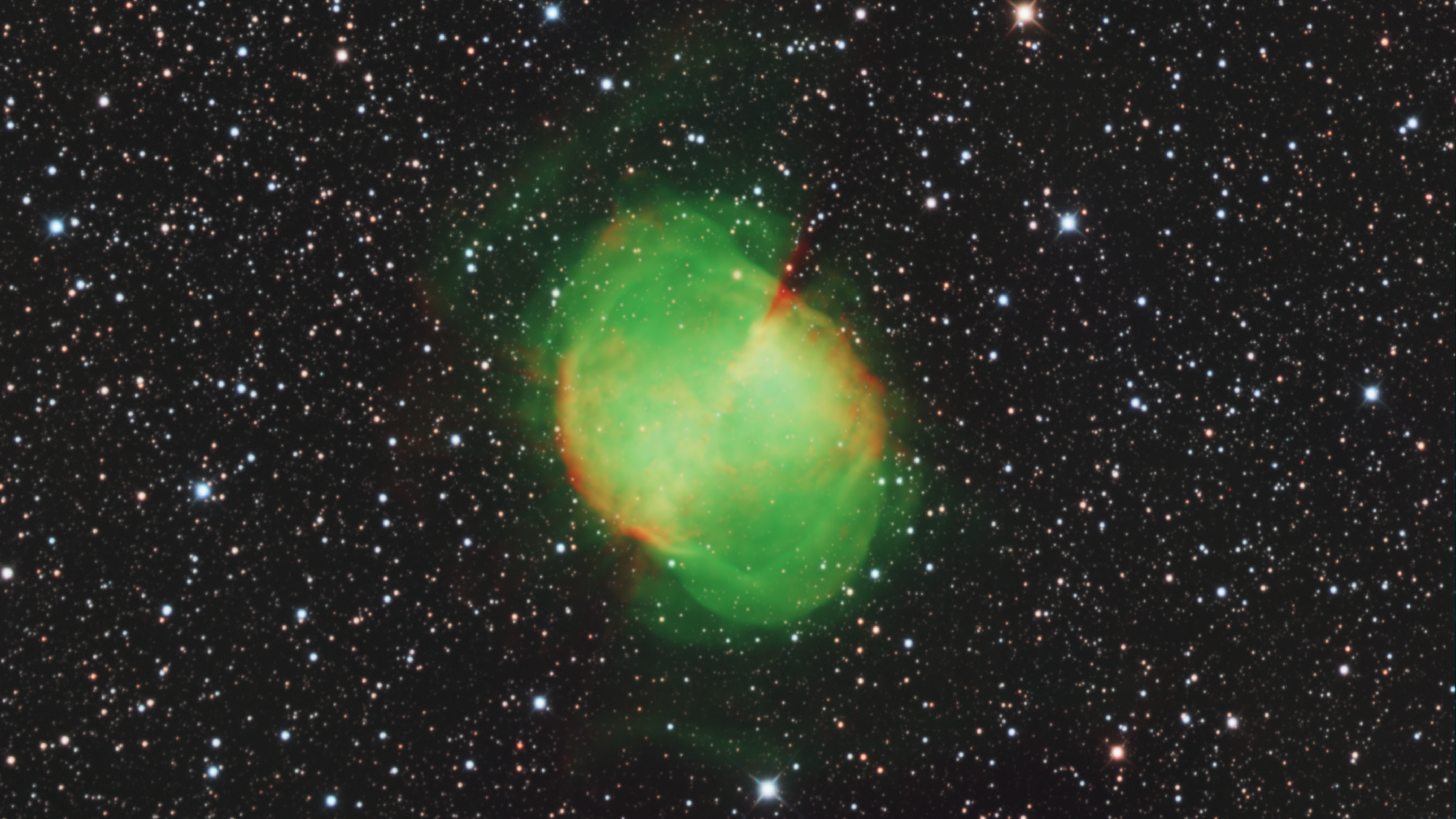
M27- Dumbbell Nebula
The Dumbbell Nebula (also known as the Apple Core Nebula, Messier 27, and NGC 6853) is a planetary nebula (nebulosity surrounding a white dwarf) in the constellation Vulpecula, at a distance of about 1360 light-years.
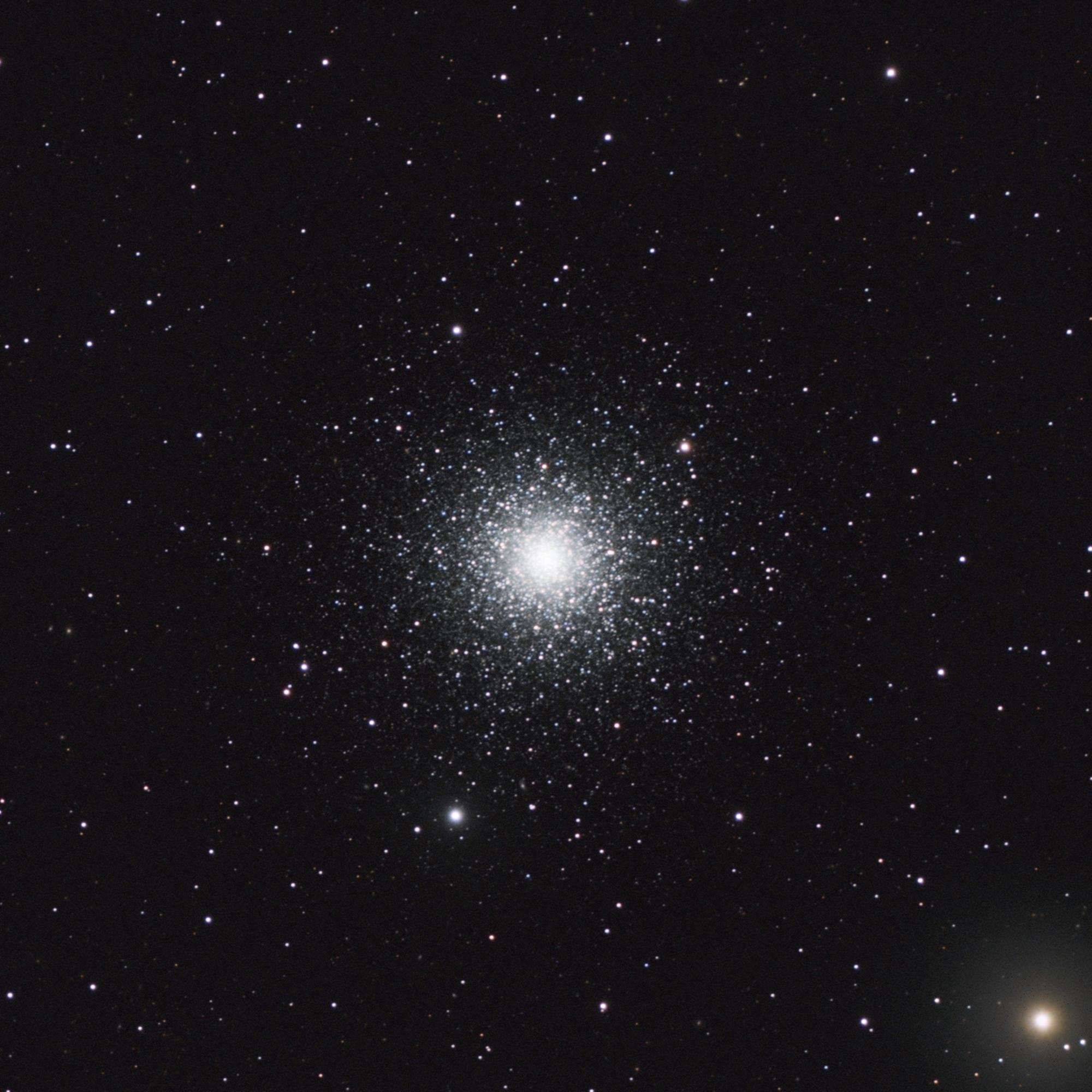
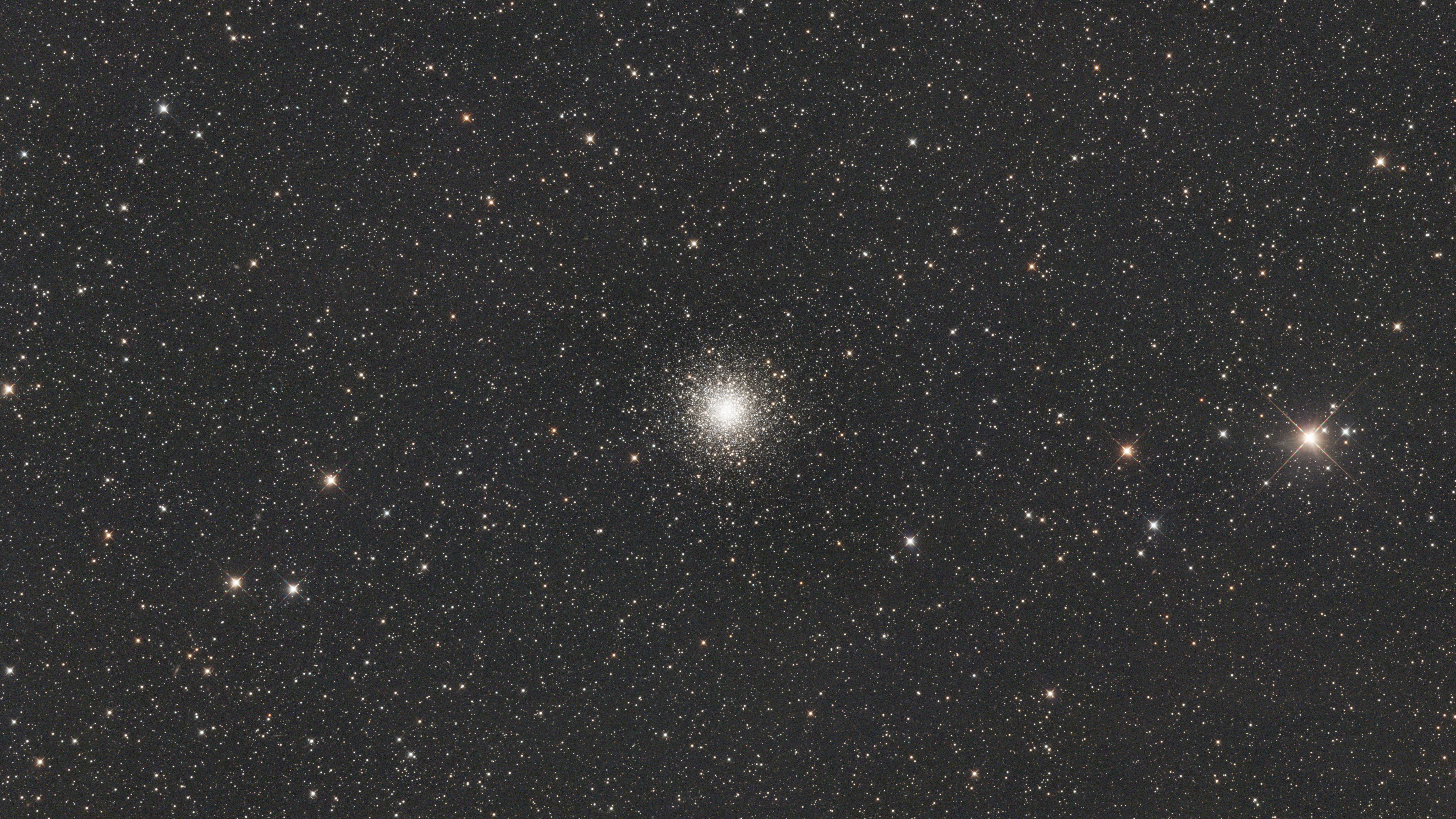
M3
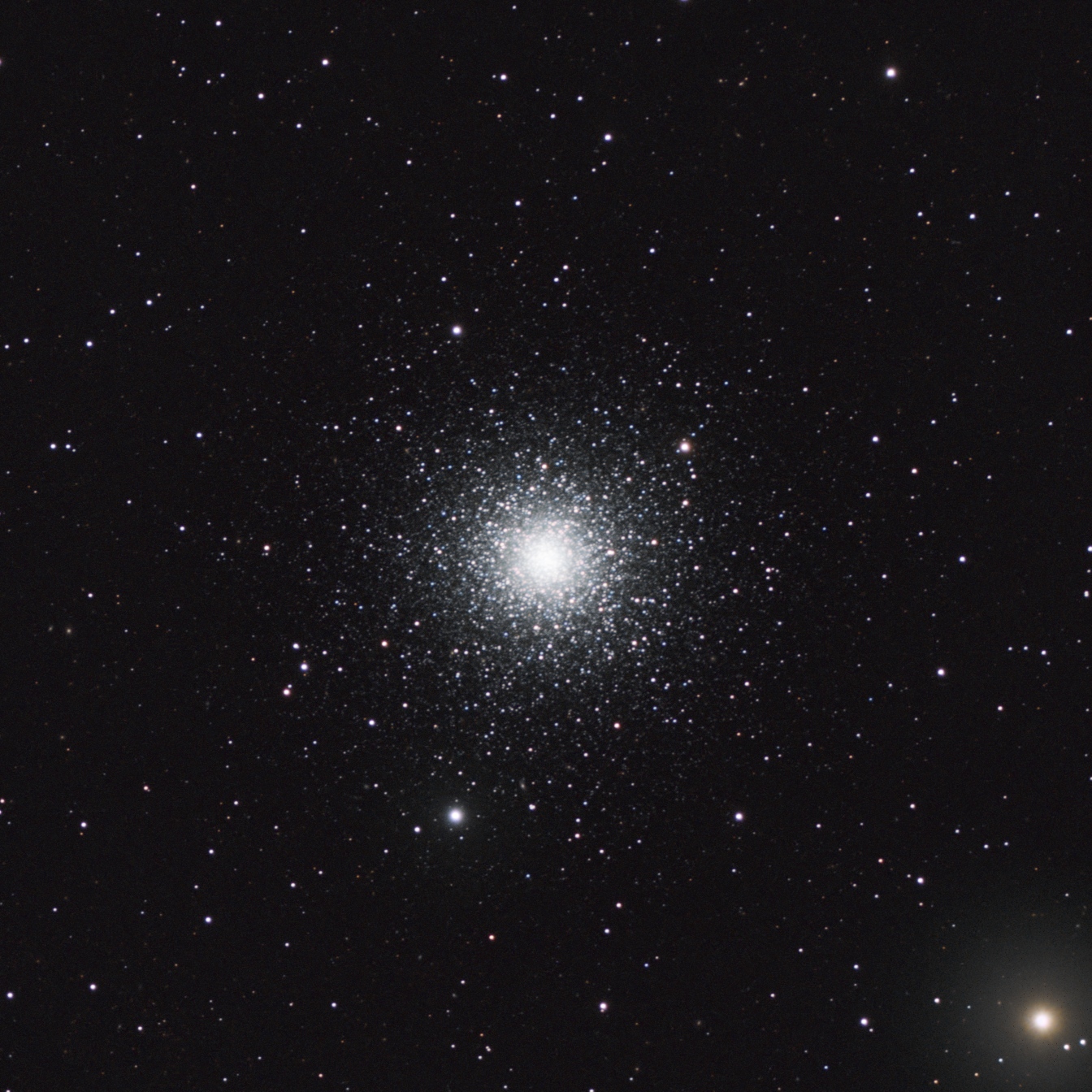
Messier 3 (M3; also NGC 5272) is a globular cluster of stars in the northern constellation of Canes Venatici.This cluster is one of the largest and brightest, and is made up of around 500,000 stars. It is estimated to be 11.4 billion years old. It is centered at 32,600 light-years (10.0 kpc) away from Earth.
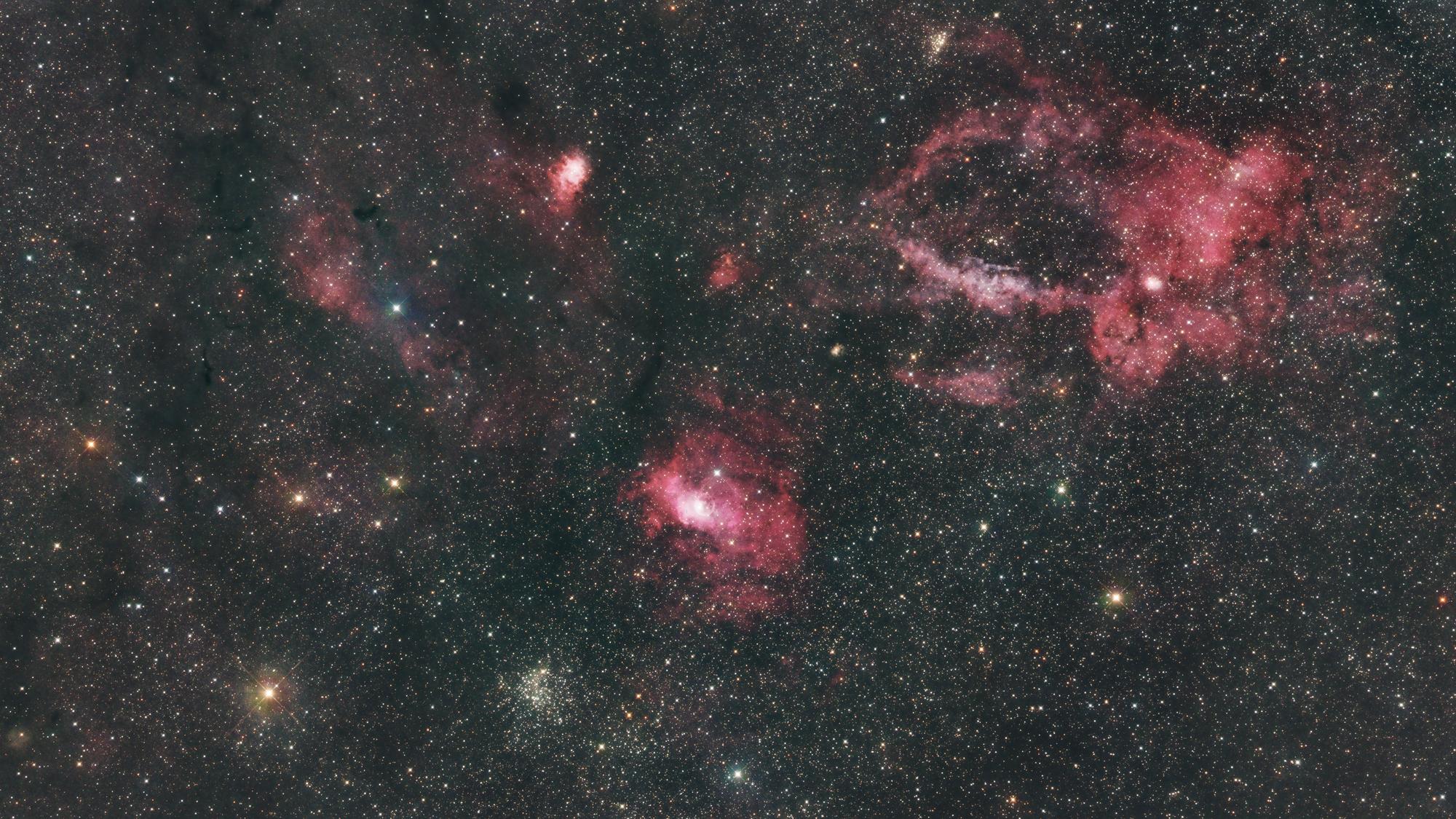
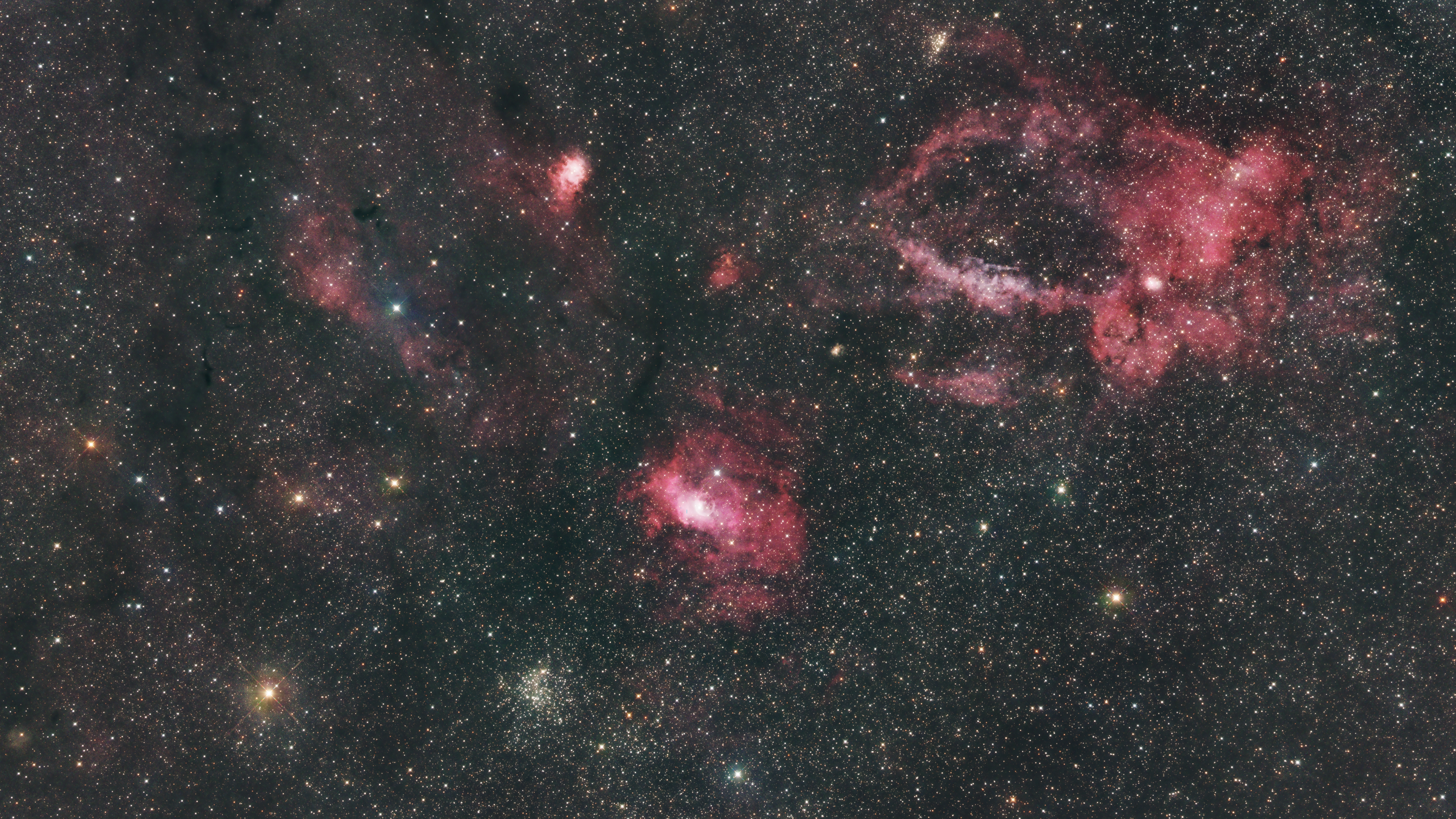
Lobster Claw Nebula - NGC7635/ NGC7654/ Sh2-157/ NGC7510/ NGC7538
NGC 7635, also known as the Bubble Nebula, is an H II region emission nebula in the constellation Cassiopeia. The "bubble" is created by the stellar wind from a massive hot young central star.
NGC 7654, also known as M52 is an open cluster of stars. It has an estimated age of 158.5 million years. Its located bit left and lower from bubble nebula.
In the immediate vicinity of the Bubble Nebula is the Lobster Scissors Nebula, generally referred to as Sh2-157. However, this catalogue designation actually refers to the small, cave-shaped nebula inside the claw. The entire nebula complex is catalogued as LBN540. To the top of the image is a beautiful open star cluster NGC7510. Remarkable is also a quite conspicuous reflection nebula in the upper left area of the image with the designation named NGC 7538.
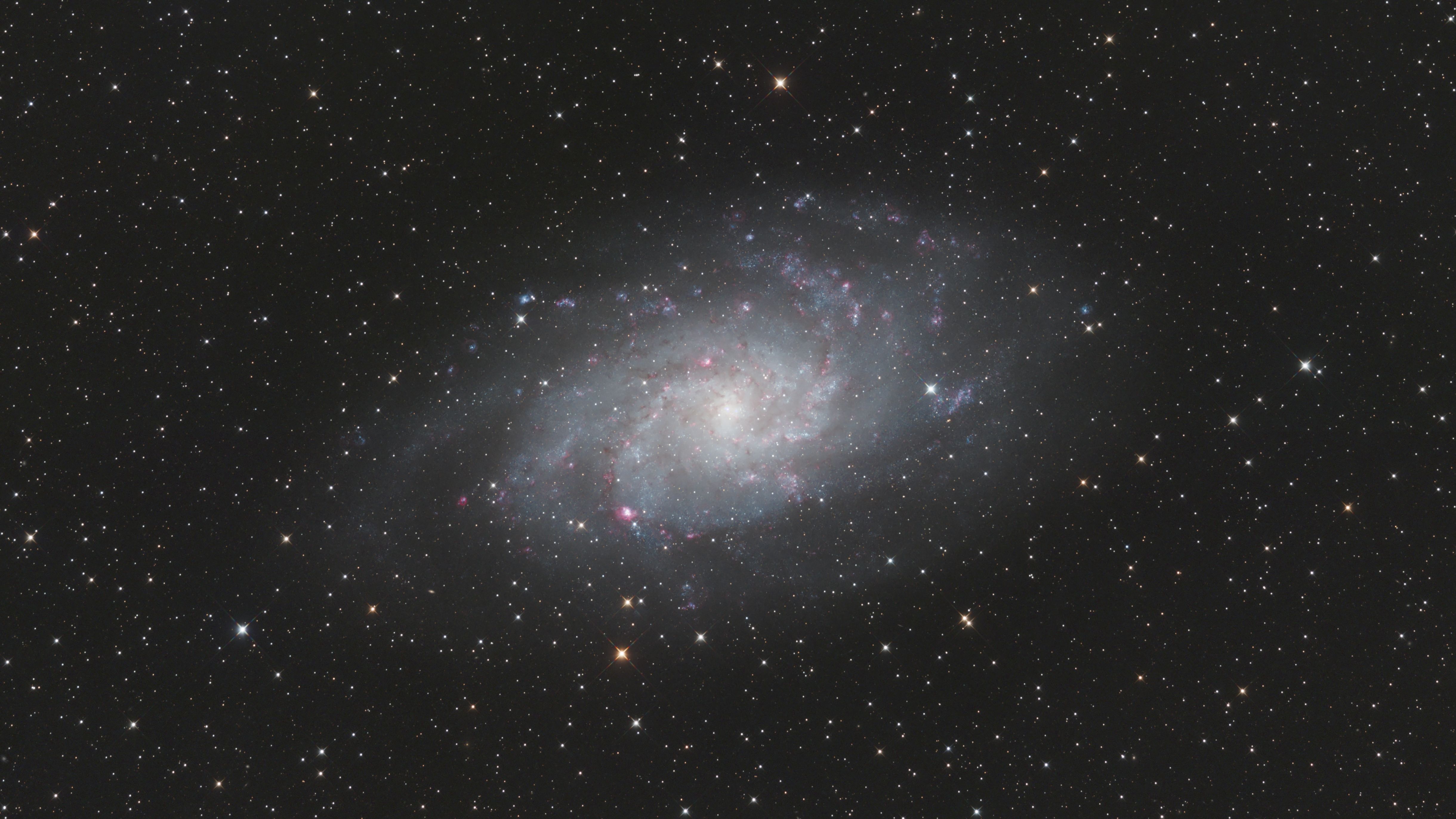
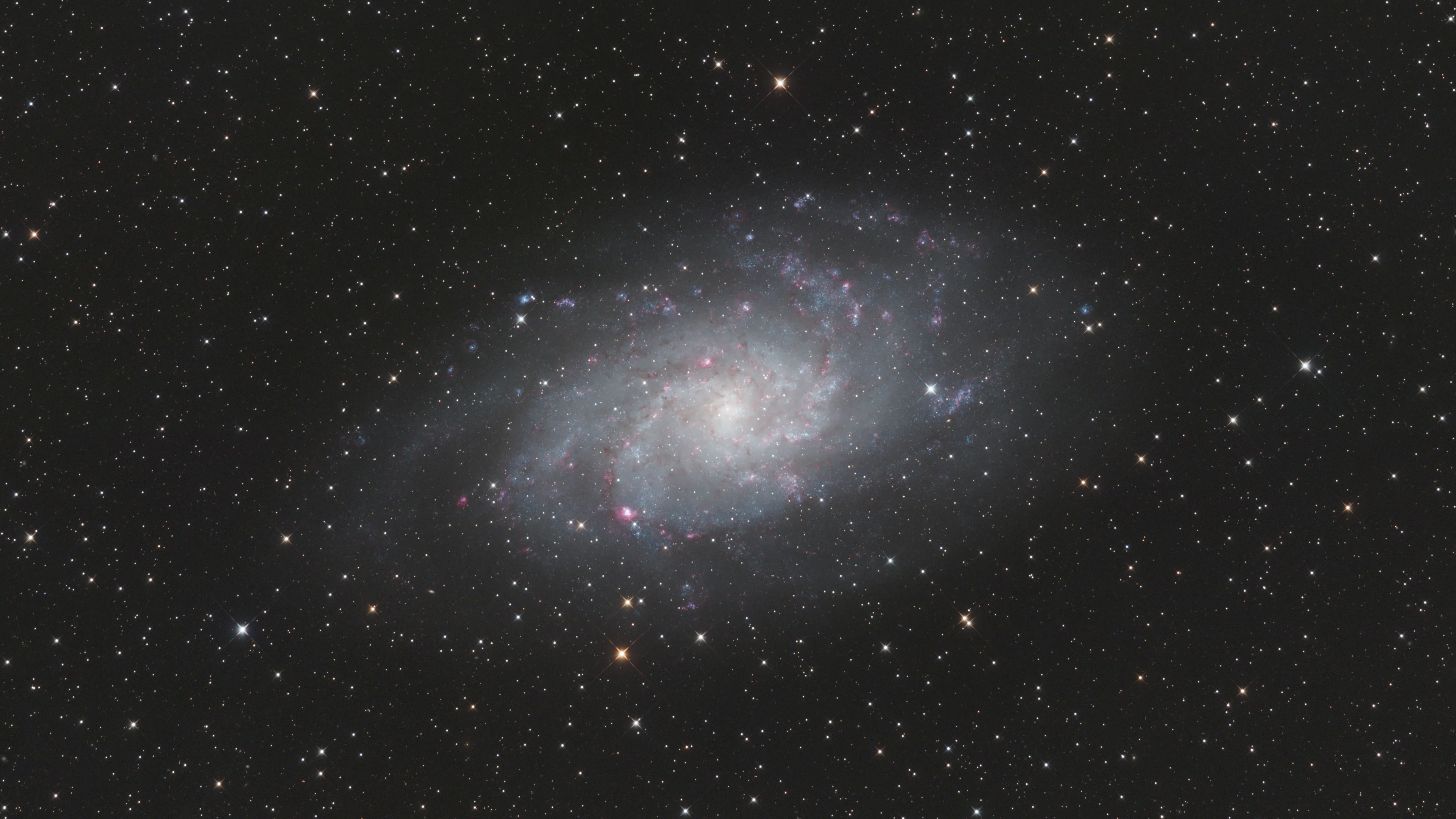
M33 - Triangulum Galaxy
The Triangulum Galaxy is a spiral galaxy 2.73 million light-years (ly) from Earth in the constellation Triangulum.
The galaxy is the smallest spiral galaxy in the Local Group (although the smaller Large and Small Magellanic Clouds may have been spirals before their encounters with the Milky Way), and is believed to be a satellite of the Andromeda Galaxy or on its rebound into the latter due to their interactions, velocities, and proximity to one another in the night sky. It also has an H II nucleus.
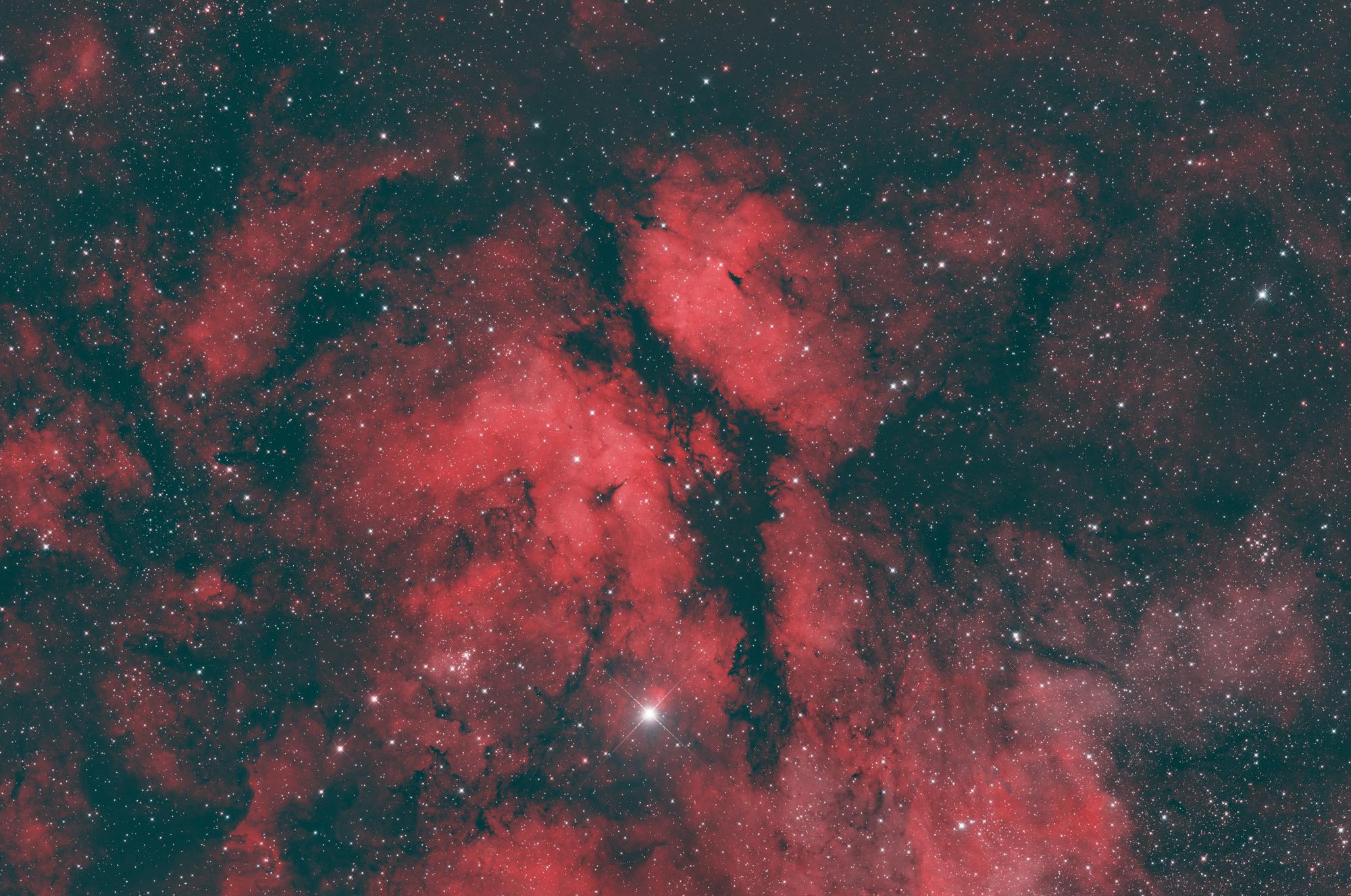
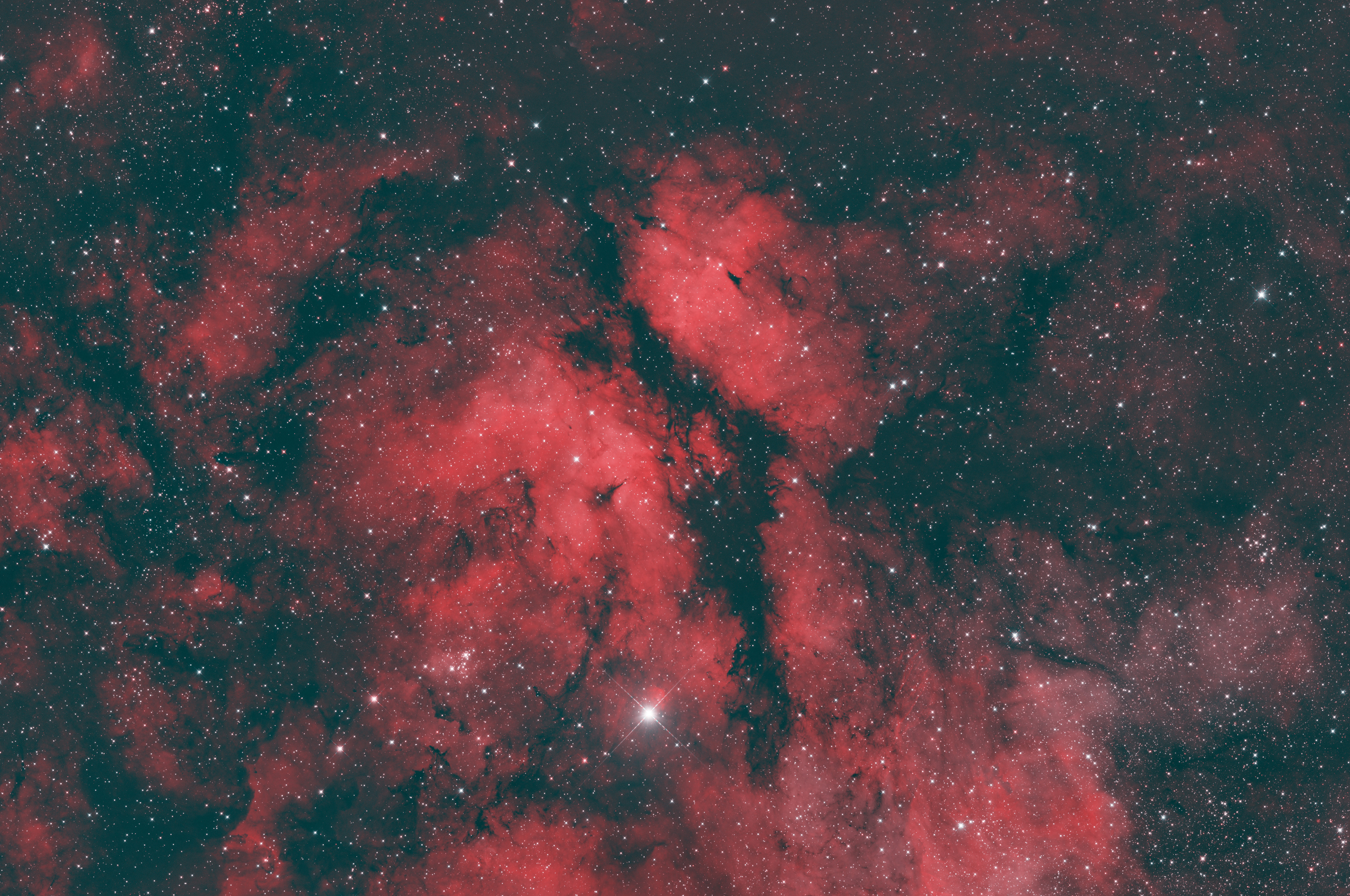
IC1318 HOO- Sadr Region
The Sadr Region (also known as IC 1318 or the Gamma Cygni Nebula) is the diffuse emission nebula surrounding Sadr (γ Cygni) at the center of Cygnus's cross
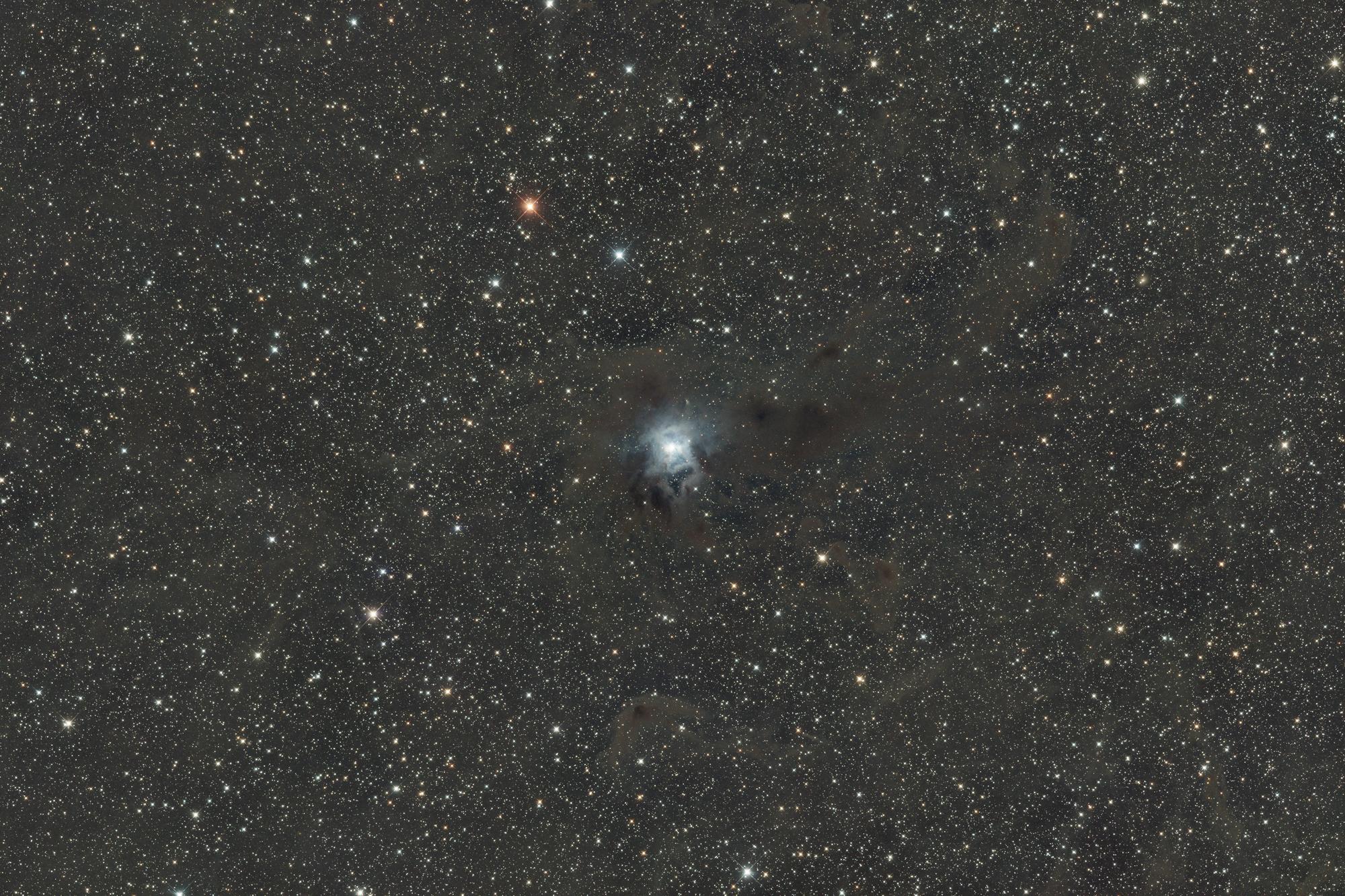
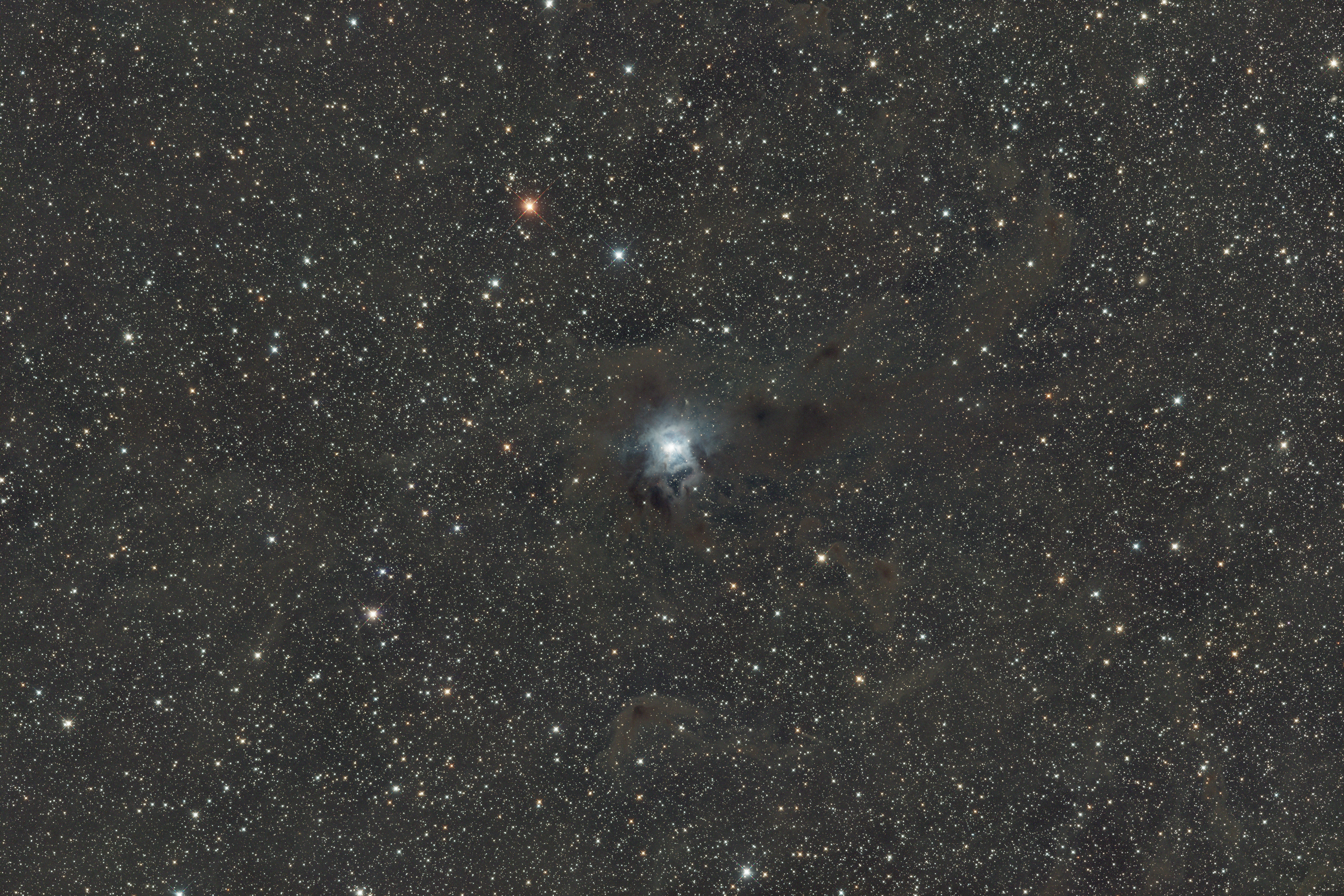
NGC 7023 - Iris Nebula
The Iris Nebula (also known as NGC 7023 and Caldwell 4) is a bright reflection nebula in the constellation Cepheus. The designation NGC 7023 refers to the open cluster within the larger reflection nebula designated LBN 487.
The nebula, which shines at magnitude +6.8, is illuminated by a magnitude +7.4 star designated HD 200775. It is located near the Mira-type variable star T Cephei, and near the bright magnitude +3.23 variable star Beta Cephei (Alfirk). It lies 1,300 light-years away and is six light-years across.
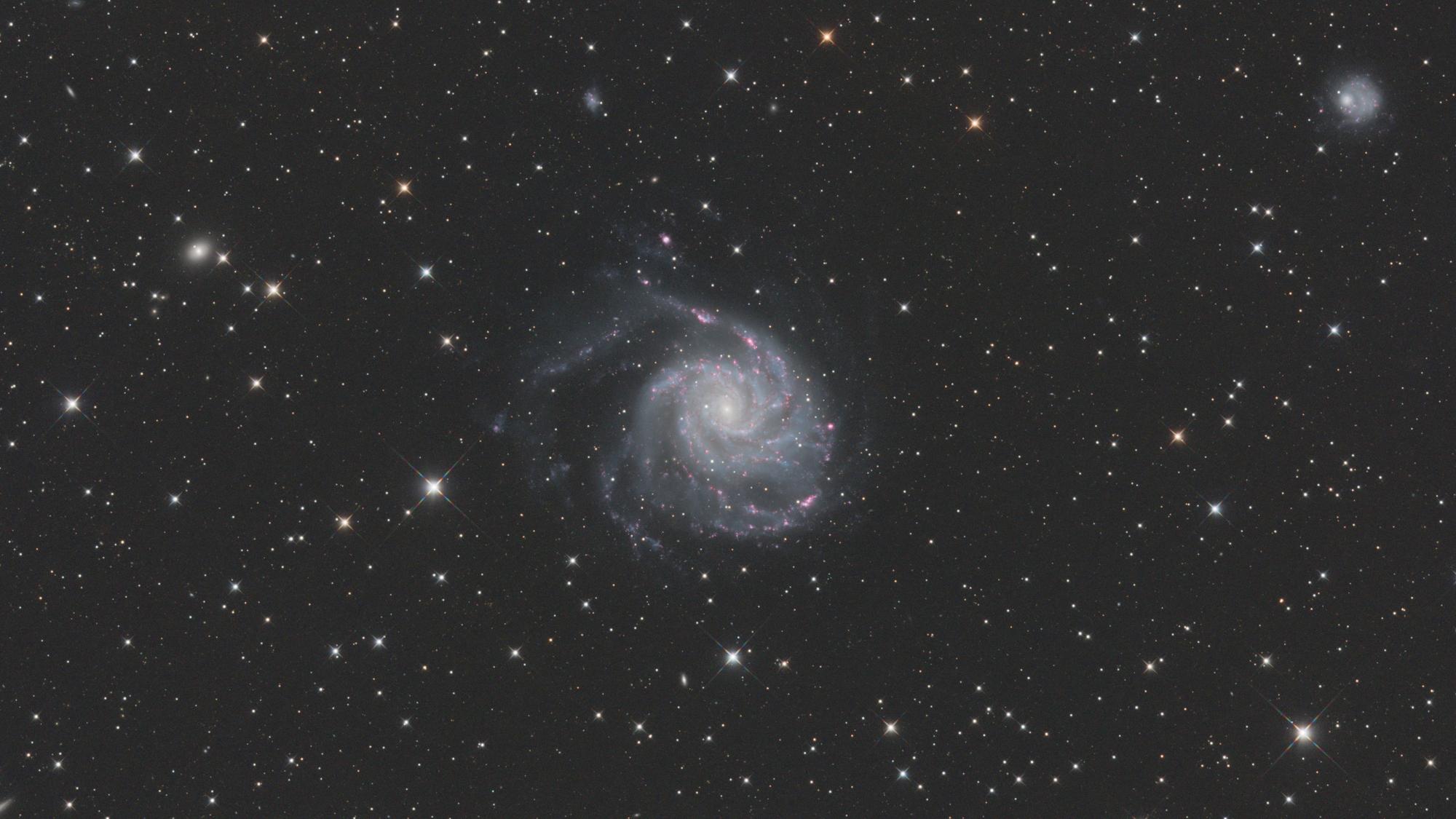
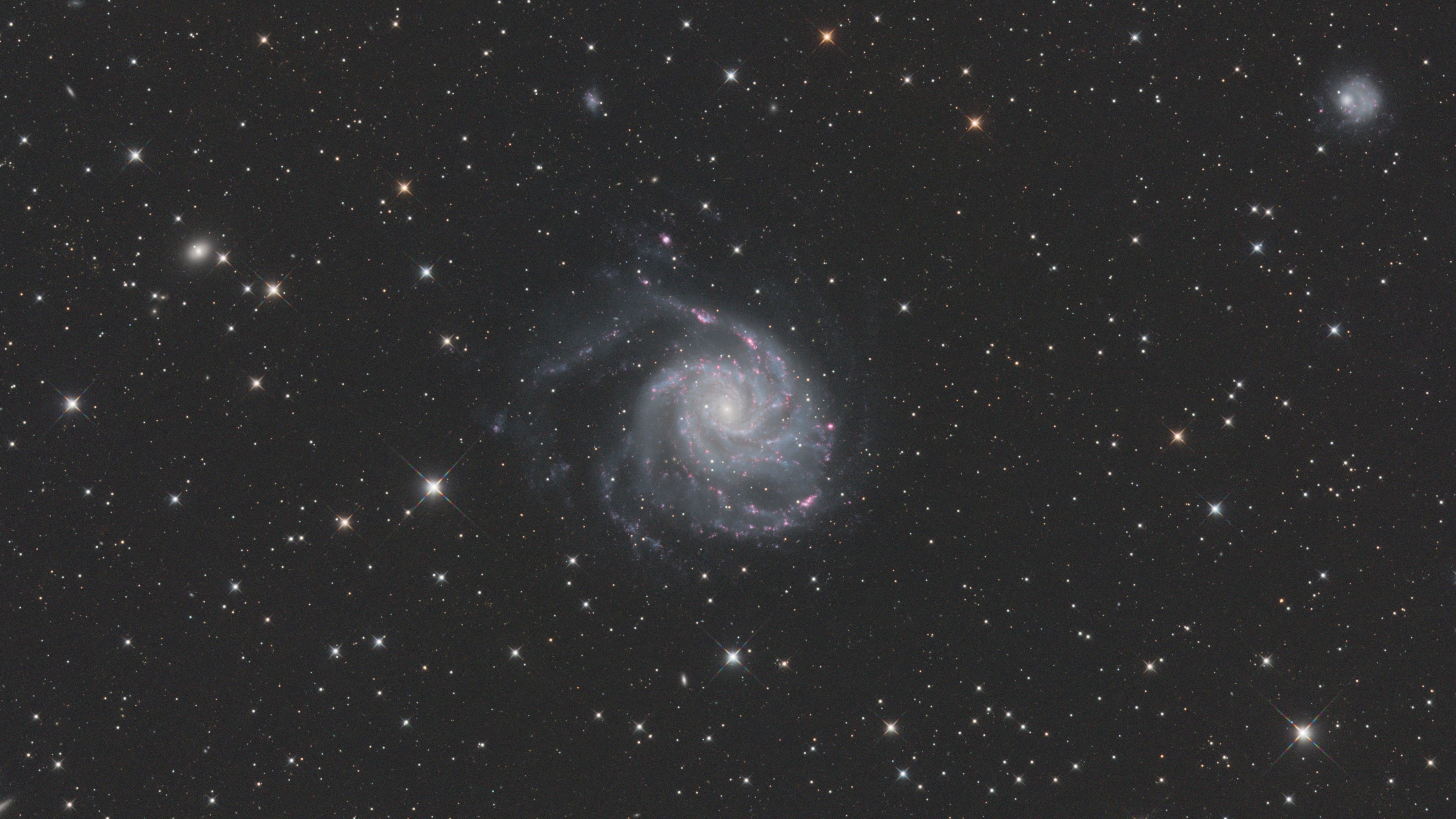
M101 RGB +Ha - Pinwheel Galaxy
The Pinwheel Galaxy (also known as Messier 101, M101 or NGC 5457) is a face-on, unbarred, and counterclockwise spiral galaxy located 21 million light-years (6.4 megaparsecs)from Earth in the constellation Ursa Major.
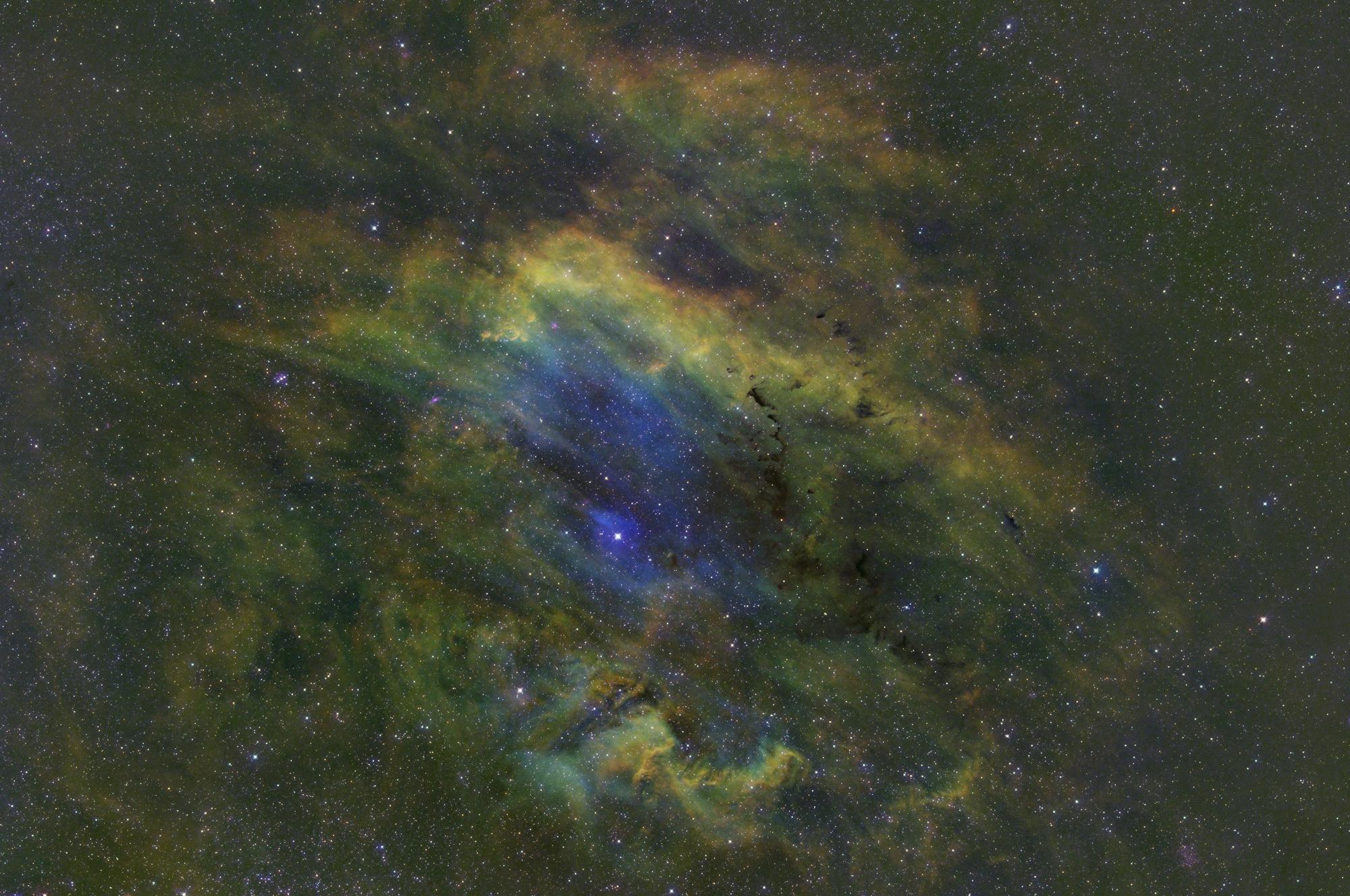
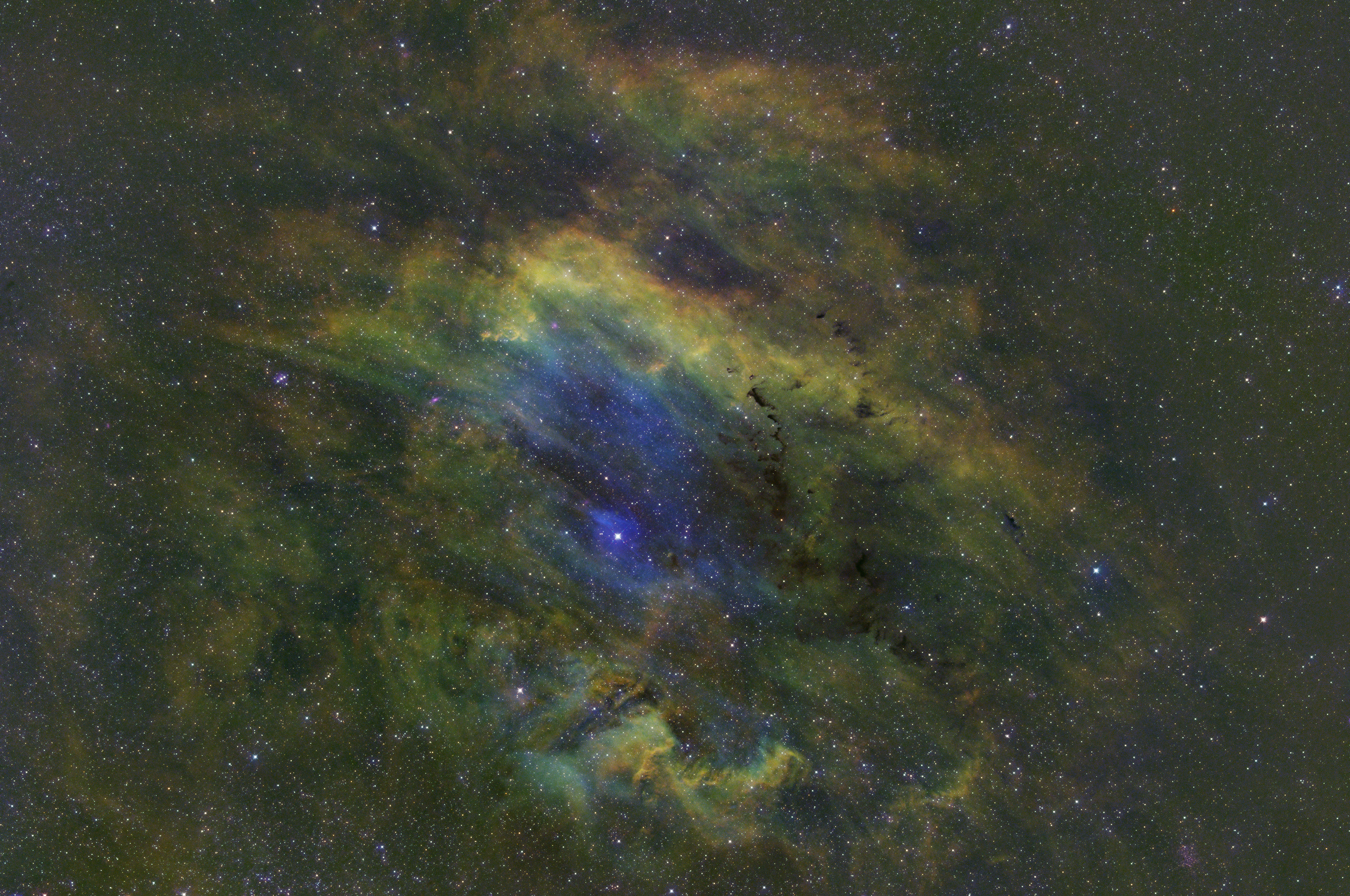
SH2-119 SHO- The Clamshell Nebula
Sharpless 119 is a vast emission region located in the constellation Cygnus, approximately 2200 light-years away. Situated just 2-3 degrees from the North America and Pelican Nebulae, it is frequently overlooked. The bright star 68 Cygni, which has a magnitude of around 5, plays a key role in ionizing the surrounding gas. This complex area contains several brighter emission patches and dark nebulae, each with their own LBN and LDN designations.
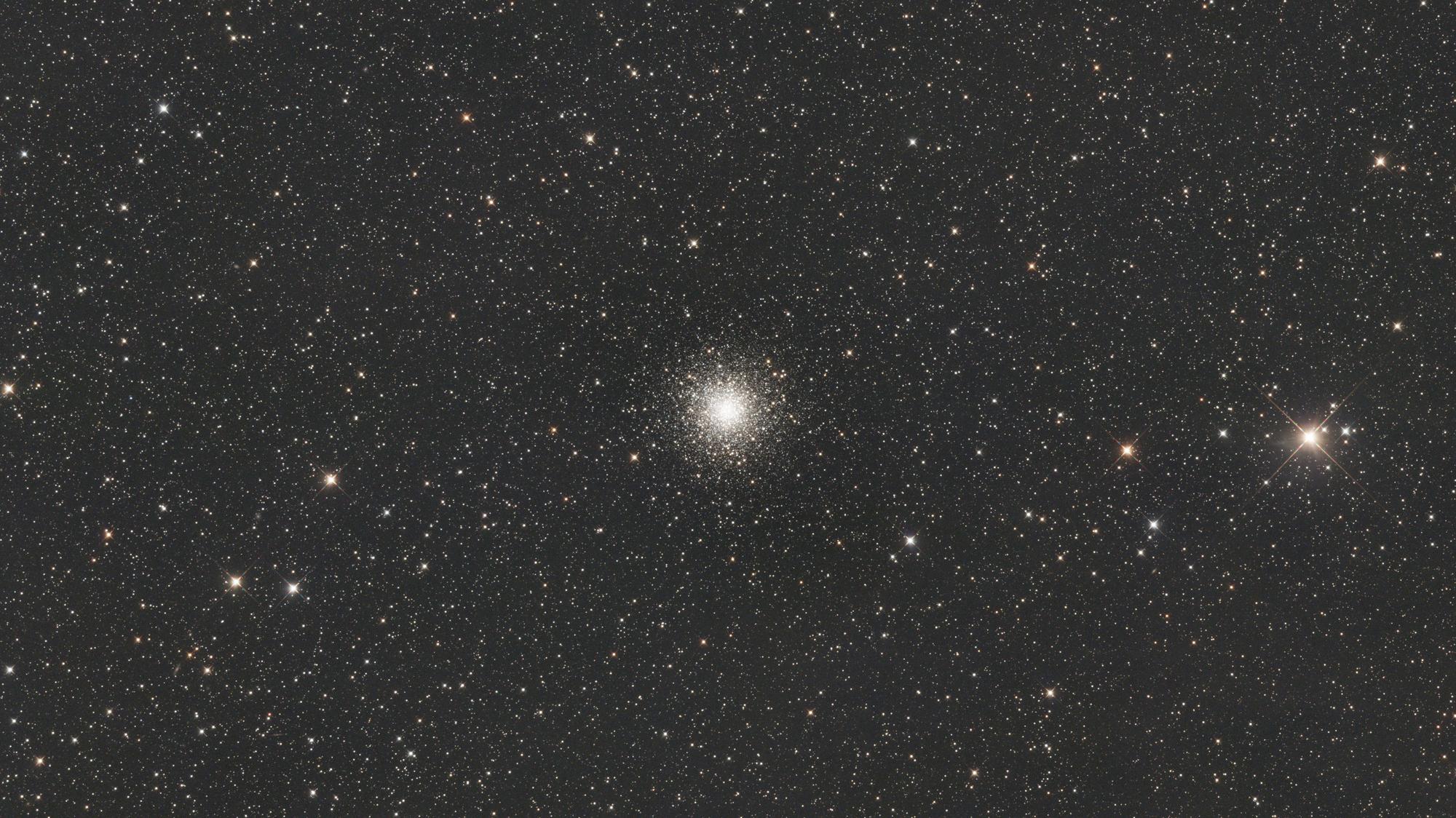
M10
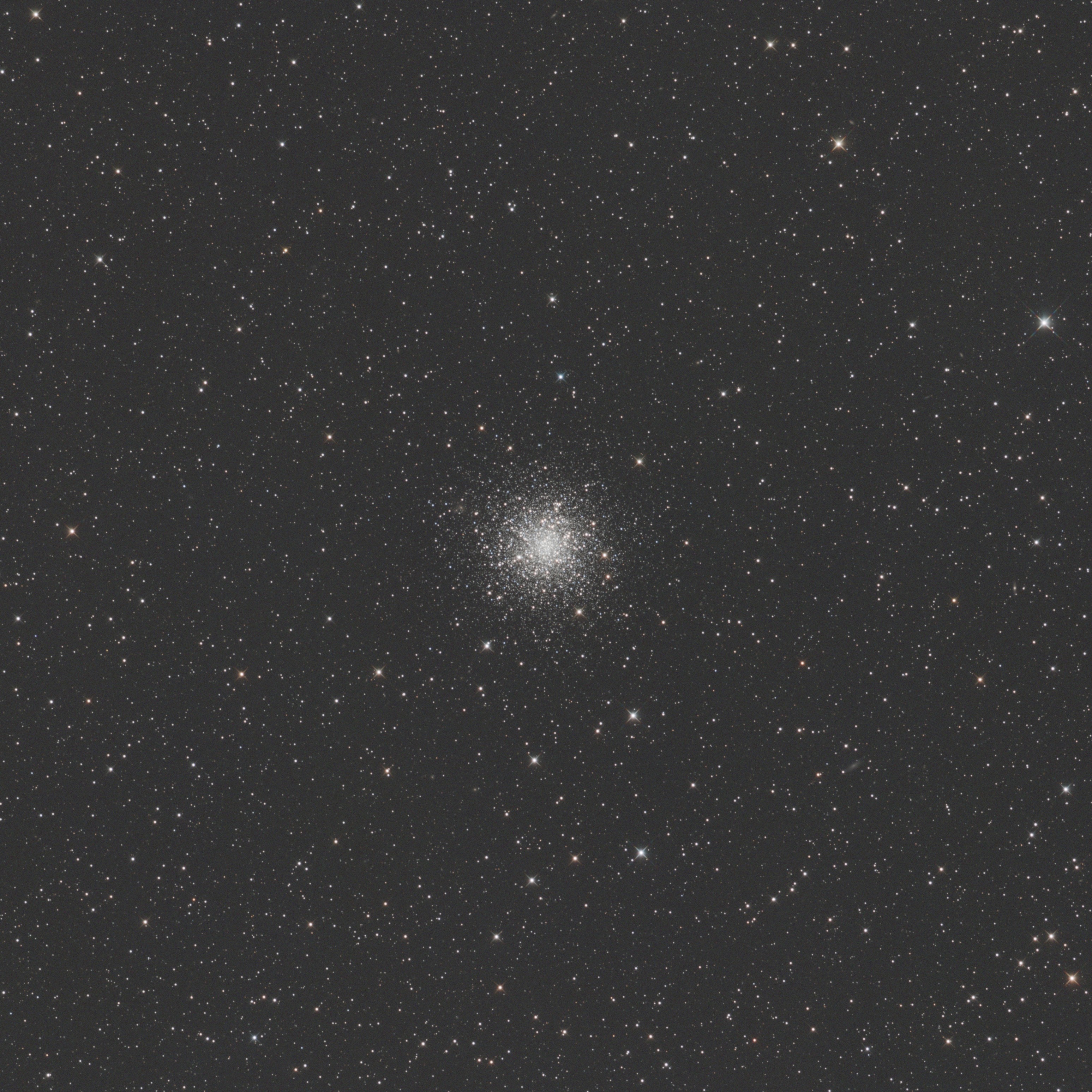
Messier 10 or M10 (also designated NGC 6254) is a globular cluster of stars in the equatorial constellation of Ophiuchus. The object was discovered by the French astronomer Charles Messier on May 29, 1764, who cataloged it as number 10 in his catalogue and described it as a "nebula without stars". In 1774, German astronomer Johann Elert Bode likewise called it a "nebulous patch without stars; very pale". Using larger instrumentation, German-born astronomer William Herschel was able to resolve the cluster into its individual members. He described it as a "beautiful cluster of extremely compressed stars". William Parsons, 3rd Earl of Rosse thought he could distinguish a dark lane through part of the cluster. The first to estimate the distance to the cluster was Harlow Shapley, although his derivation of 33,000 light years was much further than the modern value.
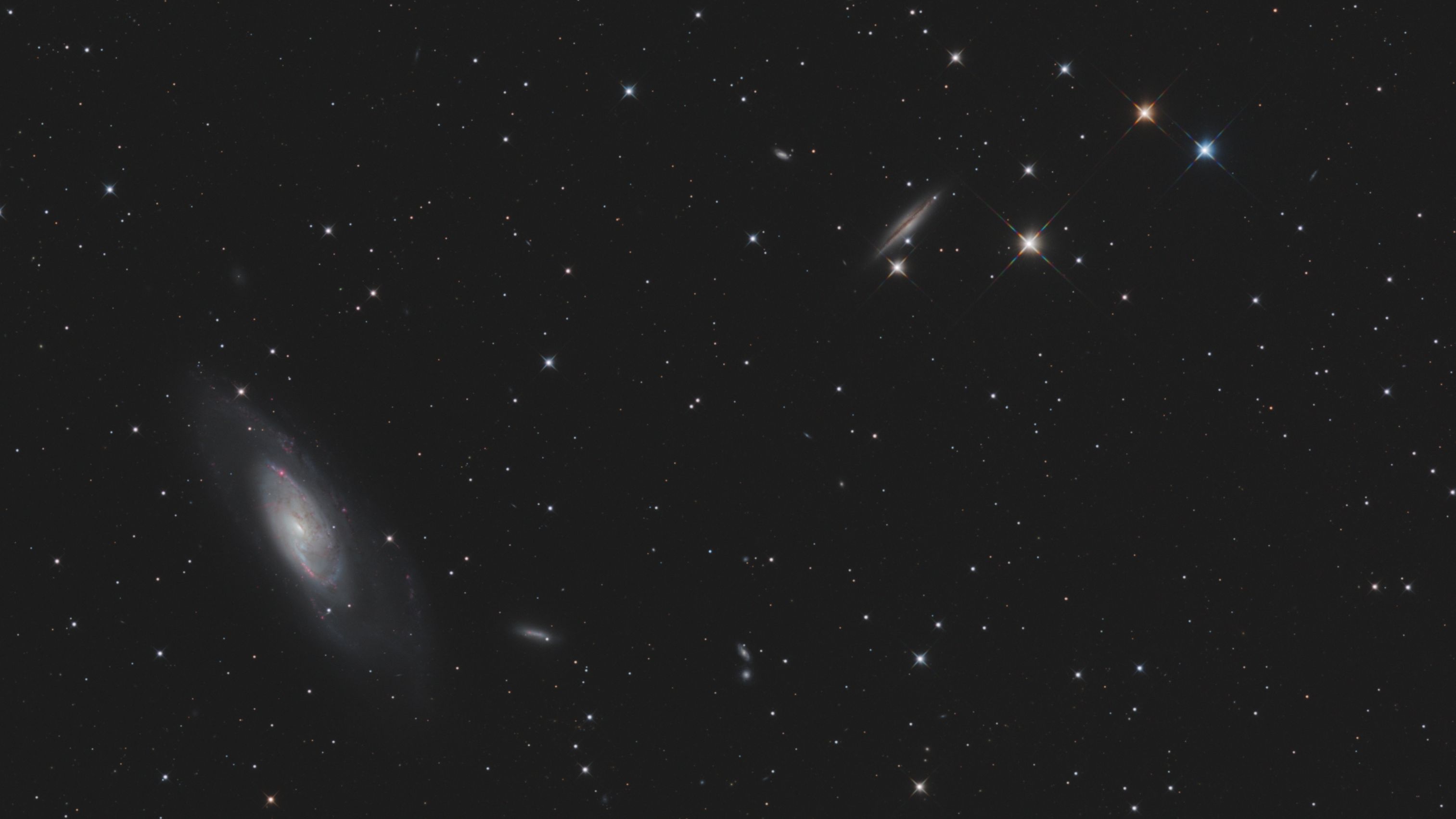
M106 RGB +Ha
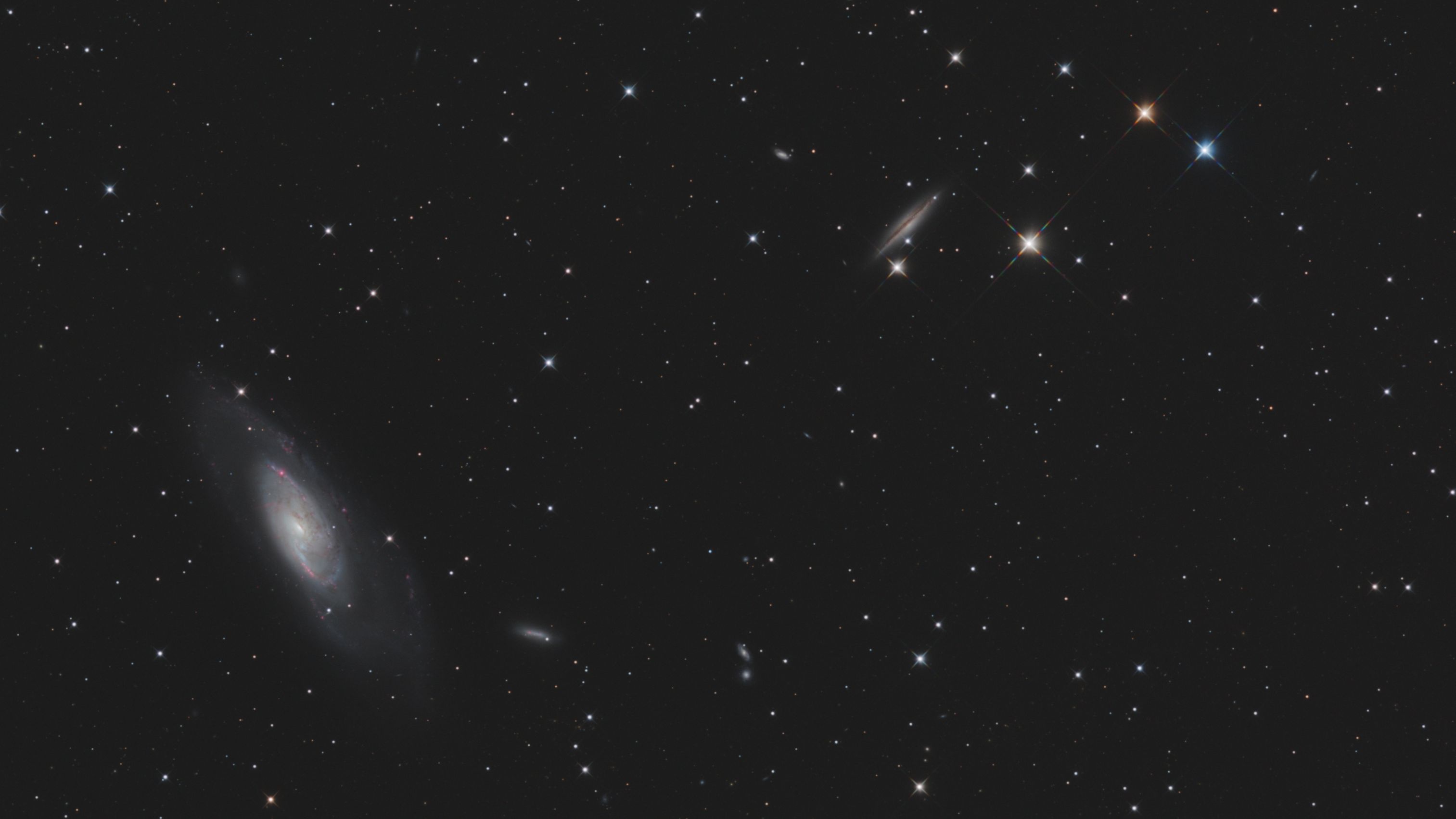
Messier 106 (also known as NGC 4258) is an intermediate spiral galaxy in the constellation Canes Venatici. It was discovered by Pierre Méchain in 1781. M106 is at a distance of about 22 to 25 million light-years away from Earth. M106 contains an active nucleus classified as a Type 2 Seyfert, and the presence of a central supermassive black hole has been demonstrated from radio-wavelength observations of the rotation of a disk of molecular gas orbiting within the inner light-year around the black hole.NGC 4217 is a possible companion galaxy of Messier 106.
Two supernovae have been observed in M106: SN 1981K (type II, mag. 17), and SN 2014bc (type II, mag. 14.8).
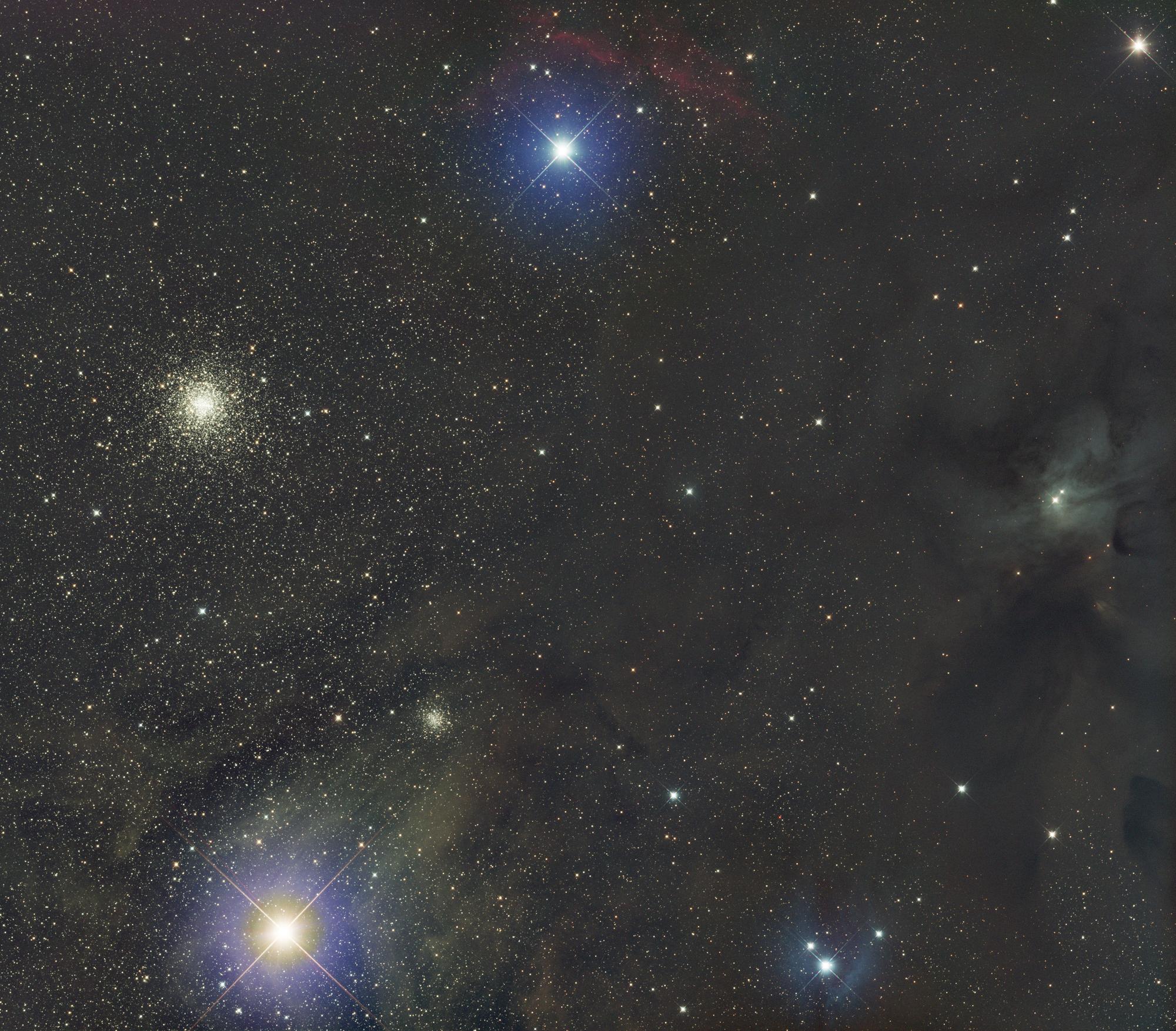
VDB-104 / SH2-9 / M4
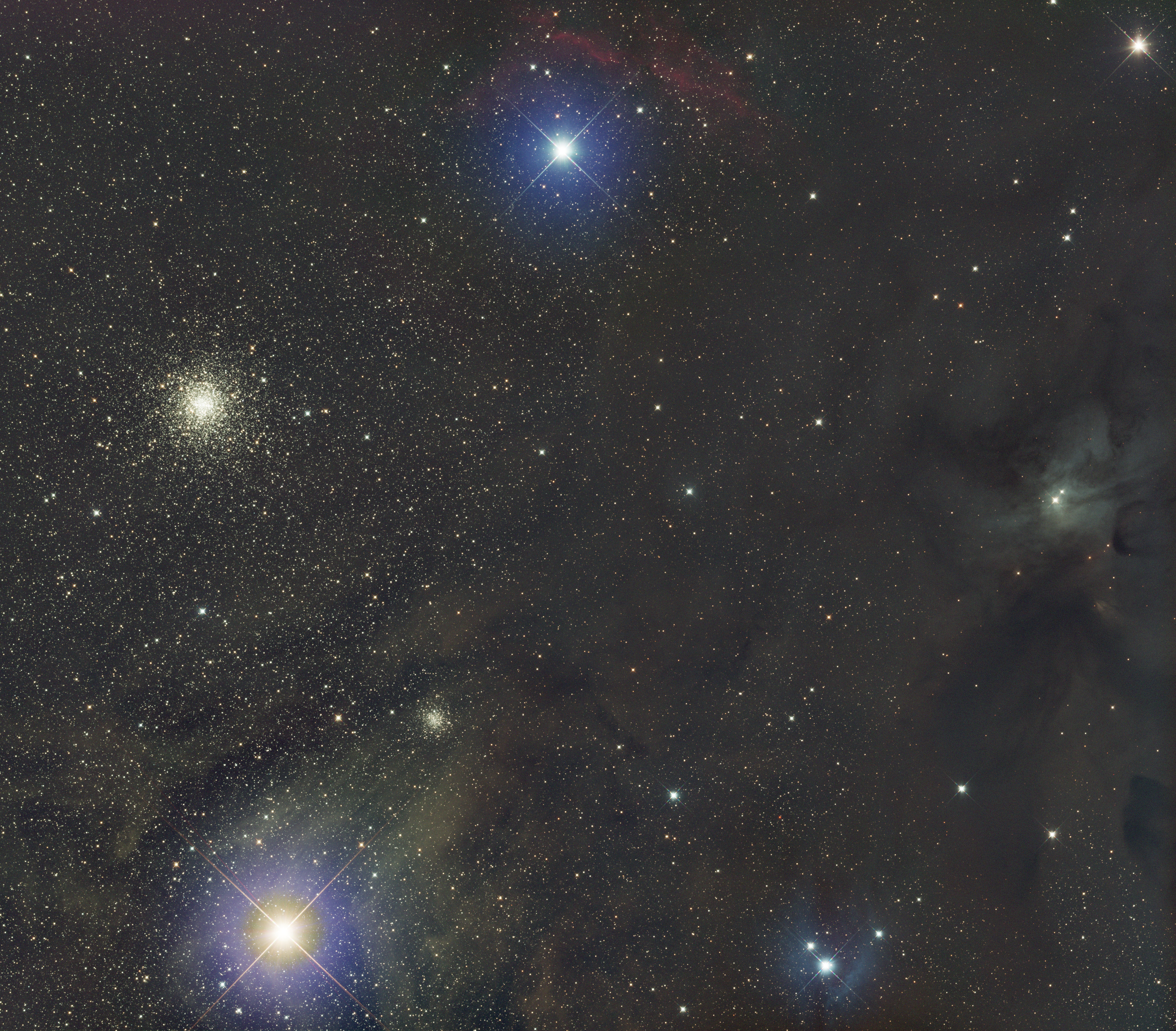
Sh2-9, also known as Gum 65, is an emission and reflection nebula in the Scorpius constellation, surrounding the multiple star system Sigma Scorpii. Located 1° northwest of Messier 4, it is easily visible with small telescopes.
Sh2-9 is a red emission nebula, ionized by the variable giant star Sigma Scorpii. It is also cataloged as reflection nebula C130. The nearby magnitude 1.1 star Antares lies 2° southeast of this nebula.
Sh2-9 is a notable 2.3 GHz radio source, and it is proposed that a collision with the dark nebula Kh 527 contributes to this emission.
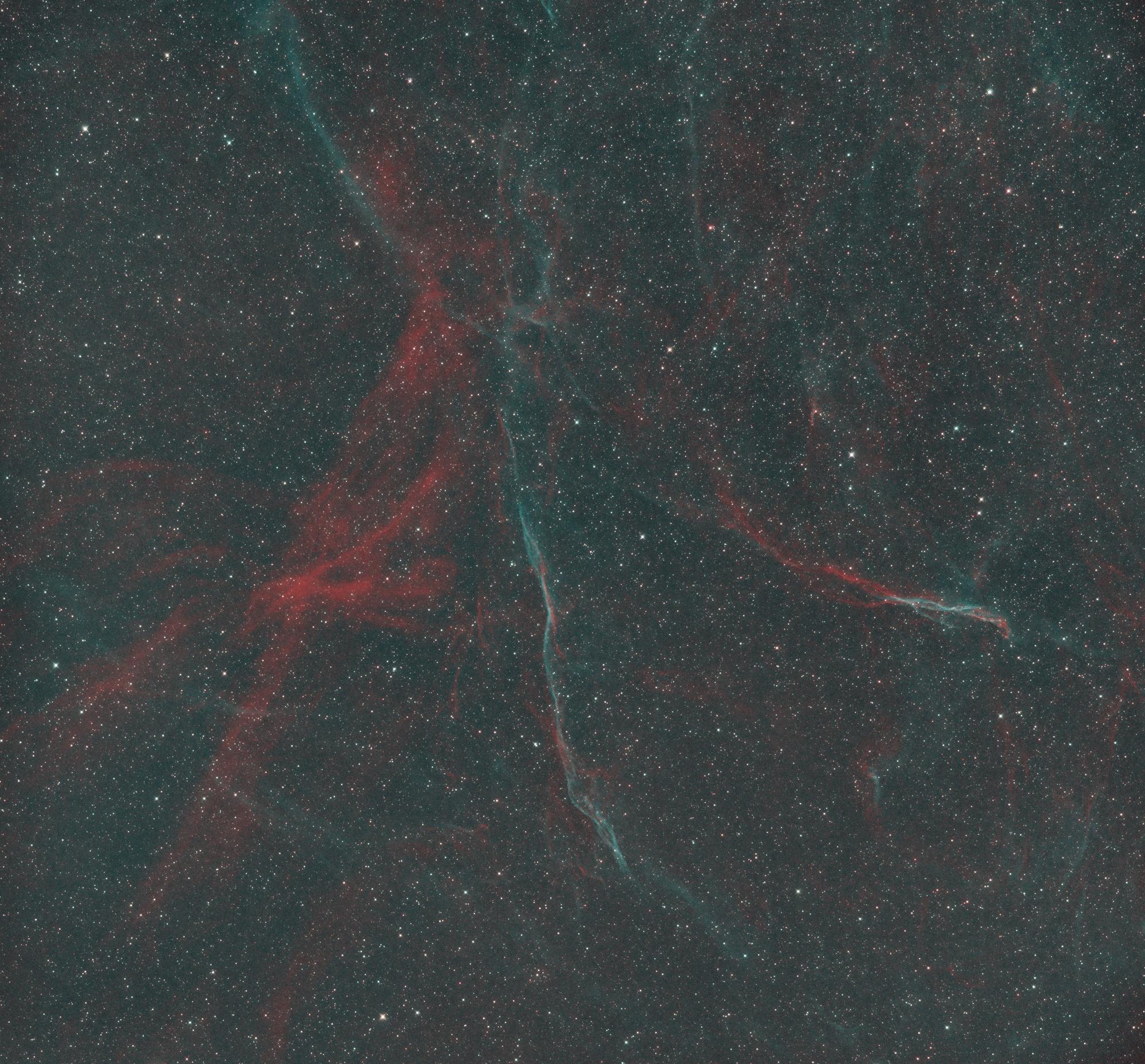
SH2-96 HOO/ supernova remnant G65.3+5.7
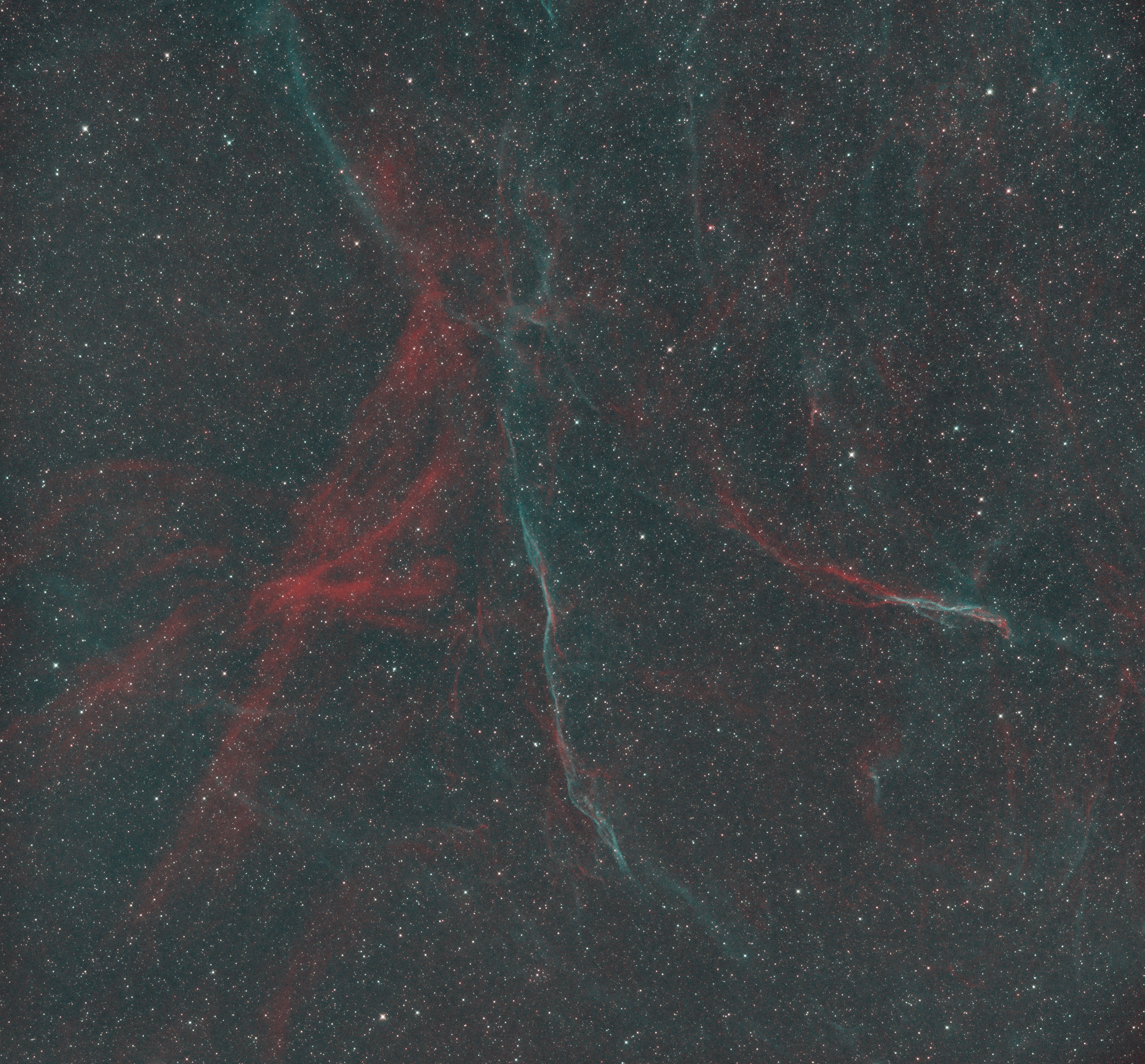
Sharpless-96 (Sh2-96) is part of the ancient supernova remnant G65.3+5.7, located about 2500 light-years away in the constellation Cygnus.
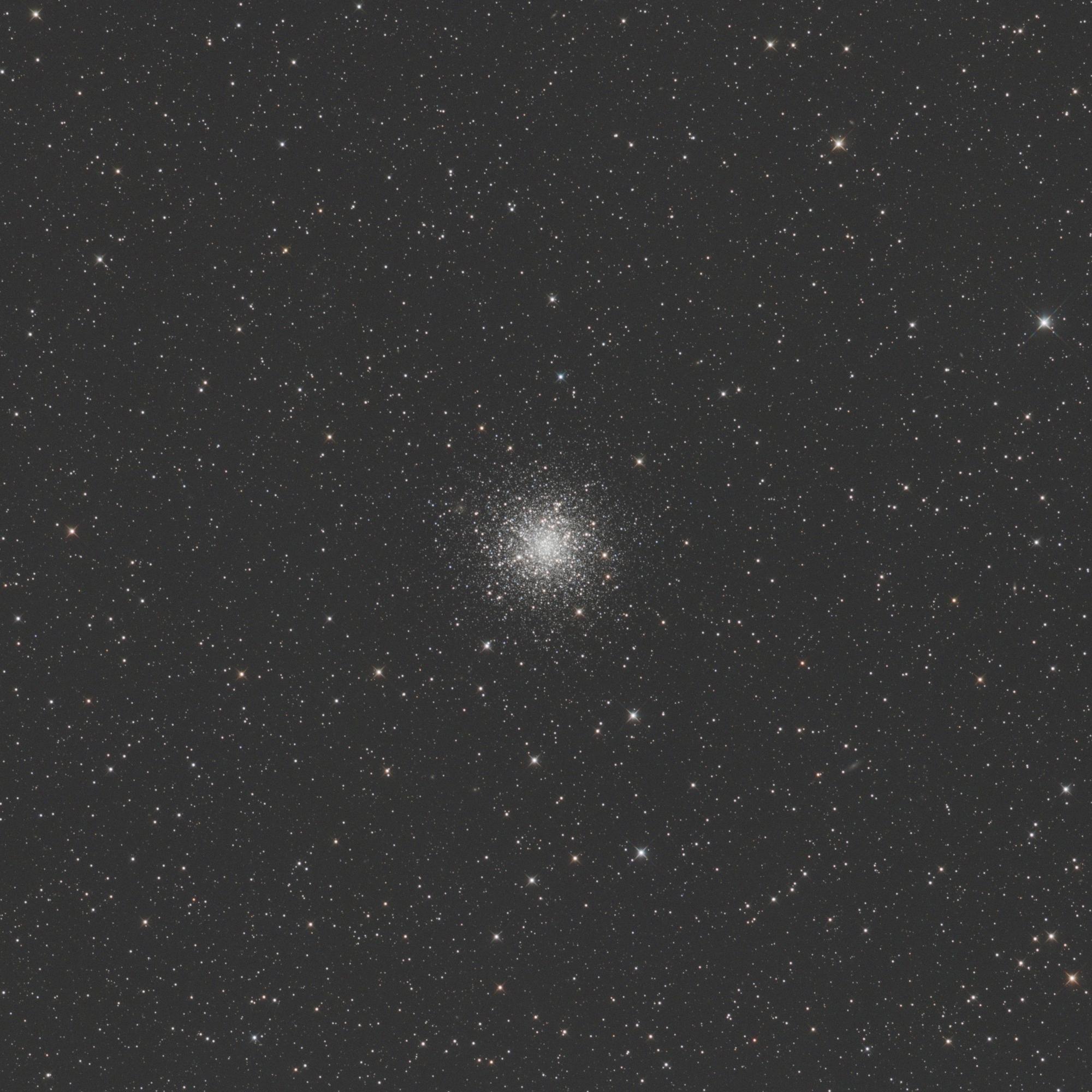
M12
Messier 12 or M 12 (also designated NGC 6218) is a globular cluster in the constellation of Ophiuchus. It was discovered by the French astronomer Charles Messier on May 30, 1764, who described it as a "nebula without stars".
It is also located near the 6th magnitude 12 Ophiuchi. The cluster is about 16,400 light-years (5,000 parsecs) from Earth and has a spatial diameter of about 75 light-years.
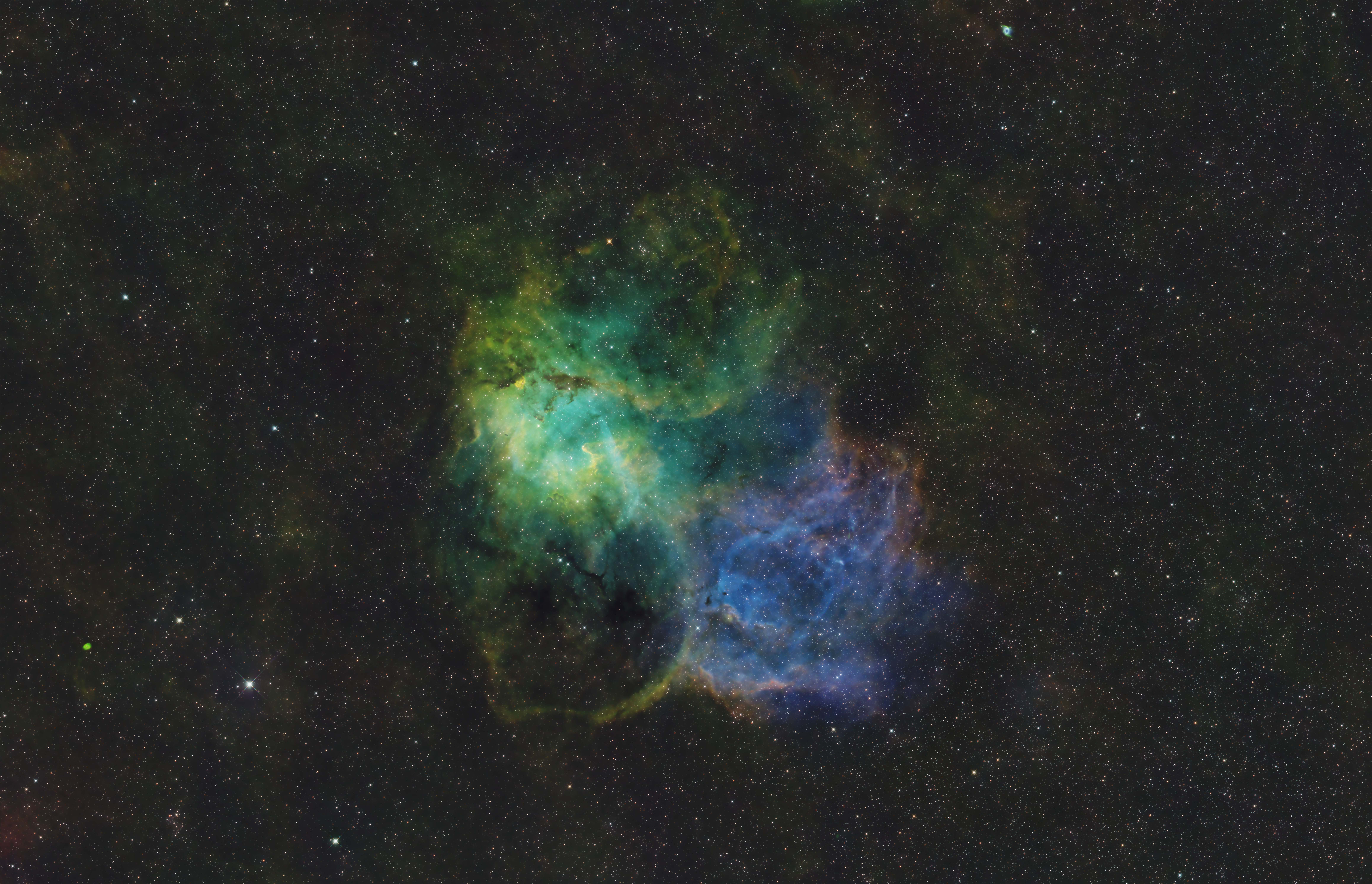
Sh2-132 Lion Nebula
Sh2-132, a stunning emission nebula located in the constellation Cepheus! 🌌
Situated about 10,400 light-years away, this nebula resides in the Perseus Arm of the Milky Way and hosts some of the hottest and most massive stars. Two Wolf-Rayet stars and an O8.5V-class star are the primary forces behind the ionization of its glowing gases. Fascinating structures like the radio-wave bubbles Shell A and Shell B reveal the powerful stellar winds and past star formation events that have shaped this celestial marvel.